


Cycle syncing: Should women really be adapting work around their menstrual phases?


Picture the scene. You’re lying in bed, sluggish and tired, when an advert for the Dogs Trust comes on. One of the dogs, says the voiceover sombrely, was beaten then abandoned as a puppy. You find yourself weeping inconsolably for the next 90 minutes – his sad eyes! His vulnerable little face! – and vaguely wonder, not for the first time, whether you might be losing your mind. But lo! The next day, your period arrives, and the world makes sense again.
Anyone who has menstruated is all too familiar with the taxing 28-day emotional rollercoaster it entails, and the impact it can feel like it has on your working life (who hasn’t, at some point, gritted their teeth through an important Zoom meeting while secretly mainlining paracetamol and clutching a hot water bottle to their abdomen?). There’s the period itself, a week of cramps and heaviness as the womb lining makes its ungainly exit from your body. Next, the glorious fortnight when you feel like a “normal” person. And then there’s the week building up to the next “crimson wave” (to borrow a delightful bit of terminology from Nineties cult movie Clueless) – typified, for many, by low mood and energy, irritability, and a galling tendency to burst into tears at adverts for animal charities.
Though every individual is different, many will likely notice these changes are tied to the four distinct phases of their cycle: menstruation (your period), follicular, ovulation and, finally, luteal. Each is influenced by fluctuations in hormones like oestrogen and progesterone. “Energy is usually lower during menstruation when these hormones are at lower levels, and increases as oestrogen rises in the follicular phase, peaking around ovulation,” says Dr Anna Cantlay, a British Menopause Society-accredited advanced menopause specialist and women’s health GP. “In the luteal phase, rising then falling progesterone can lead to fatigue, mood swings and premenstrual symptoms.”
According to data collected by Clue, a cycle tracking app, “happy” is the most frequently tracked feeling during the late follicular phase; “sensitive” is tracked a lot more by users during the luteal phase, with tiredness often an issue. “High progesterone can impact sleep quality, leading to restlessness or less refreshing sleep,” says Dr Cornelia Hainer, Clue’s head of science.
The severity of these highs and lows can vary dramatically between people and cycles. Some women feel only mild changes, while for the one in 20 who suffers from Premenstrual Dysphoric Disorder (PMDD) – a severe, cyclical hormone-related mood disorder – the physical and psychological symptoms can significantly impact daily life. Women who experience this “often describe feeling like they live two separate lives: one during the luteal phase, when they feel more irritable, emotionally sensitive, or depressed, and another during the follicular phase, when they feel more like themselves”, says Dr Andrew M Novick, a reproductive psychiatrist and assistant professor at the University of Colorado School of Medicine. “It can be incredibly disruptive to work and relationships.”
Meanwhile, a 2023 report from the Chartered Institute of Personnel and Development (CIPD) found that more than two-thirds (69 per cent) of women in the UK have had bad experiences at work because of their periods, with more than half saying they’d had to miss work because of period symptoms. Three-fifths said they had worked even when they did not feel well enough to.
Considering all of the above, it’s perhaps little wonder that a trend known as “cycle syncing” is gaining traction on social media and beyond. It involves adapting work and exercise routines around the patterns of one’s monthly cycle, and proponents include podcast host and bestselling women’s health author Mindy Pelz and the author Kate Northrup. It’s been posited that women’s decision-making abilities fluctuate throughout their cycle and that they should attempt to use these shifts to their advantage. Maybe you plan a big presentation to coincide with your high-energy phase, or put off a deep-focus task until your mental clarity reaches its pinnacle.
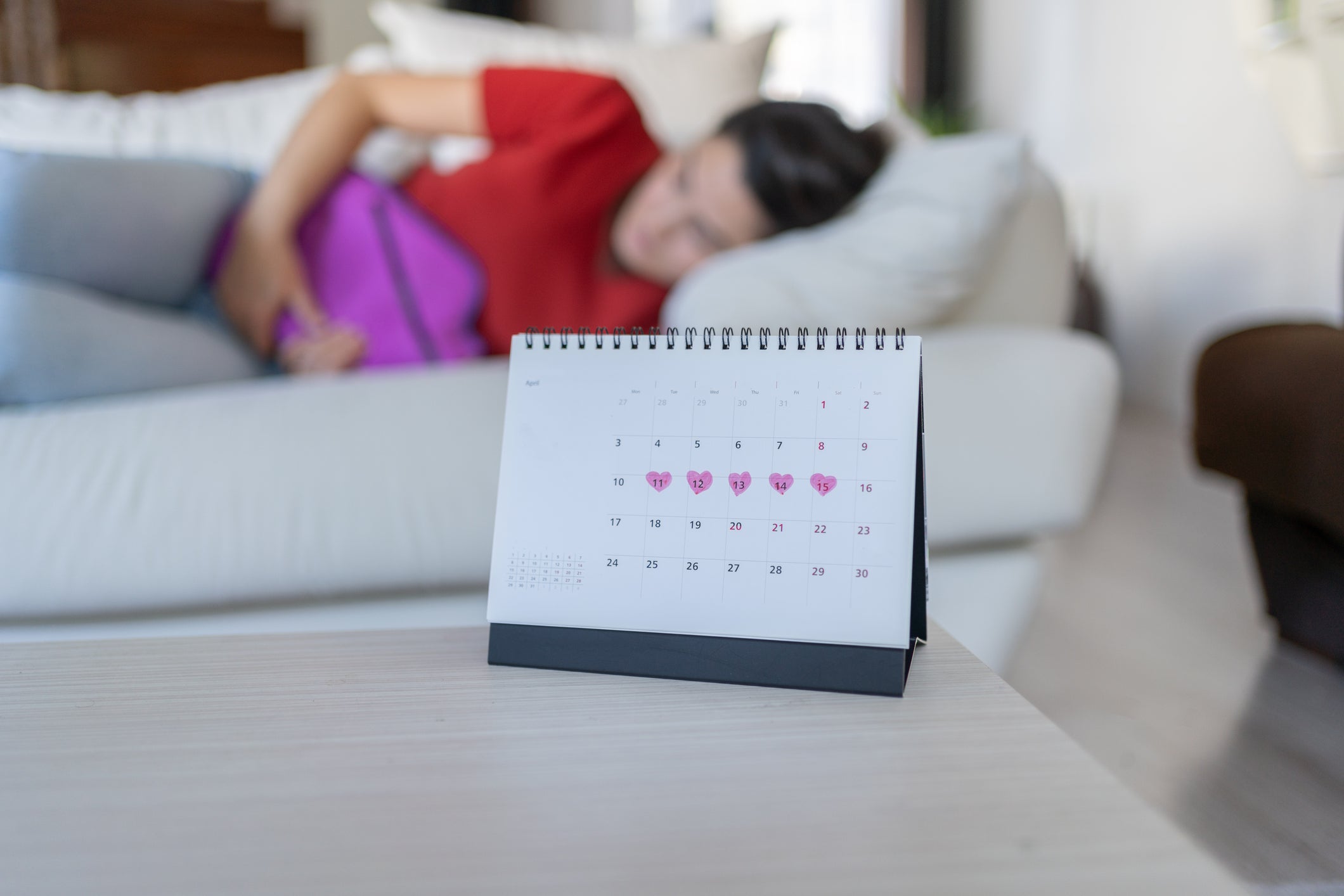
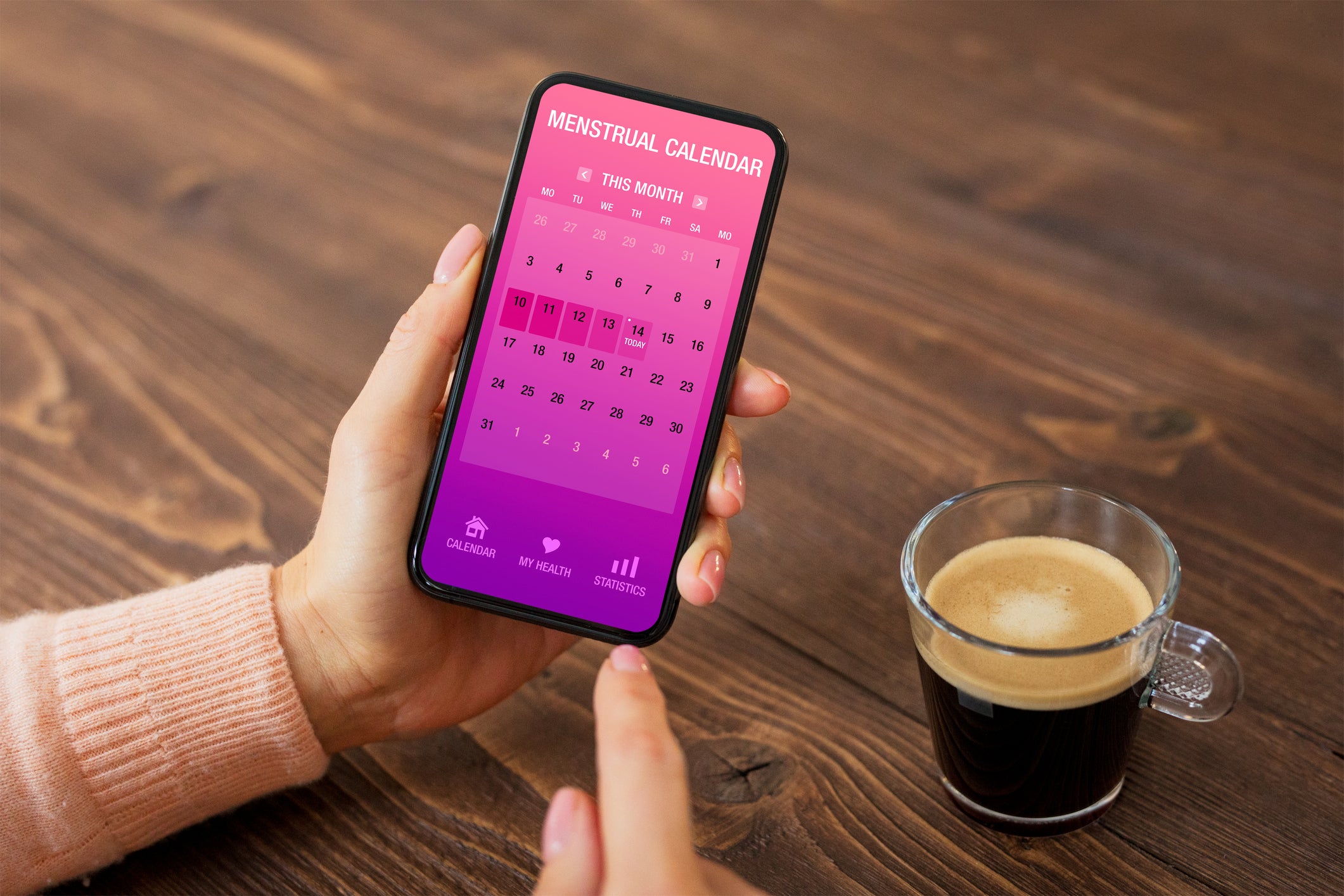
The idea has gone hand in hand with the rise of period tracking apps. First launched primarily as a fertility tool – enabling women to use them either as a form of birth control by avoiding sex during ovulation or in order to maximise their chances of getting pregnant – these apps have since grown in scope. These days, there are a whole host of platforms to choose from, including Clue, Hormona, Flo, Glow, Natural Cycles and Flo Living.
Then there are the more niche options – Fitr Woman, for example, an app that helps athletes train, compete and recover in sync with their menstrual cycle, or Vively, which uses continuous glucose monitoring to give personalised health insights that can help tackle PMS symptoms. A company called 28 provides women with a “hyper-personalised feminine fitness and holistic wellness experience” based on each user’s natural cycle; The House of Hormones (THOH) is a community platform offering education, products and services to “empower women to take control of their hormonal wellbeing”. After years of being woefully under-researched, women’s hormones finally seem to be having a moment.
The first step towards cycle syncing is to become cycle “aware” – spotting and understanding the unique personal patterns that might be influencing behaviour on a monthly basis. This usually takes a minimum of three months for an individual to identify, says Hainer. “Keeping track of your cycle and how you feel throughout is a good way to spot patterns in your mood, energy, or focus,” she adds. “Over time, this can help you understand how hormonal shifts might relate to how you feel, and help you to adapt your routines more closely to your own rhythms, rather than trying to push through or ignore them.”
Understanding how hormones affect your mood, energy, and focus can help you plan smarter, reduce burnout and work more efficiently
Dr Anna Cantlay
Many Clue users report feeling most motivated and creative in the follicular phase, especially right before ovulation. “If the same is true for you, this can be a good time for brainstorming or high-energy collaboration,” says Hainer. “Some studies also suggest creativity peaks around ovulation.” During the luteal phase, when progesterone is higher, individuals may be better suited to deep focus or more detail-orientated tasks. Though, Hainer is quick to add, this approach shouldn’t be about rigid optimisation, “which can be stress-inducing and can put people under pressure. It’s more about self-awareness and compassion.”
Cantlay agrees that tracking your cycle can help you make the most of high-energy days and be kind to yourself on tougher ones. She also notes that “many people feel more productive and mentally alert” during the follicular phase amid rising oestrogen levels. When oestrogen peaks during ovulation, some women may experience an increase in confidence and creativity, making teamwork or networking easier. “Understanding how hormones affect your mood, energy, and focus can help you plan smarter, reduce burnout, and work more efficiently,” adds Cantlay.
So why aren’t we razing current practices to the ground and starting a revolution so that workflows better suit women’s, well, other flows – especially at a point when productivity in the UK has hit an all-time low?
First off, we still live in a man’s world, argues Leah Christian, psychologist and CEO of THOH. “The reason it hasn’t really taken off in most workplaces is simple: they were built around men’s biology, not women’s,” she says. “The 9-to-5 model assumes a flat line of productivity, but women’s energy is cyclical, not linear. Until we redesign workplace culture to recognise that, women will always be adapting themselves to a system that wasn’t designed for them.”
There are some signs of change – in Spain, for example, the government recently passed Europe’s first paid menstrual leave law, allowing workers with severe period pain to take time off paid for by the state – but these are rare and slow to take hold.
And there are important caveats. Though cycle syncing has a catchy, Insta-friendly name, the reality beneath is a lot messier. Aside from the fact that syncing would be very difficult to practically implement in many jobs (“sorry Sarge, I can’t make that arrest – I’m in my luteal phase right now”), it’s also tricky to conclusively prove a link between either cognitive function or athletic performance and time of the month. A multitude of experiments were carried out in the Seventies when women were entering the workforce en masse; “The upshot was that, no, cognitive performance is not systematically affected by a woman’s cycle,” says Nanette Santoro, an obstetrician and faculty member in the Division of Reproductive Endocrinology and Infertility at the University of Colorado. In fact, many of these studies indicated that, while a woman’s perception of her cognitive performance changed with her cycle, her objective performance did not.
More recently, one meta-analysis on menstrual cycle effects on cognitive performance, published earlier this year, concluded that the research “does not support myths that women’s cognitive abilities change across the menstrual cycle”. However, a separate longitudinal study, also published in 2025, found that “women performed better on memory and attention tasks just before ovulation”.
Meanwhile, research from McMaster University published in March debunked the popular theory that tailoring exercises to the menstrual cycle creates a hormonal advantage or helps build muscle or strength. “We saw no differences, regardless of cycle timing,” said lead study author Lauren Colenso-Semple.
It’s a mistake to think hormones hold the key to all of our moods, motivations, or challenges
Dr Andrew M Novick
Part of the problem is the oversimplification of hormonal changes touted online. While hormones do matter, they’re “part of a much larger story”, says Novick. The mixed research results, he says, suggest that the influence of hormonal variation is “subtle” and probably doesn’t affect productivity or mental performance to a significant degree for most women. “Far more powerful factors are things like sleep, mental health, exercise, cardiovascular health, nutrition…” While it’s a mistake to ignore hormones completely, he says, “It’s also a mistake to think they hold the key to all of our moods, motivations, or challenges. The truth lives in that middle ground.”
Cantlay agrees that oversimplified claims can spread misinformation and risk reinforcing outdated stereotypes that hormones make women “less capable”: “Menstrual experiences vary, and they don’t define a person’s abilities.”
Herein lies a potential danger inherent in the cycle syncing theory; some experts fear it could play into toxic gender stereotypes. “I worry that this type of trend enforces a view that women are not capable of performing consistently, and that leads to negative opinions of women in demanding leadership roles,” says Santoro. “It’s also probably helpful to point out that men appear to have variations in performance based on biorhythms, and these go unaddressed because it is assumed that men are always on an even keel – which is kind of an amusing thought if you have ever lived with a man.”
So, too, the very idea of “hacking” our hormones can simply wind up being another stick to beat ourselves with, the menstrual equivalent of a tech bro explaining his heinous 3.30am wake-up routine on The Diary of a CEO podcast. “Cycle syncing can be very positive when it’s used for self-awareness and empowerment,” says Hainer. “However, cycle syncing can also be misused… No one should feel pressured to ‘optimise’, or feel guilty if they decide not to sync their cycles with their work.”
As Novick puts it: “There’s a lot of stuff out there that gets sold as female empowerment, and in reality, it’s promoting additional pressure and perfectionism.”
At the end of the day, the experts agree that any tool that can help us better understand ourselves and our bodies is no bad thing, provided it’s incorporated in a nuanced, individualised and balanced way. “Used well, it helps women harness their natural rhythms; maybe you brainstorm or present when energy is high, and rest or plan when it dips,” says Christian. “But if we use it to reinforce the idea that women are unpredictable or unstable… Well, we’ve missed the point entirely.”


