


Checked Into History: India’s Restored Havelis Are Keepers Of Time And Travel’s New Obsession


Last Updated:
As travellers seek deeper, slower experiences, India’s crumbling havelis are finding new life and new meaning




Checked Into History: India’s Restored Havelis Are Keepers Of Time And Travel’s New Obsession
In the narrow गलियाँ of Old Delhi, just past the chaos of spice shops and silver merchants, a carved doorway welcomes travellers who are enthusiastic enough to check into what is probably the most cluttered and overwhelming corner of the Capital. But once you step inside Haveli Dharampura, the city rearranges itself. That is not to say that the sounds disappear. They settle in the background. You can hear the azaan, footsteps of your fellow haveli-mates and the hum of a neighbourhood that has never really paused.
This is the paradox at the heart of India’s haveli revival. These spaces are not museums but they’re not quite hotels either. They sit somewhere in the middle, breathing history that you can check into.

The Afterlife Of A Haveli
“Haveli Dharampura sits in the Dharampura locality of Shahjahanabad — the walled city commissioned by Mughal Emperor Shah Jahan in the 17th century. The haveli itself dates to that era of dense courtyard architecture, built around the principle that a family’s world could be entirely self-contained within its walls: rooms for commerce, ceremony, rest, and worship all oriented inward around a central chowk,” explains Vidyun Goel, director at the property.
For centuries, havelis like this functioned as entire ecosystems—homes, businesses, cultural hubs. But as cities modernised, they began to empty out. “Like most of Old Delhi’s havelis, it passed through cycles of prosperity and slow decline… hundreds of havelis were either demolished, converted into warehouses and tenements, or simply left to quietly crumble.” What travellers now see inside this boutique retreat isn’t just restoration but a return to purpose.
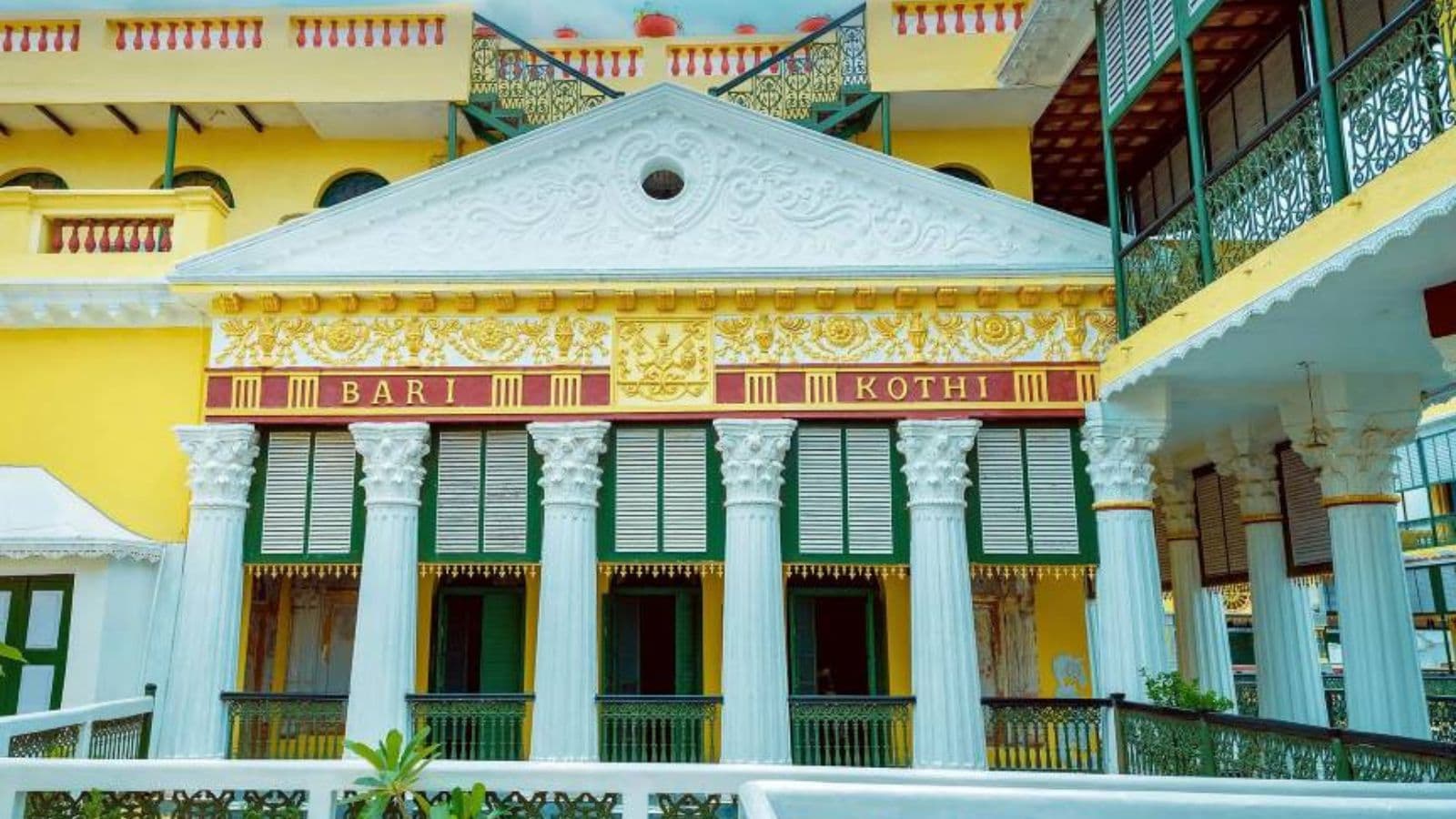
That idea is also palpable in the story of Bari Kothi, a riverside mansion in Bengal that tells a parallel tale.
“Bari Kothi was built by my forefathers in the late 18th century in Azimganj… We are Sheherwali Jains, a small merchant community that migrated from Rajasthan to Bengal at the invitation of the Nawabs of Murshidabad, and ran the silk, jute and banking trade with Europe through what was, at the time, the wealthiest province on the subcontinent,” recounts Darshan Dudhoria, the co-founder behind the restoration of this heritage retreat.
Back then, the building wasn’t just a residence. “A kothi in those years was not just a home. It was a home and a headquarters… Bari Kothi was the larger of two such buildings in our family, hence the name, simply, the Big House,” adds Darshan. But like many such homes, it eventually fell silent.
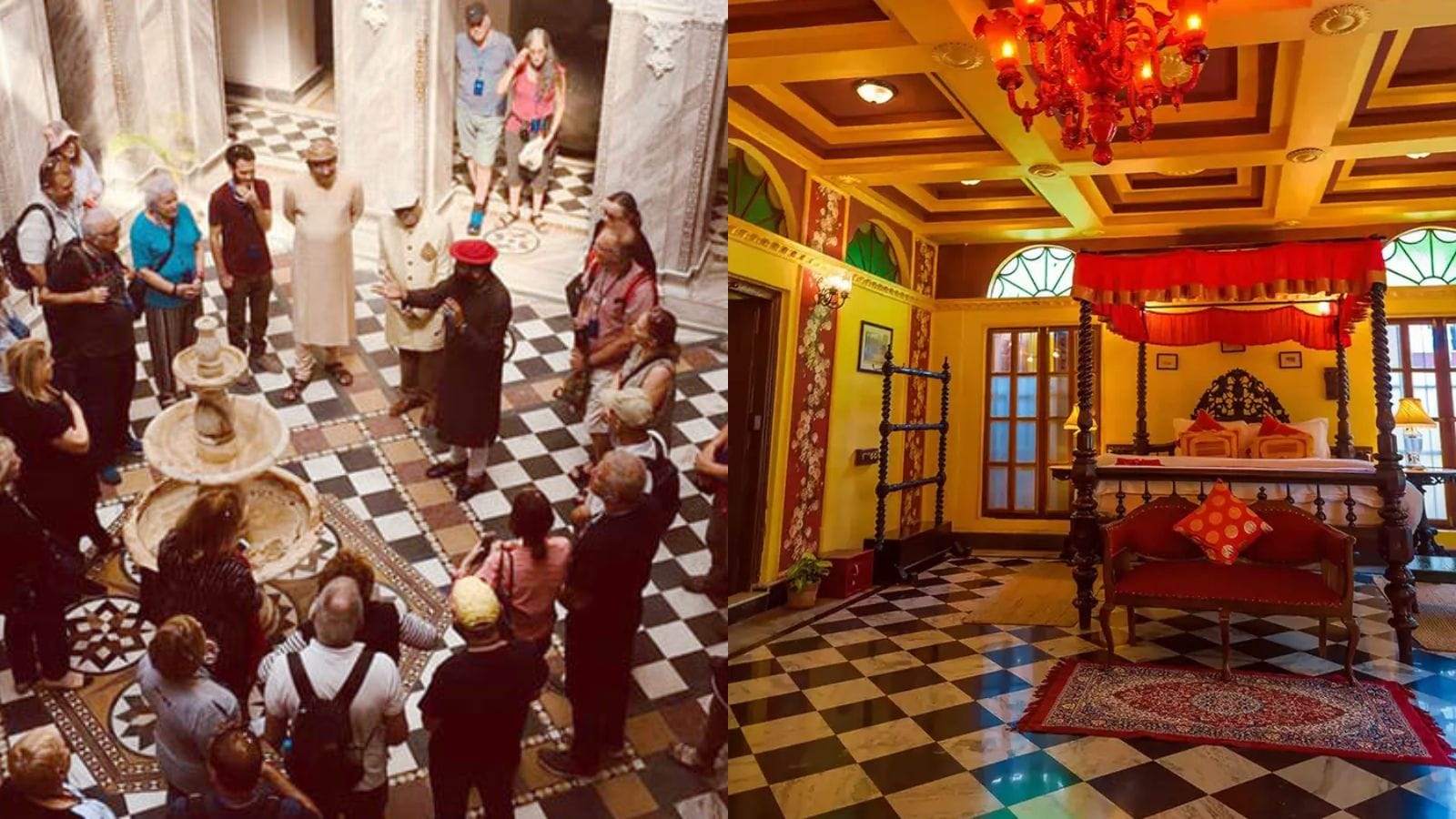
“For six generations, it was the centre of our family’s life. Then, like so many heritage homes in Bengal, it fell silent… The building stayed locked, dignified, but frozen in time.” For Darshan and Lipika, the brother-sister duo behind the place, the revival wasn’t just emotional but existential. “We didn’t restore Bari Kothi to save a building. We restored it to revive an economy.”
The Real Work Happens Behind The Walls
If there’s one thing all these restored havelis agree on, it’s this: the hardest part isn’t making them beautiful. It’s making them livable—without letting that effort show. At Bari Kothi, “We followed one rule throughout the restoration: every modern intervention had to be invisible… The building reads as it did in 1780. The systems behind it run as they should in 2026,” adds Darshan.
But thousands of kilometres away, at Padmaa, a three-century-old family haveli in the Pink City, that negotiation played out in deeply personal ways.
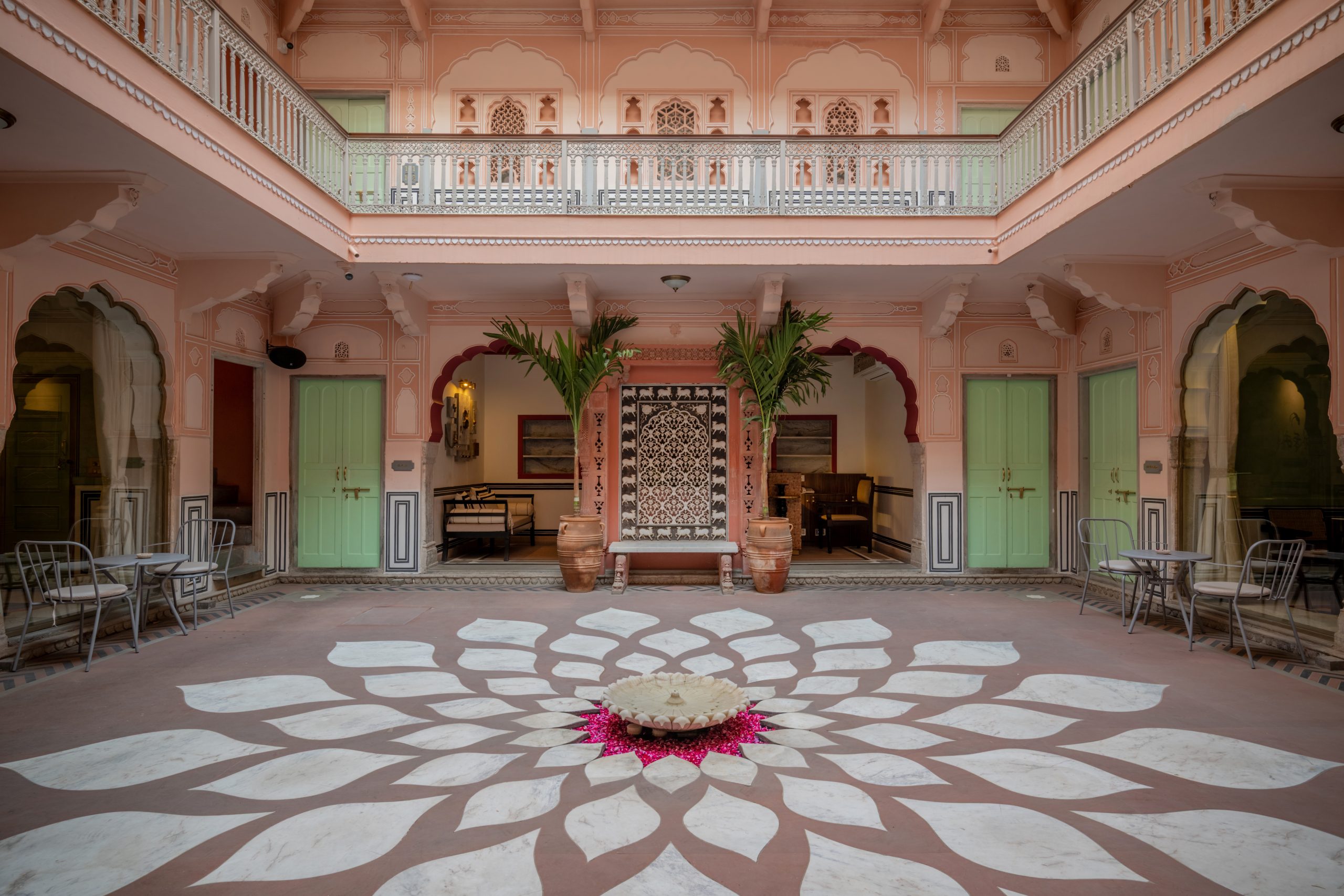
“One of the things we held back on for the longest time was adding private bathrooms… We were afraid that cutting into load-bearing walls would ‘break’ the character of the rooms and turn them into generic hotel suites,” says Prateek Shah, the owner of this gorgeous boutique heritage retreat in Jaipur. But they did reach a compromise. It wasn’t about convenience though, but restraint.
“The idea was to ensure comfort and privacy for guests without making the transition between old and new feel very obvious.” Today, much of what defines the guest experience is deliberately unseen. “Air-conditioning ducts and compressors are tucked away… Plumbing and wiring have been routed through existing service walls… Lighting is controlled by hidden switches and recessed fixtures,” shares Prateek.
The Myth Of The “Perfect” Heritage Stay
Scroll through Instagram and haveli hotels have all the staples of aesthetics. Sunlit courtyards, hand-painted walls, breakfast served under arches. But reality, as it turns out, is far more textured. “This is perhaps the most honest and underappreciated challenge in heritage hospitality,” says the team at Haveli Dharampura. “Guests arrive having seen photographs of the courtyard drenched in golden light, they’re essentially buying an aesthetic.”
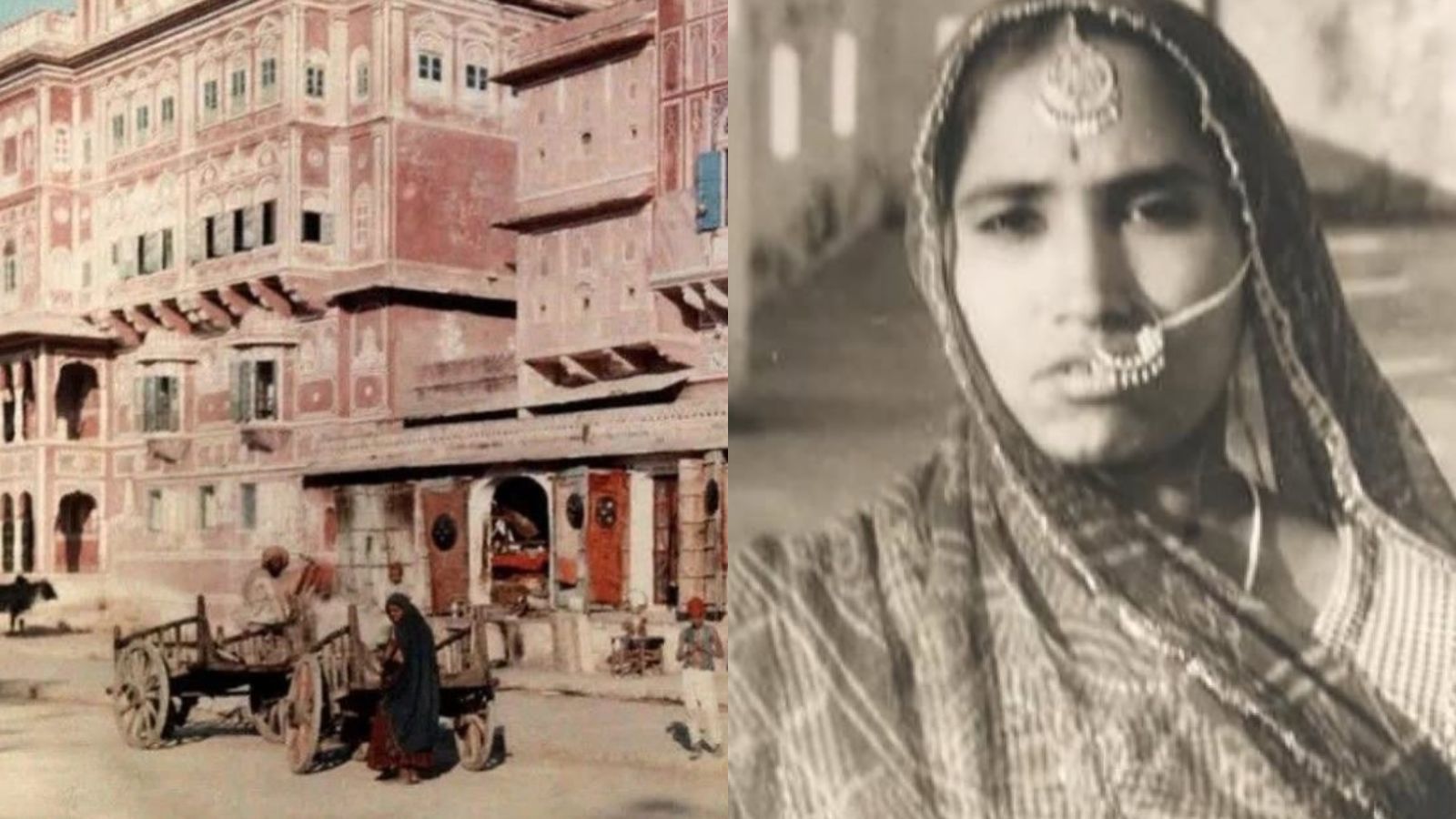
What they don’t always anticipate is that the sounds of the walled city don’t pause at check-in. “Room proportions follow Mughal domestic logic, not the logic of a five-star hotel… Bathrooms are compact. Corridors are narrow.”
And then there’s the neighbourhood itself. It is chaotic, fragrant, alive, and for some guests, an overwhelming experience outside the confines of a rose-tinted social media lens. But instead of smoothing these edges out, heritage stays are learning to reframe them as part of the experience.
Beyond Aesthetics: The Human Layer
If havelis are having a moment, it’s not just because they’re beautiful. It’s because they’re beginning to tell deeper stories about community and continuity.
“Padmaa has been a part of our family’s story for nearly three centuries. It began as a jewellery ‘gaddi’ before gradually expanding into a home for seven generations of the Shah family,” speaks Prateek. It is obvious that turning it into a hospitality space wasn’t just a business decision. “Opening it as a boutique hospitality space felt like the most natural way to keep it alive, both financially and emotionally, while sharing its story with others,” he adds, mentioning how even the name carries memory.
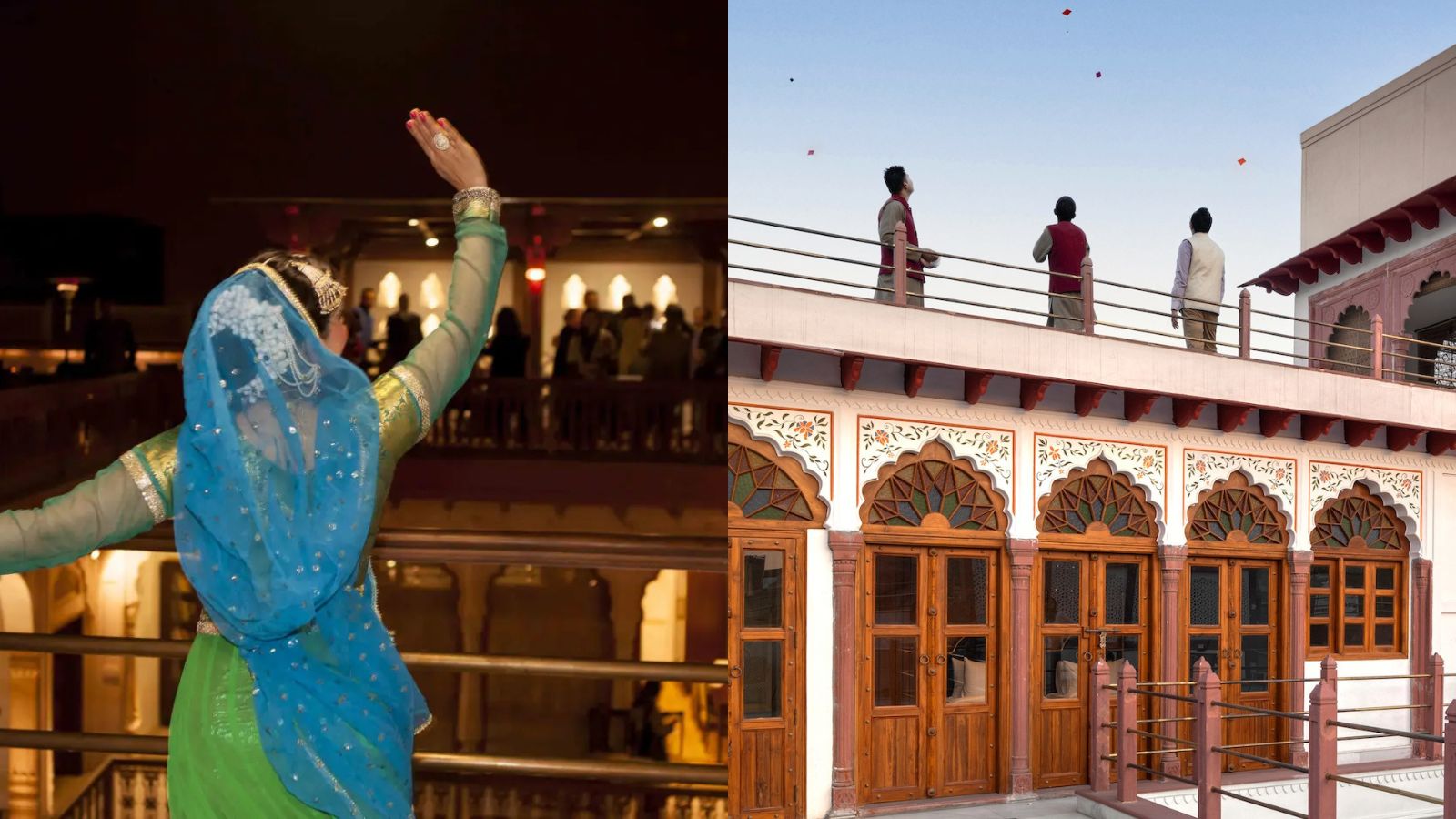
“We named it Padmaa after our mother, ‘Amma Padmaa’, weaving her warmth into its new identity.”
At Bari Kothi, Darshan says the story is what drives the stay. “The character of Bari Kothi is not in the walls. It is in the people who run it. That is not staffing. That is the soul of the property and that is the part we refused to outsource.” The project trained over a hundred local craftsmen and now supports 150 families.
At Haveli Dharampura, staff come from the same lanes that guests explore. Experiences aren’t always curated but also lived, as real as the heritage that brings travellers to this city. So when you fly kites from the rooftop, you’re experiencing an inheritance that is being passed on.
This is what separates these spaces from conventional hotels. They are not designed from scratch. They are inherited and then carefully adapted. As Vidyun puts it, “The haveli is the portal, not the destination. It orients guests toward the living city outside its walls, which is what gives the stay its real depth.” You don’t just visit the past here; you inhabit it, even if only for a night.


