


Chilled red wine: The truth about the ‘new’ trend that’s actually ancient


The first time someone handed me a red straight from the fridge, I assumed it was an accident – a bottle abandoned in the wrong door, retrieved by a host too many glasses deep to notice. I drank it anyway, because I am British and would sooner endure a flawed wine than the indignity of mentioning it. It was, irritatingly, delicious.
That was a few summers ago, when a cold red still felt mildly transgressive. Now, we are told, it is a movement. A revolution. The death, no less, of rosé.
You will have seen the headlines, because they’re everywhere. Chilled red is the drink of the season; rosé has been dethroned, left sweating alone on the picnic rug. The evidence comes from Ocado: searches for “chilled red wine” up 1,020 per cent year on year (a figure that sounds seismic until you realise it’s only possible from a base of almost zero), sales of Chill Bill Spritzy up 827 per cent, and sales of New Theory Love Bite up 32 per cent. More than half of Gen Z and younger illennial drinkers, the retailer said, had taken their red chilled or over ice, against a third of everyone else.
It is a lovely story. There are just two problems with it. The first is that it isn’t new. The second is that it isn’t true.
Humans have been cooling their red for roughly as long as they have been drinking it. The Greeks and Romans chilled wine with snow, harvested from the mountains in winter and packed into straw-lined pits deep enough to survive until summer. Athenaeus records Alexander the Great, mid-siege, ordering 30 trenches dug, filled with snow and roofed with oak branches, purely so the army could drink it cold. Nero had runners ferry snow down from the hills to his table. Hippocrates, ever the killjoy, fretted that iced wine was bad for you, which tells you how common the practice must have been to warrant a warning in 400BC.
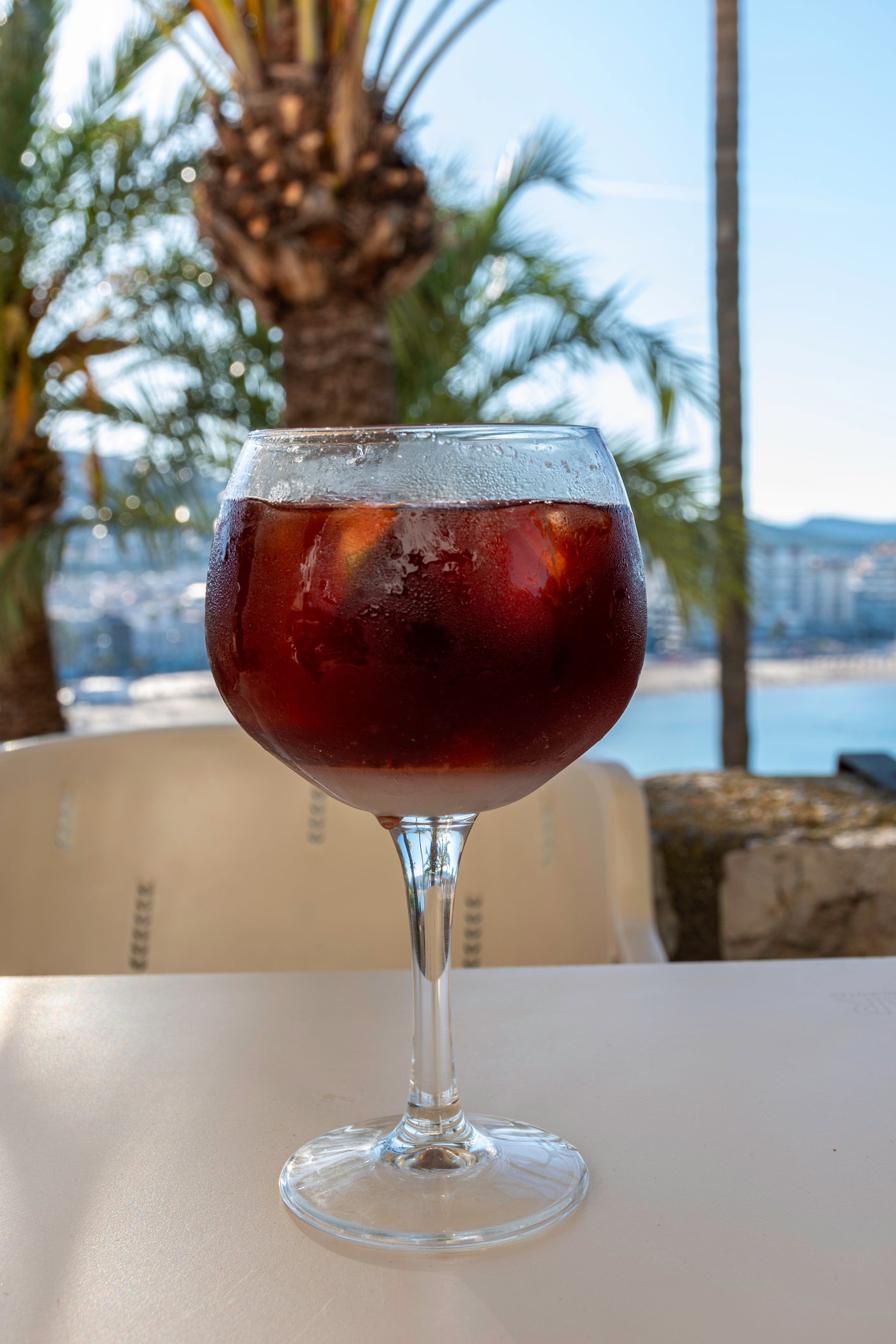
And “room temperature”, that sacred rule we’ve all been bullied by? Largely a mistranslation. It descends from the French chambré, which means the temperature of a draughty stone chateau with no central heating – somewhere around 12 to 18C. Warm rooms are a modern invention. We took a phrase that meant “pleasantly cool” and, somewhere along the way, decided it meant “tepid”. Centuries of overheated Merlot have been the result.
It never really left, either. Across the Continent, a chilled red is unremarkable. In Italy, it’s the natural state of Sicilian Frappato, all crunchy wild strawberry, or a young Valpolicella from the Veneto. Head into Emilia and they’ll happily refrigerate a Lambrusco without ceremony. The French treat a Beaujolais cru or a Loire Cabernet Franc – a Chinon, say – exactly this way, straight from the cool.
And in Spain, where the afternoon sun does the arguing, a light Garnacha goes in the ice bucket without comment, and tinto de verano – red lengthened with chilled soda over ice – is the genuinely unbothered house pour of every summer terrace. In hot places, red has always been served cool for the simple reason that it warms up the moment it hits the glass. Only in Britain did we manage to turn a sensible response to the weather into a faux pas.
It is, for the moment, largely a London story. Give it a summer
And while the story being sold currently is that chilled red is dancing on rosé’s grave, the figures say the opposite. According to the Wine and Spirit Trade Association’s latest report, rosé sales rose 3 per cent by volume and 5 per cent by value over the past year, generating £882m – around 129 million bottles, up from 125 million the year before. Rosé is the one still wine category that is actually growing, and it now sells steadily through winter, not just in July. The pink stuff hasn’t been pushed aside. It is, quietly, winning.
So who is the chilled-red boom really rescuing? Red wine, which over the same period was the worst-performing category in the country, down 6 per cent by volume, a steeper fall than white’s 4 per cent, and sliding since 2023. The sudden passion for fridge-cold Gamay is less a youthquake and more an industry doing what industries do when something stops selling: repackaging it. Can’t shift heavy red in a heatwave? Chill it, write “serve cold” on the label, call it a discovery.
None of which, I might add, is a reason to stop. The wine in the glass is genuinely good and the wine world’s own people aren’t pretending otherwise. At February’s IWSC Drinks Retail Awards, the Co-op reported strong summer sales of chillable reds, with shoppers reaching for Pinot Noir, gamay, grenache, frappato and corvina – grapes whose bright acidity and low tannins come alive with a chill.
There’s even a homegrown angle: growing-season temperatures in southern England have risen around 2C since the 1970s, which is precisely why we can now make the featherlight Pinot Noir that begs for 10 minutes in the fridge.
You can see the same logic playing out across Britain’s wine lists, where chilled red has quietly become a badge of identity – the way natural wine was a decade ago, and often in the same rooms. Forza Wine, whose new Soho site comes with a terrace built exactly for this, gives “chilled red” its own heading. At Dalston’s Planque, the whole cellar is kept cool, on the grounds that nothing is worse than a lukewarm glass. Hackney’s Tiella pours chilled red on tap.
And a generation of low-intervention bars – Top Cuvée, Bar Levan in Peckham, Cadet in Newington Green, Swirl in Leyton – now treat a fridge-cold red as the obvious thing to hand you on a warm afternoon. It is, for the moment, largely a London story. Give it a summer.
How cold is right?
Cooler than you’d think, but not Baltic. Aim for the temperature of a proper cellar, rather than a fridge: somewhere around 12 to 14 degrees for a light red, dropping to 10 or so on a genuinely hot day. In practice, that’s 10 to 15 minutes in an ice bucket or 20 to 30 in the fridge, depending on where the bottle started. Skip the thermometer, though: it should feel cool to the hand rather than cold, or what the French call frais. The one real sin is overdoing it. Too long in the cold mutes the fruit and stiffens the tannins, and a bottle forgotten in the freezer is a bottle mourned.
What you’re chilling matters more than how. The wines built for it are the pale, perfumed, low-tannin sort with plenty of acidity: Gamay above all, but also Pinot Noir, Cinsault, Sicilian Frappato, Italian Schiava, Austrian Zweigelt, a juicy Loire Cabernet Franc, a basic Valpolicella, a light southern Grenache. The paler the wine, as a general rule of thumb, the happier it is cold.
What to leave well alone are the big, brooding, oak-aged reds: Cabernet Sauvignon, Syrah, Malbec, Nebbiolo, a serious Bordeaux. Chilling those doesn’t refresh them so much as expose them, the cold sharpening their tannins into something hard and metallic while shuttering the fruit. A heatwave is no time for a powerful red anyway. That’s what the fridge and a bottle of Gamay are for.
What you needn’t do is treat any of it as a referendum on rosé, or as proof the world has turned on its axis. It hasn’t. We’ve simply remembered something the Greeks knew two and a half thousand years ago – that cold wine is rather nice when it’s hot out.
Eight reds worth chilling
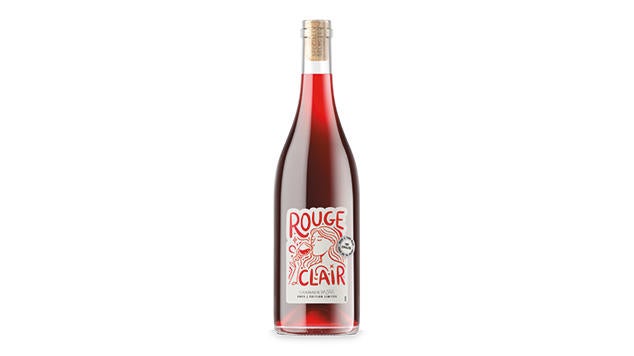
Aldi Specially Selected Rouge Clair, £8.99
The trend in a bottle, almost literally. A pale, juicy Cinsault from the Pays d’Oc with a thermochromic label that turns blue when it’s cold enough to pour. A gimmick, obviously, but a likeable one, and the wine underneath is all summer berries and cherry. Aldi’s first “chill-to-reveal” red, on shelves since April.
Available in-store
Co-op Al Fresco Garnacha, £9.25
Proof you needn’t spend much. A fruit-forward Navarra Grenache at just 11 per cent, built to be chilled; Decanter named it a clear winner for summer sipping. Sour cherry, ripe strawberry, no homework required.
Waitrose No 1 Beaujolais Villages, £14.75
The benchmark and the OG chillable red. Gamay grown on Beaujolais’ ancient granite soils, all bright red berry and low tannin. Serve it slightly chilled, with charcuterie and cheese. Spend a little more on a named cru like Fleurie or Brouilly and it’ll repay a gentler chill.
Morrisons The Best Dão, £10
A soft-boned Portuguese red led by Touriga Nacional, with enough freshness to take a light chill without falling apart. Decanter’s pick from the Morrisons range, and a steal for the money.
Sainsbury’s Discovery Collection Lambrusco, £4
The party option. Proper dry Lambrusco – fizzy, dark, served cold – is one of the great underrated pleasures, brilliant with charcuterie or a wet Tuesday. Technically a sparkling red. Best not to mention it; just pour.
Doom Juice Rouge, £22 at Top Cuvée
For the natural-wine curious. A cult Australian Shiraz-Grenache blend with a devoted following and Top Cuvée’s chillable-red bestseller. Bouncy, easy and made to be drunk cold, without ceremony.
Carvalho Martins ‘Pacto Palhete’, £14.90 at Tanners
The interesting one. A Palhete is an old Portuguese style that co-ferments red and white grapes, and this organic Douro example was built expressly to be chilled. Translucent, floral, faintly wild.
Aldi Specially Selected Pinot Noir, around £7
The grown-up end, and proof German Pinot is chilled red’s great-value secret. A Spätburgunder from the Pfalz: light to medium-bodied, soft and red-berried and lovely with 10 minutes in the fridge. If you spot it, Lidl’s Baden Spätburgunder does the same job.
Available in-store


