


This 12-year-old’s science-fair experiment turned a Lego robotics kit into a working Braille printer costing far less than commercial machines


At 12, Shubham Banerjee was looking for a way to make Braille printing more affordable. His search began after he saw a letter asking for help for blind people during his family’s Christmas celebrations at home. When he learnt that Braille printers could cost more than $2,000, he wondered whether the technology could be built more cheaply. For a school science fair, Banerjee turned to a Lego Mindstorms EV3 robotics kit and began experimenting. His aim was simple: to build a machine that could print Braille without the high price of commercial equipment. After several attempts, he produced a working prototype called Braigo.According to Shubham Banerjee’s article published by IEEE Computer Society, the project used Lego pieces, a printer, and software that he developed himself. Banerjee later shared the building instructions and software as open source, hoping others could make their own low-cost versions. What began as a middle-school experiment grew into an effort to make Braille printing more accessible to people who could not easily afford existing machines.
How a 12-year-old turned a Lego robot kit into a Braille printer
Banerjee’s idea took shape after he researched assistive technologies for people with visual impairments. He found that a basic Braille printer could cost more than $2,000. Without government or nonprofit support, that price could make access difficult overall. He decided to explore whether he could build a lower-cost machine from readily available parts. Using the Lego Mindstorms EV3 robotics kit, he designed and programmed a printer that could translate letters into Braille. His experiments involved building different models, testing them, and refining the design. The resulting prototype was called Braigo, combining Braille with Lego, and became the centre of his science-fair project.
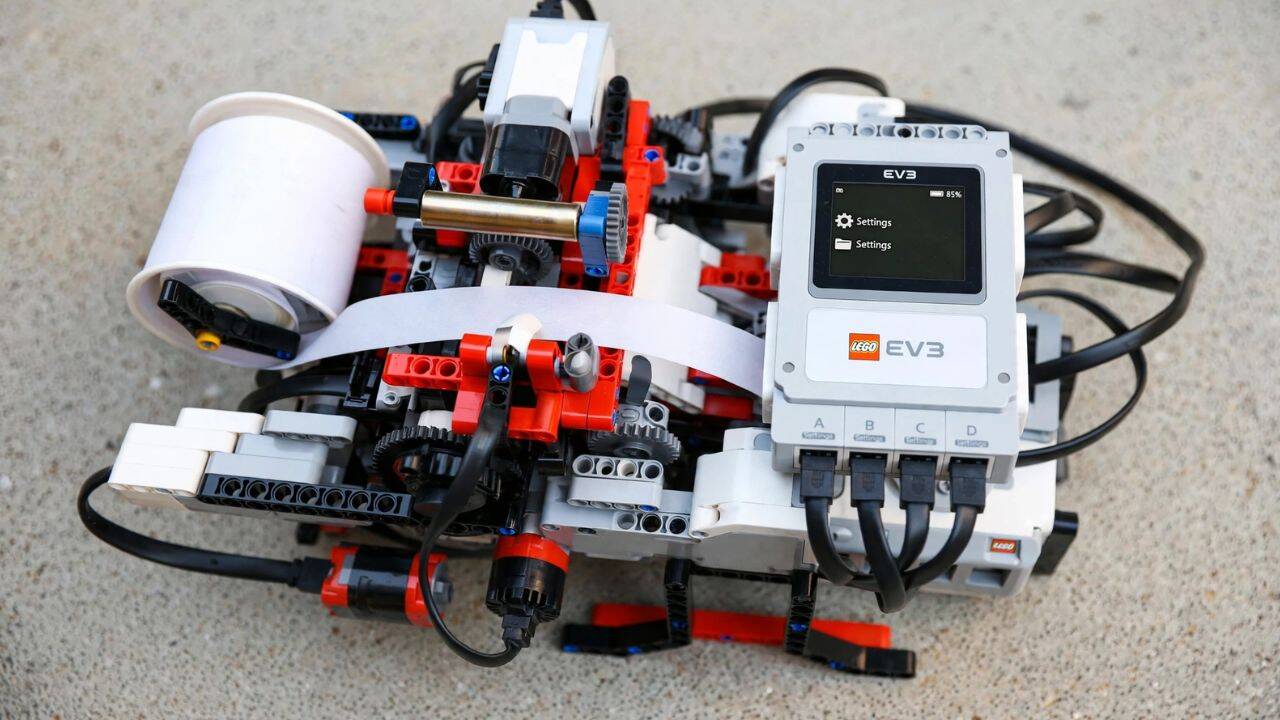
PC: IEEE
What did Banerjee discover while developing Braigo
The first version did not work perfectly. Banerjee said he built and tested seven models before finding one that could print six dots in the correct sequence according to Braille standards. He used a calculator paper roll to provide proof of concept, then called his prototype Braigo. Version 1.0 reached a working stage, and later he planned Braigo 2.0 costing less than $200. His work also involved writing software and making potential updates available through small software changes. The project reveals how a robotics kit could be adapted for a purpose beyond its usual classroom applications.
Why did Banerjee make Braigo’s instructions and software open source
Banerjee did not want the project to remain only a science-fair demonstration. He wrote that offering the building instructions and software as open source could provide a low-cost alternative for others. This supported his goal of making Braille printing accessible. Rather than keeping the design closed, he wanted people to have the information needed to build and adapt the machine themselves. His article describes how he worked on software updates and considered future versions of Braigo. He envisioned a consumer model that could provide a cheaper option than conventional embossers. It became an early attempt to connect low-cost hardware, open software, and social purpose.
From a school project to a plan for a cheaper Braille embosser
After creating the prototype, Banerjee continued developing the idea and described plans for Braigo 2.0. He wanted Braigo 2.0 to be a Braille embosser priced below $200. He shared building instructions and software online. His work attracted attention because it combined a children’s robotics platform with an accessibility device. He presented the project as part of his interest in creating innovative technologies for social good, with a strong focus on accessibility and affordability for users. What started with a letter asking for help for blind people had led to a working prototype and a continuing effort to lower the cost of Braille printing.


