


London volunteers turned a forgotten potato patch into a 55-litre wildlife pond; within a year, frogs, newts, snails and hoverflies had made it their home


Volunteers at the Hampstead Heath Energy Garden in London transformed a disused, potato-covered garden bed into a small pond. What began as a simple effort to create a wetland habitat gradually attracted several types of wildlife. The volunteers installed a 55-litre pond shell in the raised bed and used rainwater, garden rubble and pond plants to create the new habitat. Over the following months, the pond began to support mosquito larvae, snails and hoverflies before the group spotted its first frog, which they named Prince. According to Energy Garden (2025), the pond welcomed another visitor the following spring when volunteers spotted newts swimming beneath the water’s surface.
Volunteers turn unused garden bed into a small wildlife pond
The idea came from volunteers at the Hampstead Heath Energy Garden, who wanted to turn an unused part of the garden into a space that could support local wildlife. A raised bed had been left overrun with forgotten potatoes, allowing the group to create something new. They decided to turn it into a small pond and wetland habitat, hoping to attract frogs and other amphibians.The garden’s legacy frog statue was also named Prince. To create the pond, they bought a 55-litre pond shell online and combined it with rainwater from spring showers, rubble found in the garden and different pond plants
PC: Energy Garden
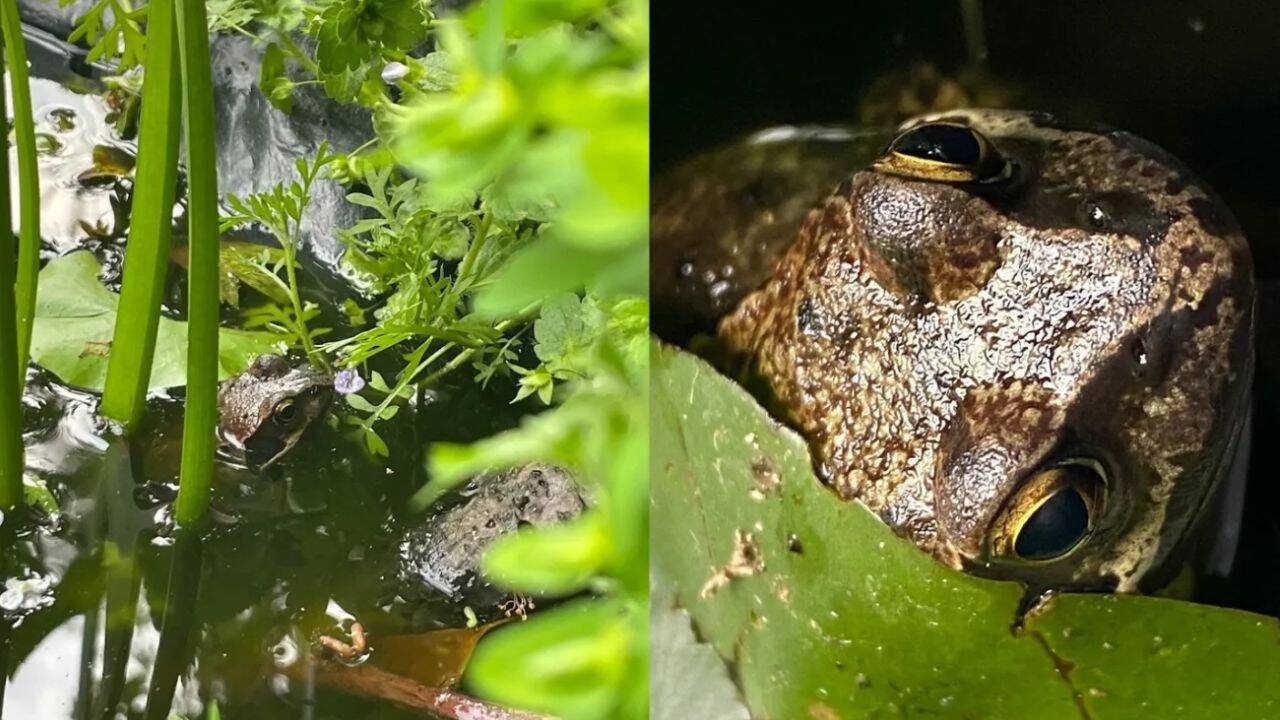
Frog named ‘Prince’ became the pond’s first major wildlife discovery
Spring showers filled the pond with rainwater, while the volunteers added rubble found in the garden and several pond plants to create a new habitat. In the early days, they found only mosquito larvae in the water. They occasionally used pond dipping to check the pond’s condition and look for other signs of life.Snails and hoverflies eventually appeared, followed by the group’s first frog sighting. The frog was spotted taking refuge beneath Common Arrowhead and beside Water Forget-me-not plants. The volunteers also named the frog Prince. The sighting came just a few months after the pond was created, marking an important moment for the volunteers as their small habitat began attracting wildlife.
How did the small pond become home to frogs and newts
The group described the sighting as a significant moment because the young pond had become a home for wildlife. In the following spring, volunteers watched for frogspawn but discovered newts instead. The animals appeared below the water’s surface, where their bodies could be seen moving beneath the pond.The volunteers missed their frog visitors but were fascinated by the new arrivals. The pond had therefore been used by several kinds of wildlife, including frogs, newts, hoverflies and pond snails. The newts became the focus of the pond’s first year.
Why volunteers believed small ponds mattered for London’s wildlife
Issy, a volunteer at Hampstead Heath Energy Garden, said, “Freshwater habitats like rivers are under threat in London – obviously we don’t have space for a huge lake, but even a tiny pond gives animals a stepping stone to help them on their way as they move between bigger water bodies. We’ve seen tons of species using our pond including frogs, newts, hoverflies and pond snails. It’s so fulfilling to build a new habitat and watch it fill up with life.”Commuters passing through the station and gardeners taking a break from weeding had paused beside it. The pond offered a moment to watch for life above and beneath the surface, and to connect with the garden beside the station.


