


Indoor tanning can make your skin decades older, new study finds


Sessions in tanning beds may only last five minutes – but researchers warn exposure to their ultraviolet radiation can literally age skin decades, as well as lead to deadly skin cancer.
While it’s long been understood that tanning bed users have a higher risk of skin cancer, a new study from collaborators at the University of California at San Francisco and Northwestern University found for the first time that young indoor tanners experience genetic changes that can lead to more mutations in their skin cells than people twice their age.
These mutations can lead to skin cancer, including rare and deadly melanoma.
“We found that tanning bed users in their 30s and 40s had even more mutations than people in the general population who were in their 70s and 80s,” said San Francisco’s Dr. Bishal Tandukar.
“In other words, the skin of tanning bed users appeared decades older at the genetic level.”

The wrong kind of UV rays
Examining the medical records of more than 32,000 dermatology patients and the skin samples of 26 donors, the researchers found that the tanning bed users had more skin mutations in their lower back, too.
While that area does not get as much damage from sunlight, tanning beds increase the area’s exposure to ultraviolet radiation.
Though ultraviolet rays provide some benefits to our health – they’re a source of vitamin D, for example – the light in tanning beds is not the same.
“The bulbs used in tanning beds emit mostly UVA light; however, your body needs UVB light to make vitamin D,” according to the American Academy of Dermatology Association.
Although UVB rays are thought to cause most skin cancers and are the main rays that cause sunburns, UVA rays can cause cell aging, wrinkles and some skin cancers, as well. UVA rays penetrate more deeply into the skin, the American Cancer Society says.
Melanoma risk triples
The study found that using tanning beds triples the risk for melanoma, the deadliest kind of skin cancer.
Certain subsections of people are most at risk, including young women who are the main patrons of the tanning industry.
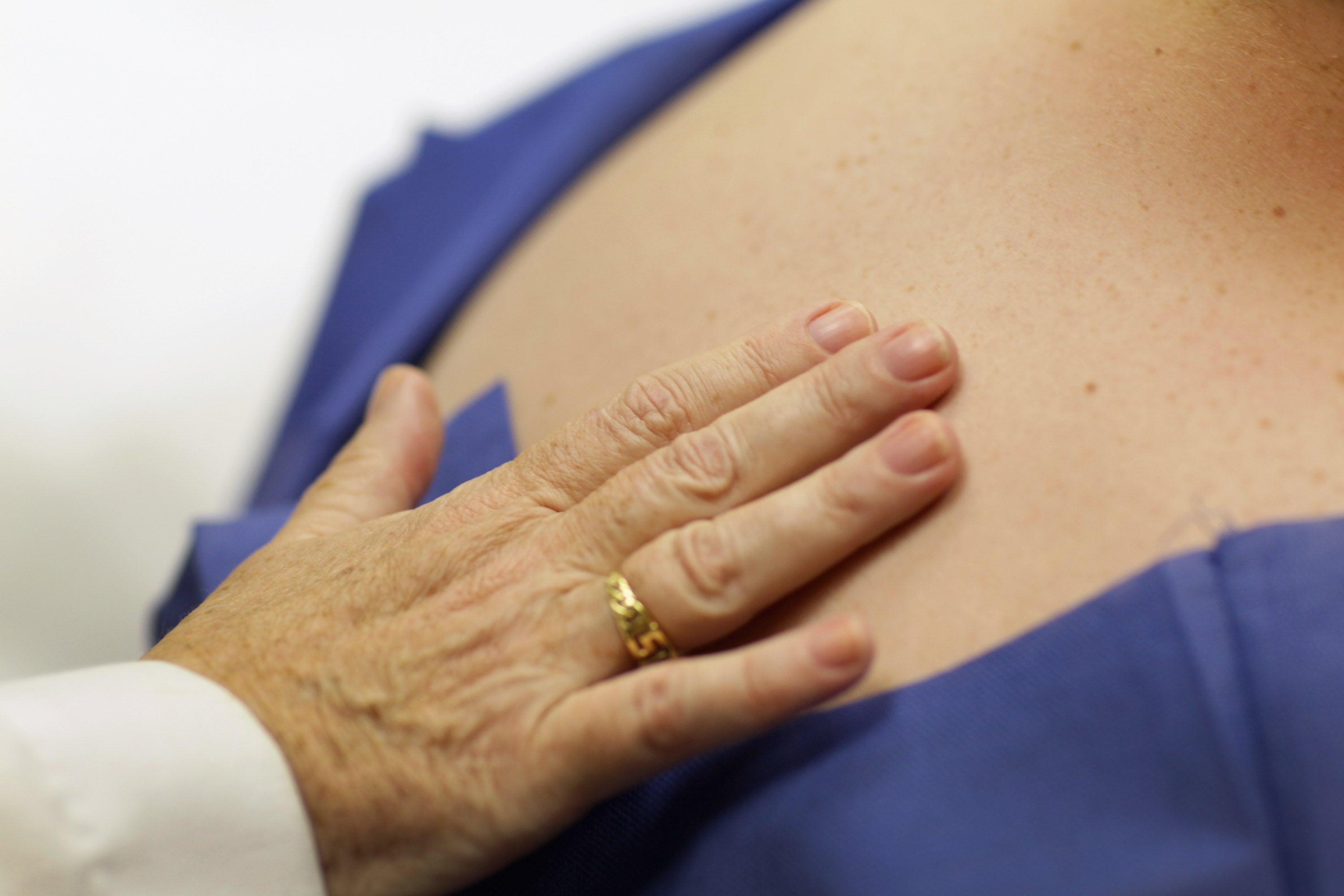
Skin cancer is the most common in people over the age of 50, people who have been sunburned or spend a lot of time in the sun, people with a family history of skin cancer and people with light-colored skin, hair and eyes.
The risk of melanoma is about 60 percent higher is a person starts indoor tanning before the age of 35 years old.
Common signs of melanoma include lesions with uneven edges, multiple shades of brown or black, a darker hue than other moles and changing in size, shape, color and elevation.
There are expected to be more than 8,400 deaths tied to melanoma in the U.S. this year.


