


Rewriting the cinematic map | The Express Tribune


PUBLISHED
March 08, 2026
The cinema of a region is never merely a sequence of images, it is a choreography of belonging. To speak of South Asia on screen is to invoke not a stable geography but a vibrating field of memory, partition, aspiration and loss. The image flickers between village and megacity, shrine and multiplex, battlefield and bridal chamber. What appears as spectacle – namely the hero’s entrance, the heroine’s dance, the villain’s fall – conceals a far more intricate labour, which is the continual remaking of community under the pressure of language, religion, class, gender and the global market. The screen does not simply reflect the world; it convenes it.
For decades, the study of the subcontinent’s moving images has orbited a single sun. The name of that sun is familiar, exportable, easily hashtagged. Yet the cinematic life of the region has always exceeded that gravitational pull. Languages proliferate; borders fray; diasporas hum with mediated nostalgia; streaming platforms unsettle the censor’s scissors; dancers splice tradition into algorithmic virality. If there is a single thesis animating contemporary scholarship, it is that the centre no longer holds – or rather that it never quite did. The map of South Asian cinema resembles less a pyramid than a delta, with distributaries that split, converge, and irrigate fields far from the presumed source.
In this context, the appearance of a comprehensive volume devoted to the cinemas of the region feels less like an academic milestone than a cartographic event. It asks what would follow if we took the plural seriously. It asks what might emerge if we read the screen not as a national emblem but as a site of negotiation between regions, industries and imaginations. It asks what would happen if the margins were allowed to speak without being translated into the idiom of the centre. The answers offered are not uniform. They move between war and melodrama, soft-porn and devotional dance, diasporic longing and digital dissent. The result is a portrait of South Asian cinema as an arena in which sovereignty, intimacy and spectacle are endlessly contested.
A constellation against the centre
The substantial volume Routledge Handbook of South Asian Cinemas, edited by Ajay Gehlawat and Jayson Beaster-Jones and published by Routledge in 2026, extends to more than 400 pages and brings together 26 contributors. It is organised into two principal sections titled “Regions” and “Themes,” and it opens with an introduction by the editors called “Redefining ‘South Asian cinema’.”
The ambition is unmistakable. Rather than treating the subcontinent’s film cultures as satellites orbiting a single Hindi-language nucleus, the editors propose a networked vision. The chapters proceed from Bangladesh to Bhutan, from the multiplicity of Indian-language cinemas to Nepal, Pakistan and Sri Lanka, before turning to cross-cutting concerns that include streaming, caste, diaspora, dance, masculinity and sexuality. The architecture itself enacts a displacement, since it places locality before thematic abstraction and specificity before generalisation.
The contributors, drawn from diverse institutional and intellectual locations, include Elora Halim Chowdhury on Bangladeshi war cinema; Ivan Stacy on Bhutanese film; Meheli Sen on Bengali spectrality; Kathryn Hardy on Bhojpuri citation; Lucia Krämer on the era commonly referred to as Bollywood; MK Raghavendra on Kannada geopolitics; Hrishikesh Ingle on Marathi historicity; Harjant S Gill on Punjabi masculinity; Selvaraj Velayutham and Vijay Devadas on Tamil blockbusters described as “post-regional”; Dikshya Karki on Nepali authenticity; Syeda Momina Masood and Esha Niyogi De on Pakistani genres; Zebunnisa Hamid on New Pakistani Cinema; and Ian Conrich on Sri Lankan post-war representation. The thematic section brings together Nandana Bose on OTT platforms, Šarūnas Paunksnis on streaming and majoritarian politics, Runa Chakraborty Paunksnis on caste visibility, Anjali Ram on diaspora, Anaar Desai-Stephens on virality, Pallabi Chakravorty on remix dance, Rumya S. Putcha on Kuchipudi, Anna Stirr on Nepali music videos, Namrata Rele Sathe on the romantic comedy heroine, Baidurya Chakrabarti on sovereign masculinity, and Darshana Sreedhar Mini on Malayalam soft-porn.
To list these names and titles is to glimpse the scope of the enterprise. Yet the true wager of the volume lies not in its comprehensiveness but in its refusal of hierarchy. The editors explicitly challenge the assumption that one language, one city, one industry can stand in for the region. The effect is to unsettle a habitual mode of thought, encouraging us to see South Asian cinema not as shorthand for a globally branded commodity but as a dense web of interacting practices.
War, memory, and the gendered nation
The opening regional chapters immediately reveal the significant stakes involved in this reorientation. Elora Halim Chowdhury’s study of Bangladeshi Muktijuddho cinema traces the memorialisation of the 1971 Liberation War. Here the camera is imagined both as a weapon and a witness, an instrument in the struggle for recognition. Yet Chowdhury refuses a triumphalist narrative. She demonstrates how women filmmakers complicate the masculine mythology of nationhood by foregrounding sexual violence, ethical ambiguity and the fragility of reconciliation.
The figure of the Birangona, the war heroine subjected to rape, becomes a site of contradiction. Celebrated in rhetoric yet marginalised in representation, she exposes the tension between nationalist pride and patriarchal shame. In this reading, cinema does not simply archive trauma; it stages a contest over who may speak for the nation. The war film becomes a laboratory in which the ethics of memory are tested.
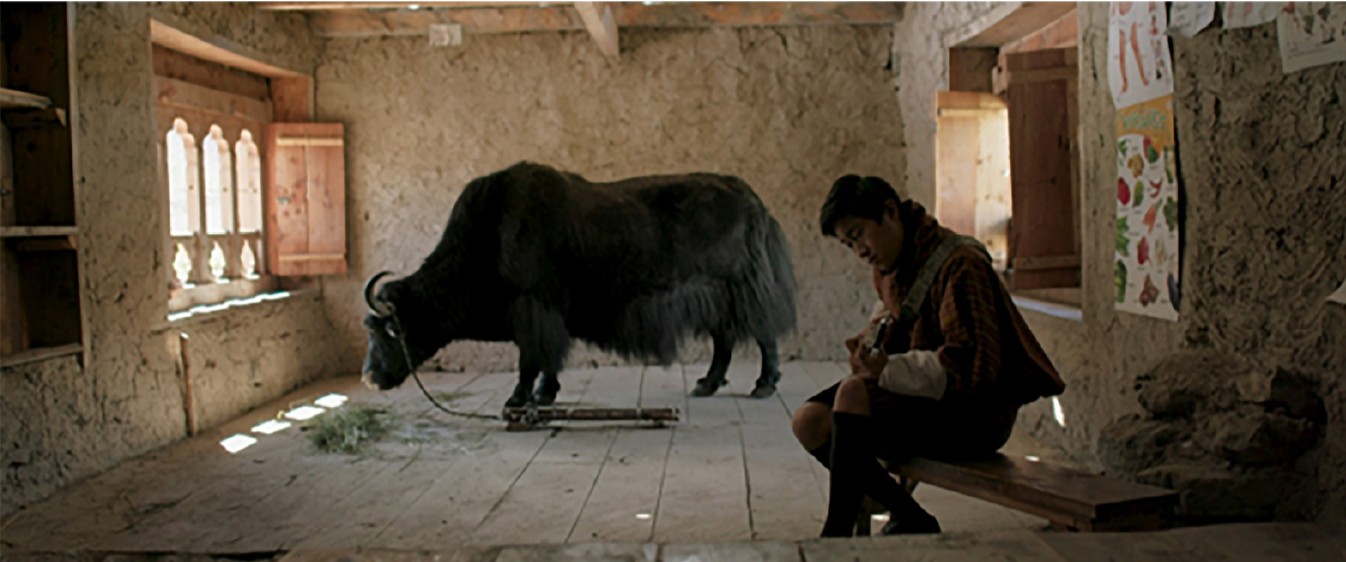
A similar negotiation of identity unfolds in Ivan Stacy’s account of contemporary Bhutanese cinema. Emerging within a Buddhist monarchy that navigates global modernity, Bhutan’s films oscillate between spiritual introspection and social critique. Stacy discerns genres oriented toward life and death, tradition and modernity, and shifting gender roles. The smallness of the industry does not preclude ambition. On the contrary, its self-conscious distance from both Hollywood and Hindi commercial cinema enables a distinctive aesthetic that is contemplative, locally inflected, and alert to the pressures of tourism and development.
Across these chapters, a recurring motif becomes visible, namely the nation as a fragile construction sustained by ritual and image yet haunted by its exclusions. Cinema becomes the space in which those exclusions flicker into view.

Regions within the region
The section on India, appropriately pluralised, dismantles the fiction of a monolithic Indian cinema. Meheli Sen’s meditation on Bengali ghostliness reads female spectral figures as embodiments of dispossession, that is to say as women whose jewellery, bodies and desires index shifting economies of wealth and conjugality. The supernatural becomes a language for social transition and an allegory of modernity’s uneven gains.
Kathryn Hardy’s exploration of Bhojpuri citation in a Hindi-language film about a small-town singer demonstrates how linguistic hierarchies are reproduced and contested. The distinction between Hindi and Bhojpuri is not merely grammatical; it encodes class, taste and moral panic. To cite Bhojpuri is to flirt with the vulgar, whereas to disavow it is to claim refinement. Cinema thus participates in the policing of language as cultural capital.
Lucia Krämer’s chapter on the era commonly labelled Bollywood situates the 1990s and beyond within transformations of economy, technology and diaspora. The term itself, once deployed ironically, has become a brand. Krämer charts its aesthetic signatures, including gloss, transnational romance and choreographed excess, while also noting their mutation in the twenty-first century. What emerges is not a stable genre but a moving configuration that responds to global flows and domestic politics.
M.K. Raghavendra’s survey of Kannada cinema links linguistic reorganisation of states to narrative conventions. Hrishikesh Ingle’s history of Marathi film underscores the interplay between vernacular theatre and cinematic space. Harjant S. Gill’s analysis of Punjabi action films identifies moments of queer interruption within hypermasculine agrarian narratives, suggesting that even the most patriarchal genres contain fissures. Selvaraj Velayutham and Vijay Devadas describe Tamil blockbusters in terms of the “post-regional”, referring to films that seek pan-Indian and global markets while retaining regional textures.
Collectively, these essays erode the assumption that the regional is synonymous with the marginal. Instead, they reveal a constant negotiation between locality and scale. The region appears not as a periphery but as a node within a network.
Smaller cinemas, larger questions
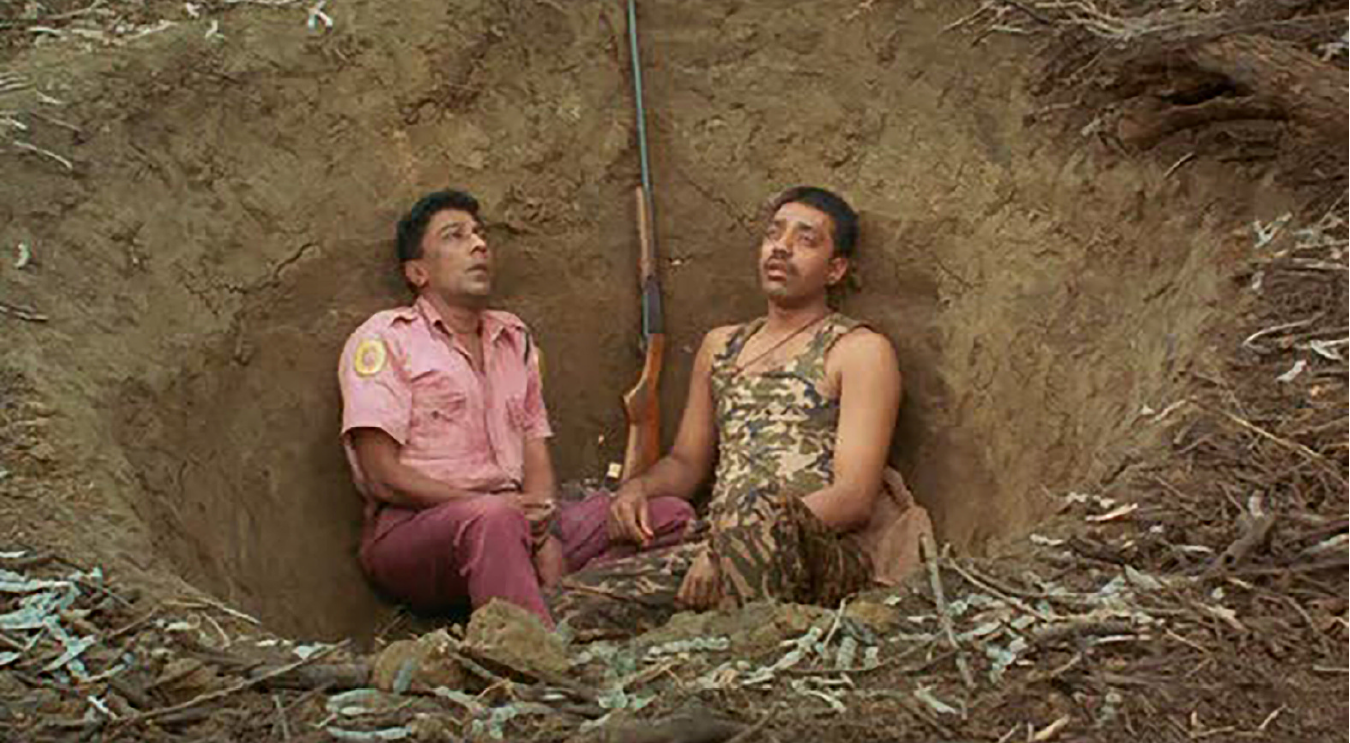
The chapters on Nepal, Pakistan and Sri Lanka further complicate the picture. Dikshya Karki’s discussion of maulikta, understood as authenticity, in Nepali cinema captures a desire to articulate a national idiom distinct from both Hindi and Western models. Authenticity in this context functions less as an essence than as a strategy, namely as a way of accruing value in festival circuits and domestic discourse.
In Pakistan, Syeda Momina Masood’s analysis of gandasa cinema, named after the sickle-axe weapon wielded by its heroes, portrays a low-budget Punjabi genre within the aftermath of secession and military rule. The figure of Sultan Rahi, who straddles horror and action, becomes emblematic of working-class appeal and aesthetic excess. Esha Niyogi De and Zebunnisa Hamid trace the evolution of women-centred narratives and the emergence of multiplex-era New Pakistani Cinema, in which gender, urbanity and global media converge.
Ian Conrich’s reading of Sinhala anti-war films in Sri Lanka demonstrates how cinematic representation of civil conflict invites both national censure and international acclaim. Accusations of terrorist sympathy coexist with festival recognition. The screen becomes a battleground for legitimacy.
Taken together, these chapters indicate that so-called small cinemas often confront the largest questions, including sovereignty, memory, authenticity and the price of dissent.

Streaming, virality, and the platformed public
If the first half of the volume foregrounds geography, the second turns to circulation. Nandana Bose’s history of OTT platforms in India follows the rise of streaming from early services through pandemic-era acceleration to corporate consolidation. Initially celebrated as a space of creative freedom beyond theatrical censorship, streaming now finds itself entangled in new regulatory frameworks. The promise of liberation is moderated by market saturation and political scrutiny.
Šarūnas Paunksnis examines a stalled Netflix project in order to situate streaming within majoritarian nationalism. The controversy surrounding a dystopian narrative demonstrates that digital platforms are embedded in ideological struggles rather than operating as neutral conduits. Runa Chakraborty Paunksnis analyses Dalit representation in films and subscription video on demand services, pointing to a shift in visibility as characters once relegated to the background begin to occupy the frame more centrally and thereby challenge entrenched hierarchies.
Anjali Ram’s ethnographic study of diaspora audiences in the United States illuminates the affective labour of viewing. Films are woven into domestic rituals, self-fashioning and intergenerational negotiation rather than being passively consumed. Anaar Desai-Stephens analyses the viral hook step from a recent blockbuster song and examines the choreography of shareability. The dance movement, crafted for replication, becomes a micro-politics of participation within a polarised media environment.
In these accounts, the cinema screen gives way to the smartphone. Spectators transform into users, songs circulate as memes, dissent and desire move through algorithmic circuits. The public sphere is reconfigured as a feed.
Bodies in motion: dance, desire, sovereignty
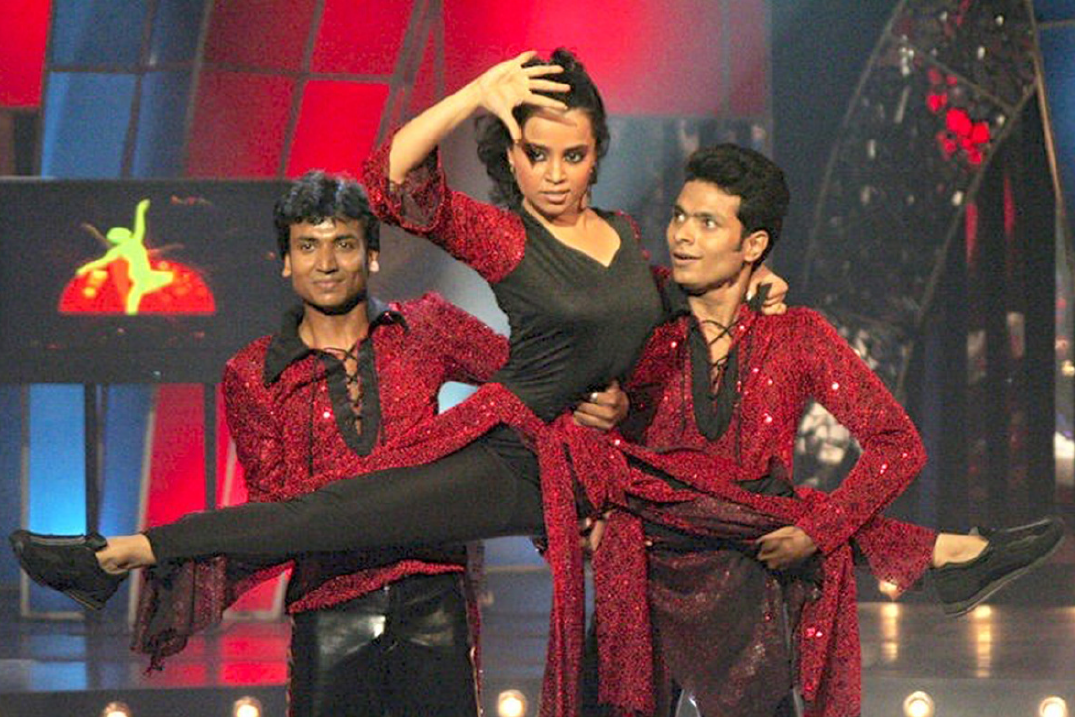
The final cluster of essays returns to the body. Pallabi Chakravorty explores reality television and item numbers by theorising remix aesthetics as a negotiation between tradition and aspiration. Young women’s performances on televised stages articulate new forms of cosmopolitan femininity while remaining embedded in market logic.
Rumya S. Putcha examines Kuchipudi dance in Telugu cinema and demonstrates how classical forms were codified as emblems of linguistic identity. Anna Stirr traces the history of Nepali music videos and charts the visualisation of songs across changing technologies. In each instance, movement appears both as heritage and as commodity.
Namrata Rele Sathe’s close readings of recent romantic comedies argue that the contemporary feminist heroine is intertwined with neoliberal subjectivity, since freedom is framed as choice and choice as consumption. Baidurya Chakrabarti develops the concept of sovereign masculinity and traces a lineage from mid-century brooding heroes to hyper-violent contemporary protagonists whose invulnerability verges on caricature. Darshana Sreedhar Mini examines Malayalam soft-porn and interrogates discourses of obscenity as well as the labour of the so-called sex-siren, insisting on the critical importance of studying low-budget and marginalised genres.
In this way, the politics of the region are inscribed on the body, whether in the dance step, the muscular torso or the eroticised glance. Cinema becomes an anatomy of power.
A network, not a family tree
What does this handbook ultimately achieve? Its most significant strength lies in its insistence that South Asian cinema names not a synonym but a question. By placing Bangladesh’s war memories alongside Bhutan’s Buddhist modernity, Punjabi action beside Nepali authenticity, and Tamil blockbusters next to Sri Lankan anti-war films, it constructs a mosaic rather than a hierarchy.
The network model proposed by the editors proves productive. Industries interact; aesthetics migrate; languages cite and disavow one another. The once dominant centre appears less like a sun and more like a particularly bright node within a crowded constellation. At the same time, the volume avoids romanticising plurality, since it remains attentive to majoritarian politics, caste oppression, gendered violence and the disciplining effects of capital.
A lingering tension concerns scale. A handbook aspires to coverage, and coverage can risk flattening. Yet the essays here largely resist that tendency by offering textured case studies that gesture outward. The effect is cumulative rather than encyclopaedic.
In an era in which the image travels faster than the passport, to rethink the region through cinema is to rethink the region itself. The Routledge Handbook of South Asian Cinemas does not close the question of what South Asian cinema is; it multiplies it. In doing so, it invites scholars and viewers alike to attend to the flicker at the edges of the frame, where new forms of belonging are rehearsed and contested.
Routledge Handbook of South Asian Cinemas
Edited by Ajay Gehlawat and Jayson Beaster-Jones
Published by Routledge, 2026
The writer is a Pakistan-born and Austria-based poet in Urdu and English. He teaches South Asian literature and culture at Vienna University
All facts and information are the sole responsibility of the writer


