


The real reason Hamnet is making you cry, according to psychologists


Fancy a good cry – and to feel emotionally detoxed? Want a release of oxytocin? To feel lighter? Clearer? Need to breathe again? Just go and see Hamnet, the new screen adaptation of Maggie O’Farrell’s 2020 novel, starring Paul Mescal as William Shakespeare and Jessie Buckley in her Golden Globe-winning role as his wife, Agnes – and prepare for a mass sob-fest with some popcorn.
Chloé Zhao’s award-winning film Hamnet, adapted from the novel of the same name, which imagines the story surrounding the death of Shakespeare’s only son, has become notorious not just for its outstanding performances, but for the tsunami of sobbing it is triggering in cinemas across the globe.
“Take tissues and prepare to have your heart ripped out,” is a typical comment among the thousands posted since the film came out at the weekend. “It’s worthy of a whole box of Kleenex,” one friend wrote. Another said: “It destroyed me. I had to sit in silence until the last person left the cinema to recover.”
So what is going on? With Hamnet tipped for a full sweep at the Oscars, is this a release in every sense of the word? It certainly feels as though people are queuing to see it not just for Buckley’s astonishing performance, but because they are actively anticipating a monumental outpouring of emotion too.
The promise of being reduced to a blubbering mess, tears streaming down your face, has become part of the box-office thrill. Hamnet is increasingly being used as a vehicle through which people can connect with feelings that might otherwise take years to access in talking therapy. In a world full of anxiety over what we cannot control, and grief for what we feel we are losing, are we now using the film as a collective bonding exercise in catharsis? Has Hamnet become an epic communal therapy session?
Repressing emotions has long been associated with illness and mental health issues – so what better place to let it all go than your local Vue?
Hamnet is heavy stuff. For any parent, the death of a child is the ultimate nightmare scenario, and a potential trigger for a host of deep-seated fears and emotions. The raw depths of pain expressed over Hamnet’s death feel like a brutal, unforgiving punch to the soul. Yet bearing witness to such catastrophic loss also gives us permission to cry, and it feels as though many cinema-goers are going in anticipation of the epic meltdown to come.
“Crying can have an emotional cleansing effect, releasing endorphins and oxytocin and enabling a kind of emotional reset of the brain,” says psychotherapist Annette Byford, who admits she felt strangely unmoved by Hamnet, finding it “emotionally manipulative”. However, she was acutely aware of the fact that everyone around her in the cinema was in floods of tears.
“It was clear to me that people came into the film expecting to cry – and that the film merely provided a vessel for projecting already pre-existing feelings into it,” says Byford.
“Those feelings may have a lot to do with current world events,” she adds. “The world has become an ugly and irrational place over which we have no control – much like the characters in Hamnet have no control over the plague.”
It is this pool of feelings that she believes the film is tapping into so effectively. “That is why we seek these experiences in films and music. In Hamnet’s case, the audience are actively coming for it.”
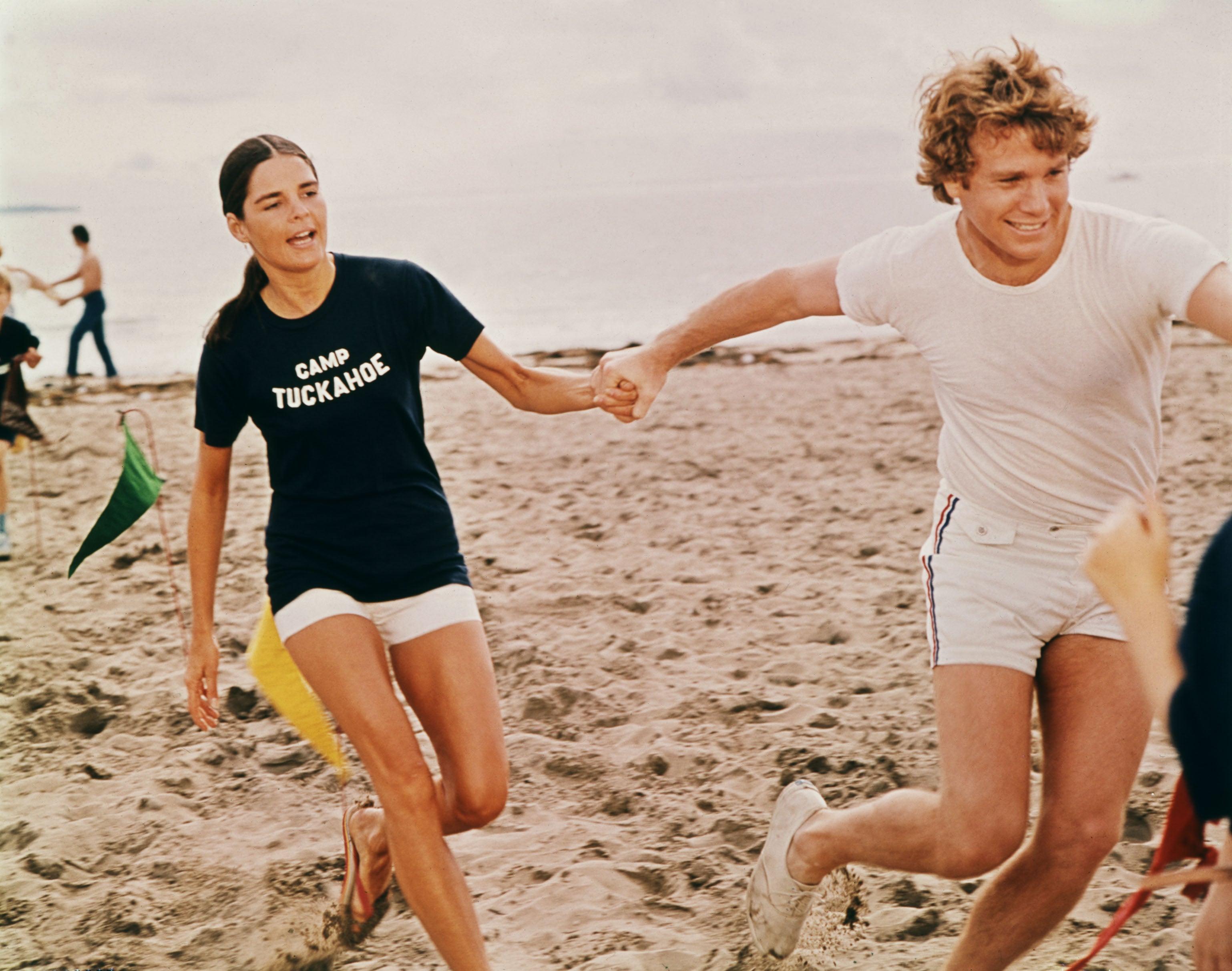
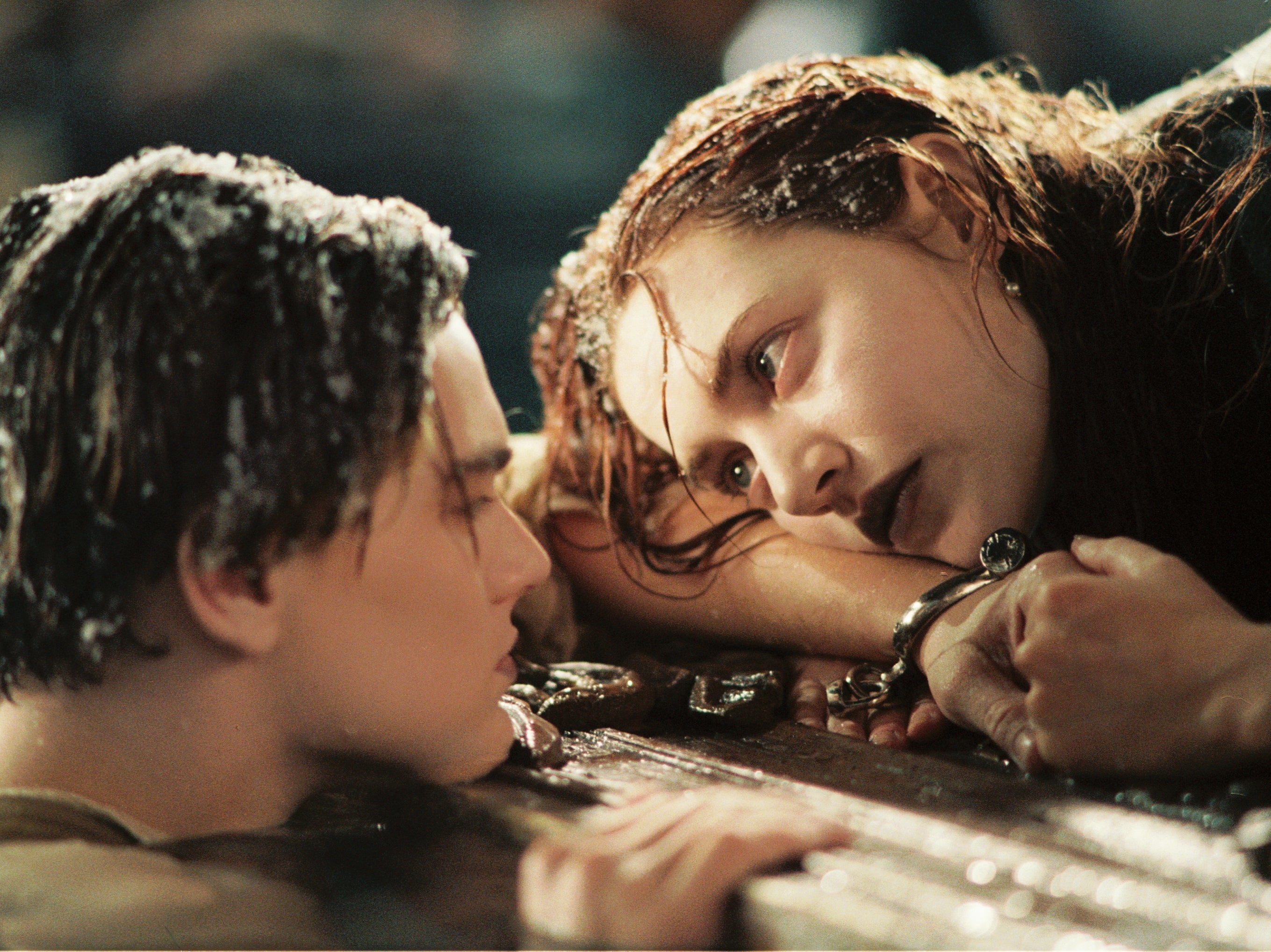
Films in the weepie genre often involve powerful stories of love, loss, survival or deep human connection. Epic romances such as Titanic, with its devastating ending in which Leonardo DiCaprio’s Jack sinks into the icy water so that Rose (Kate Winslet) can survive, are designed to break even the most stoic viewer. Love Story, the 1970s tragedy starring Ali MacGraw and Ryan O’Neal as the blissfully happy couple Jenny and Oliver, who then discover she has terminal leukaemia, remains a must-watch for a good cry.
Other classic blub-athons include It’s a Wonderful Life, Schindler’s List, Hachi: A Dog’s Tale, The Green Mile and Brokeback Mountain, while Aftersun – a devastating portrait of depression and a father-daughter relationship – proved the big tearjerker for men in 2022.
Recently, I unexpectedly broke down in tears while watching 1982’s E.T. the Extra-Terrestrial, when E.T. goes home and leaves the boy behind. I knew it wasn’t really E.T. I was saying goodbye to, but my father, who died in 2024. Another friend returns to Beaches whenever she needs a proper cry, and I defy anyone to sit through Terms of Endearment, starring Shirley MacLaine and Debra Winger, without being moved by its raw portrayal of illness, motherhood and grief.
Crying, of course, makes us human. It allows us to emotionally defrost and to feel closer to others through vulnerability. Yet it can feel awkward when it happens out of context. Rachel Reeves crying during Prime Minister’s Questions last year sparked debate about whether it is appropriate to cry at work. Perhaps the chancellor of the Exchequer should have gone to see a big weepie to get the stress out of her system, rather than choking back tears on the front bench on live television.
“There can be something – call it communal catharsis – about jointly sharing pain and loss in a group setting like Hamnet,” says psychotherapist Sarah Aldridge.
People came into the film expecting to cry… and those feelings may have a lot to do with current world events
Annette Byford, psychotherapist
“It can help to process some unimaginable feelings (in this case, the loss of a child) that might otherwise be hard to express, as well as create a containing and healing space to be in touch with the emotions. As our lives can be increasingly individualistic, that shared emotional experience can be highly restorative and healing,” she says.
“Crying is a huge release, and most of us feel better after a cry,” she adds. “It can be so hard to be vulnerable, but crying over a film can help us get in touch with something.”
However, Dr Ad Vingerhoets, professor of emotions and wellbeing at Tilburg University in the Netherlands, and author of 2013’s Why Only Humans Weep: Unravelling the Mysteries of Tears and many research studies about crying, disagrees.
His 2008 study, “When is Crying Cathartic: An International Study”, found that only 50 per cent of over 5,000 respondents in 37 countries felt better after crying, while 40 per cent felt no difference, and 10 per cent felt worse.
“We identified three important factors that determined the reactions to crying, and it appeared that mood improvement was especially found in cases when subjects are in good mental shape,” he explains. “In other words, people who are depressed or suffer from burnout hardly, if ever, benefit from crying, while they tend to cry more.”
His research also found that the benefits of crying were linked to how bystanders reacted to it.
“If they are offered comfort and support, a person will feel better after crying, but if bystanders start ridiculing them, they feel ashamed, and it’s unlikely they will feel any positive effects of crying.”
Research carried out by the University of Queensland and led by Leah Sharman of the school of psychology in 2019, suggests that crying may help people “self-soothe”, while also “regulating their heart rate”, but in Vingerhoets’ opinion, the idea that crying in a film makes us feel better is down to us returning to our usual baseline after feeling sad. This is, he says, “misinterpreted as mood improvement”.

But the idea that crying is helpful persists. A new website, Cry Once a Week, launched in October, has 25 moving clips selected from films designed to make you cry. Its sole aim is to help people relieve stress by releasing their emotions – as well as to normalise crying, especially for men.
I fully expect Hamnet to be included in its future portfolio of clips. The truth is, Hamnet might be a great film – but the weeping is even better. Like with Princess Diana’s funeral, the outpouring of grief people are experiencing has become a collective mourning that is validating our own pain. It gives us all permission to let it all out. Going to the cinema and having a sob feels like giving yourself a big hug, and when you consider how 2026 has started, that is needed now more than ever.


