


This Week in History: From poisoned Russians to life on Mars?


It is a turbulent week for Russia, from stark warnings that “poisonous” pollution is cutting down life expectancy, to a UK inquiry decades later linking Vladimir Putin directly to the infamous poisoning of Alexander Litvinenko. Meanwhile, the Soviet-era city of Baku sees tens of thousands gather in defiance of a Soviet military crackdown that would later become known as Black January. In Washington, this week proves transitional as George H W Bush is sworn in as US president, promising a new political era and distancing himself from the “selfish” excesses of the Reagan era. Beyond our terrestrial plane, attention turns skywards as new images from Mars reveal frozen water on the planet’s surface, raising fresh questions about its past – a significant step in understanding whether the Red Planet might once have supported life. All are charted in The Independent.
21 January 1989 – George H W Bush sworn in as US president
George H W Bush is sworn in as the 41st president of the United States, closing the Reagan era as he takes office in Washington DC. In his inaugural address, Bush speaks of “a new breeze blowing” and a “world reborn”, striking a more restrained note as he signals a shift away from what he describes as the “selfish” excesses of the previous decade, telling Americans that “we are not the sum of our possessions”.

23 January 1990 – Baku defies Moscow after Soviet crackdown
Tens of thousands gather in the capital of Azerbaijan, Baku, to mourn those killed in a Soviet military crackdown, openly defying a decree from Moscow as funerals are held for victims hailed locally as martyrs. The Independent reports that the Kremlin hints at a softer approach in the face of mounting resistance, as nationalist sentiment in Azerbaijan surges during the final months of Soviet rule. Moscow’s crackdown would come to be known as Black January.
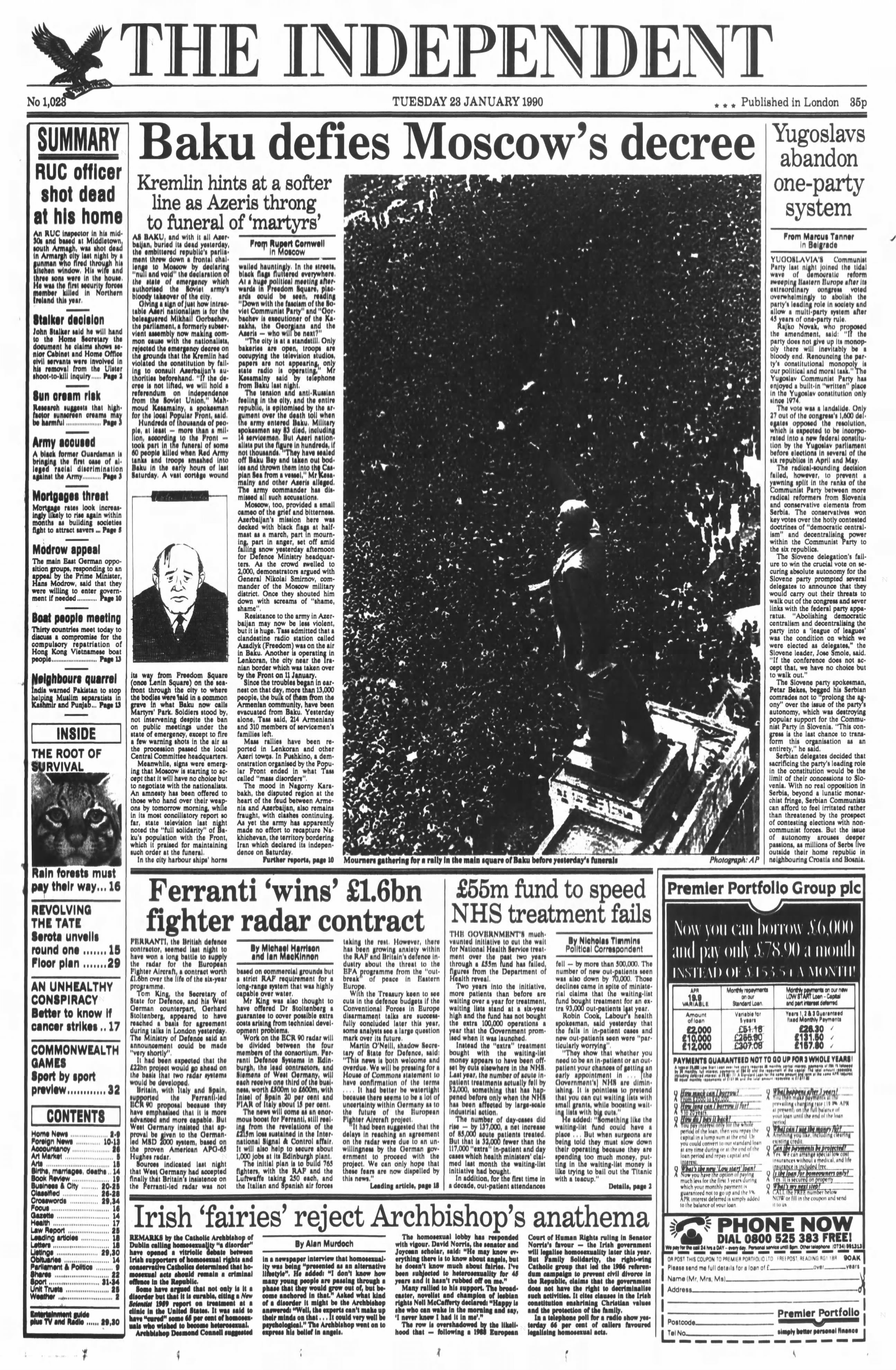
24 January 1992 – Pollution blamed for Russia’s falling life expectancy
Severe industrial pollution across Russia is linked to a dramatic fall in life expectancy, with some estimates putting average lifespan as low as 44 years. The Independent reports that decades of environmental neglect under Soviet rule are taking a heavy toll on public health, as experts admit “we are near catastrophe” in the early years of the post-Soviet transition.
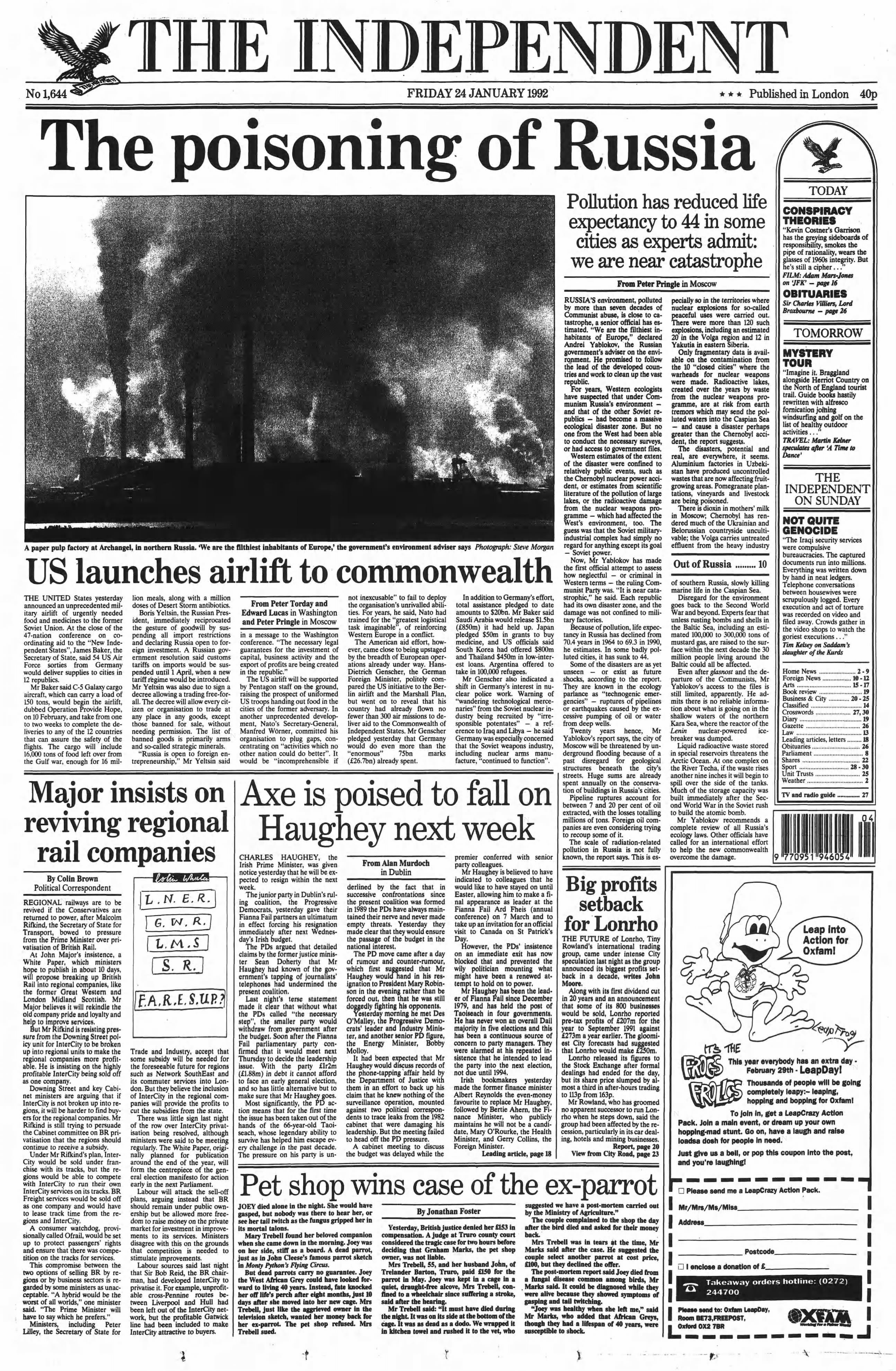
25 January 1993 – Croats and Serbs edge closer to all-out war
A Croatian offensive against Serb-held positions unfolds amid tank battles for a third consecutive day near key sites, despite a United Nations ceasefire agreed the previous year. Geneva peace talks are suspended and heavy weapons are seized from UN control, prompting warnings that the spectre of all-out war between Serbs and Croats is drawing closer. The fighting marks a sharp escalation in the conflict, which continues through 1993 as ceasefires repeatedly break down and large-scale violence persists.
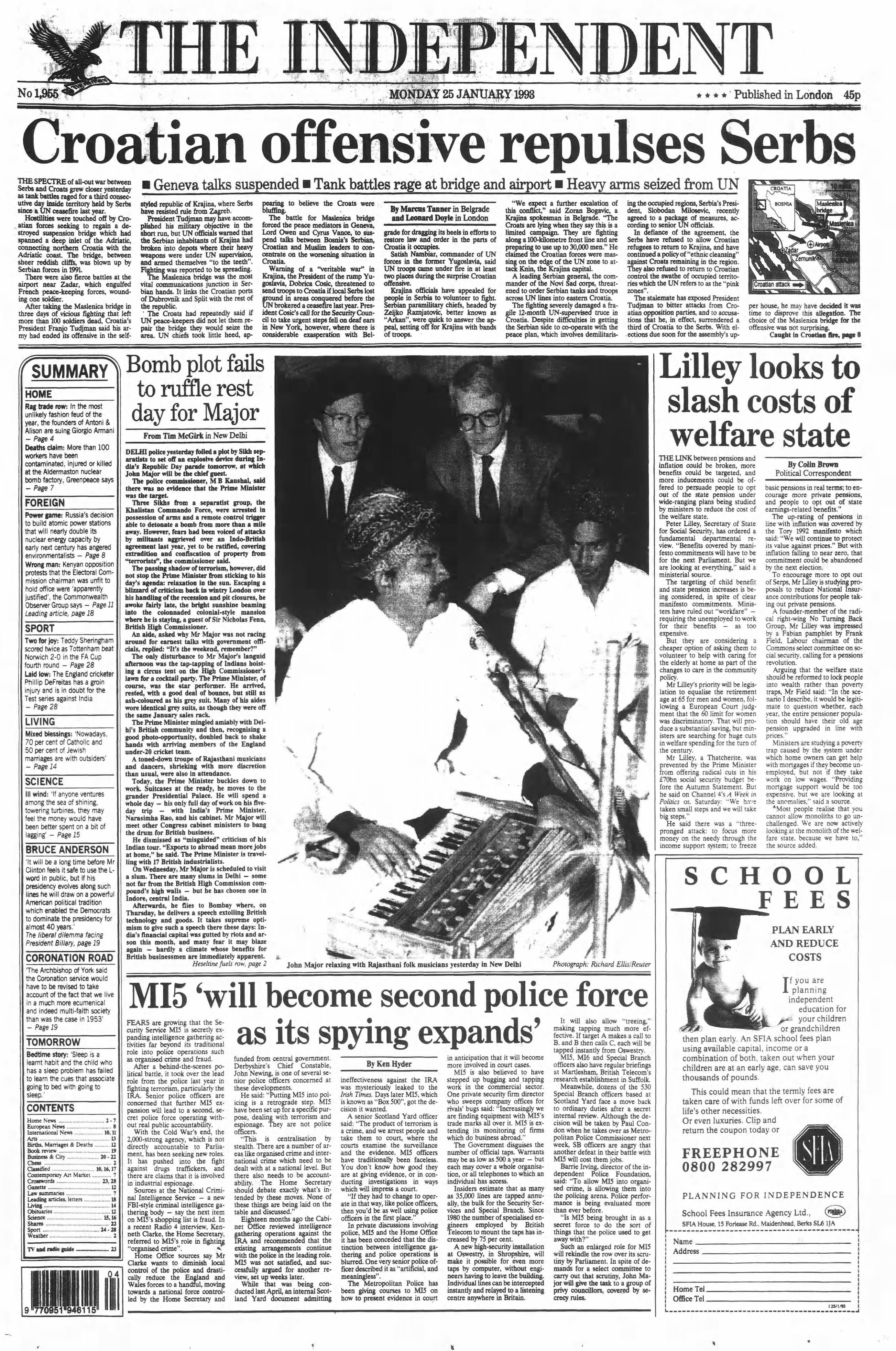
23 January 1997 – Taxpayers fund new royal yacht
Taxpayers are set to fund a new royal yacht at an estimated cost of £60m, as the government commits to replacing the ageing Britannia. The Independent highlights the scale of the expenditure by comparing it with alternative public spending, noting the sum could instead fund dozens of new primary schools or a hospital, prompting debate over priorities and public value.
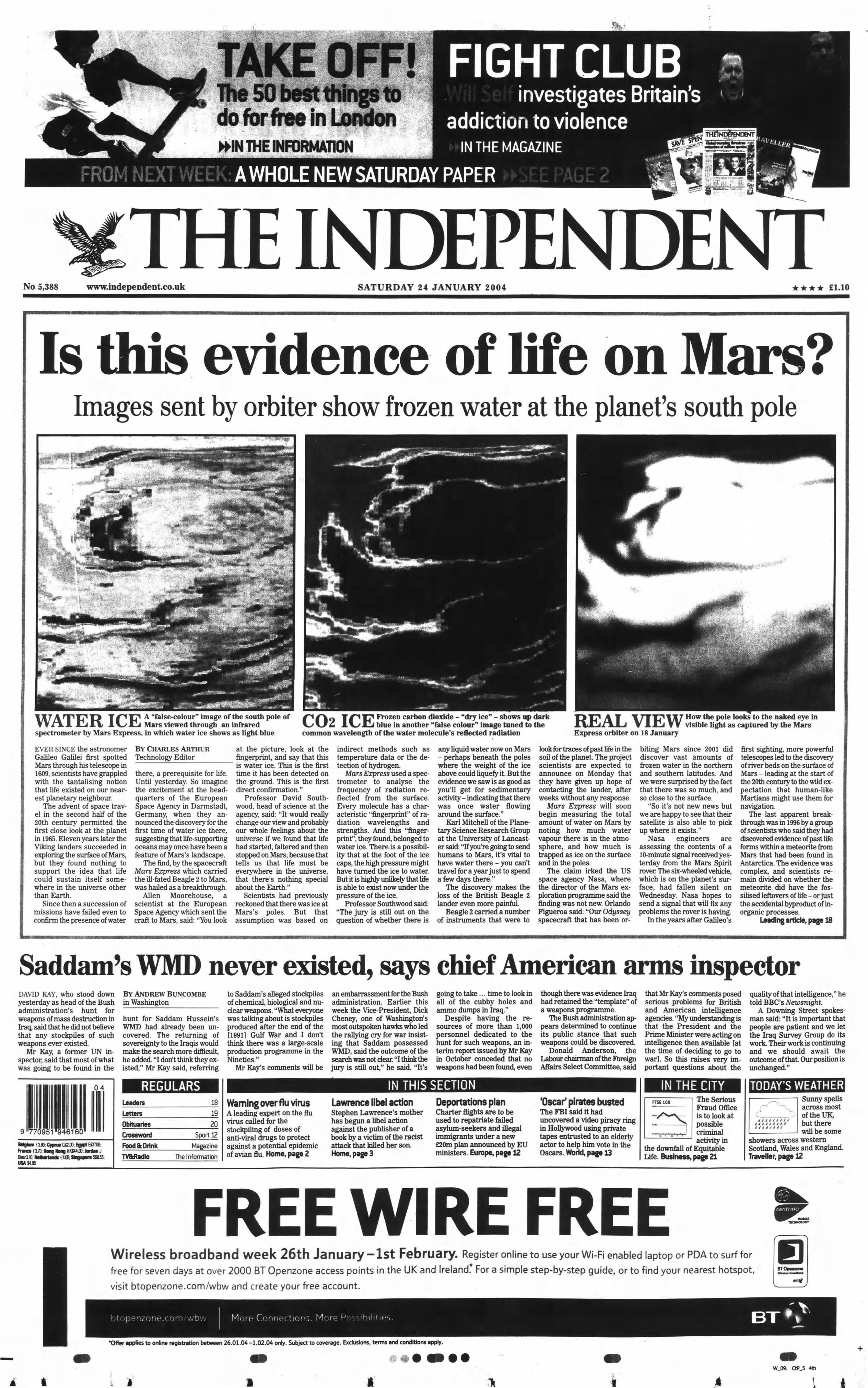
24 January 2004 – New images reveal frozen water on Mars
Images sent back by a Mars orbiter reveal frozen water on the planet’s surface, prompting fresh questions about whether conditions for life may once have existed there. Scientists stress that while the discovery strengthens evidence of Mars’s watery past, it does not confirm life, marking instead a significant step in understanding the planet’s history and potential habitability.
20 January 2006 – A message from Bin Laden
An audio recording believed to be from Osama bin Laden is released, marking his first message in more than a year and renewing questions about his whereabouts. US intelligence officials say the voice is almost certainly his, as the al-Qaeda leader, still in hiding, issues threats and commentary amid ongoing efforts to track him down.

23 January 2015 – Daily Mirror hacking scandal
The phone-hacking scandal at the Daily Mirror is described as “worse than at Murdoch’s papers” after details emerge at a High Court hearing. Lawyers say as many as 41 journalists may have accessed private voicemails illegally, exposing the publisher to potential compensation claims running into tens of millions of pounds and intensifying scrutiny of newsroom practices across the industry.

22 January 2016 – Inquiry links Putin to Litvinenko murder
A public inquiry delivers a stark verdict, concluding that Russian president Vladimir Putin “probably” authorised the murder of Alexander Litvinenko, the former spy poisoned with polonium-210 in London in 2006. The findings trigger calls for a robust government response to what the inquiry describes as a state-sponsored killing of a British citizen, while Moscow reacts with fury, dismissing the report as a UK “provocation” and deepening an already fraught diplomatic standoff.


