


Tips And Tricks: How To Grow A Thriving Herb Garden This April


Setting up a kitchen herb garden on your balcony in April is both practical and delightful. The weather is mild, the days are longer, and herbs thrive in this transitional season.
Step 1: Choosing the Right Herbs
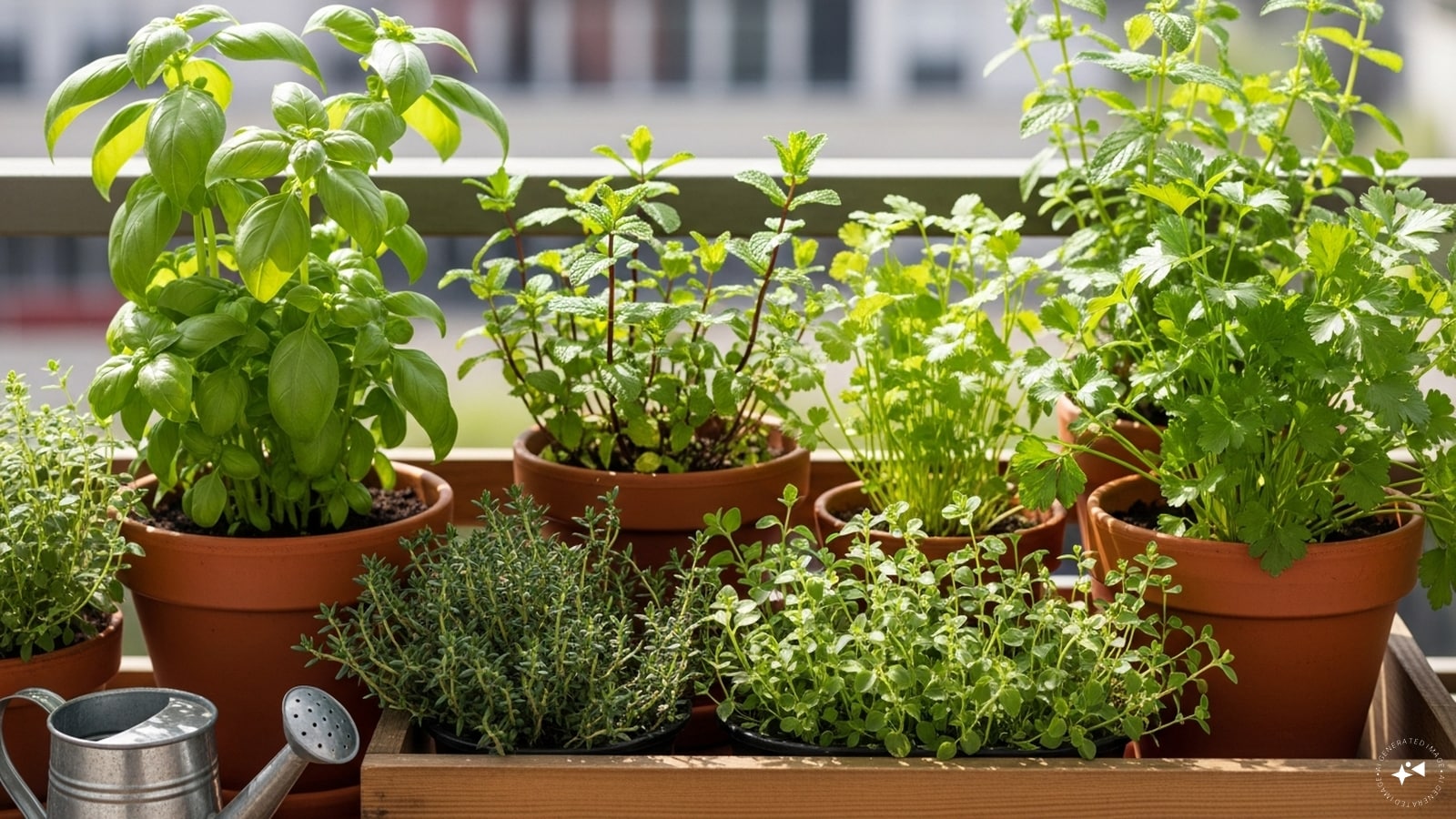
April is the perfect time to plant herbs that enjoy warmth but aren’t too sensitive to heat. Basil, mint, coriander, parsley, thyme, and oregano are excellent choices. Basil loves sunlight and grows quickly, mint is hardy but should be kept in a separate pot to prevent it from spreading, coriander thrives in cooler nights, parsley prefers partial shade, while thyme and oregano flourish in balcony conditions. Start with three or four herbs you use most often in your cooking so the garden remains manageable and practical.
Step 2: Selecting Containers
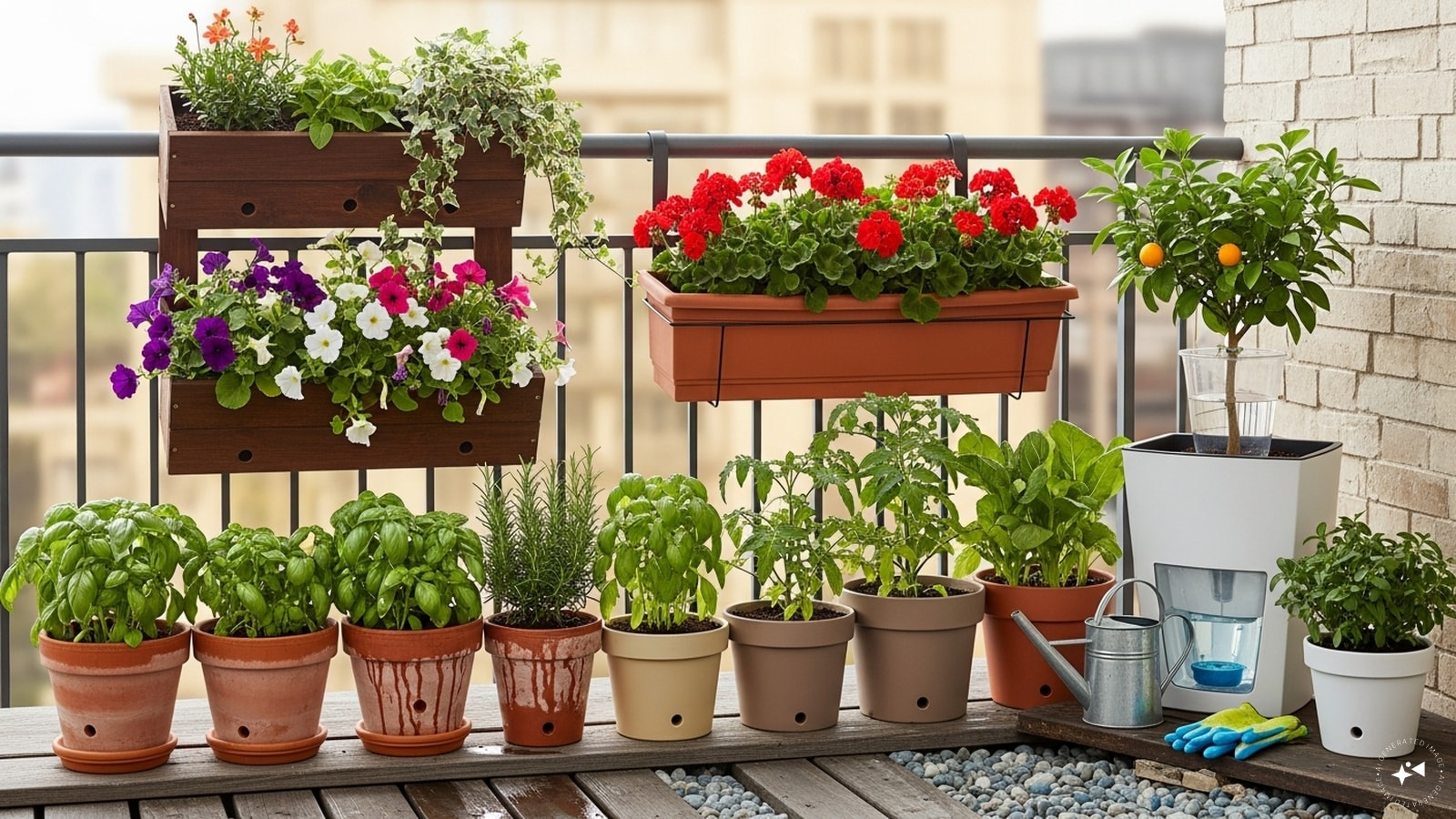
Since balcony gardens rely on containers, choose ones that suit both your space and the plants. Terracotta pots are breathable and classic but dry out faster, while plastic pots are lightweight, retain moisture, and are easy to move. Vertical planters or railing boxes are great for small balconies, and self-watering pots are ideal if you travel often. Whatever you choose, make sure the containers have drainage holes to prevent root rot.
Step 3: Finding the Perfect Spot
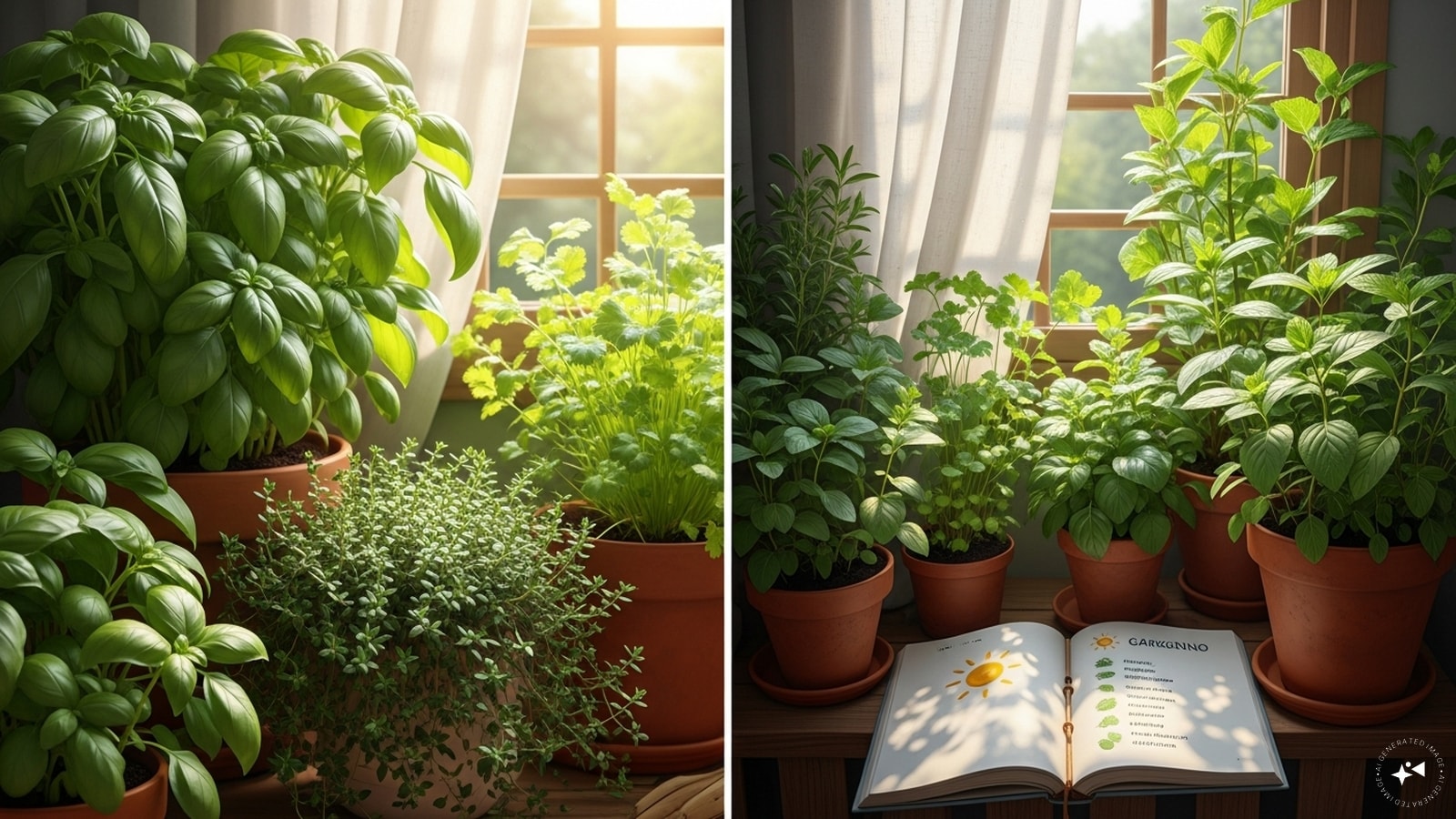
Herbs need sunlight, but not all require the same amount. A south-facing balcony is best for sun-loving herbs like basil and thyme. An east-facing balcony with gentle morning sun suits parsley and coriander, while a west-facing balcony with afternoon sun works well for mint and oregano. As a general rule, most herbs need four to six hours of sunlight daily to thrive.
Step 4: Preparing the Soil Mix
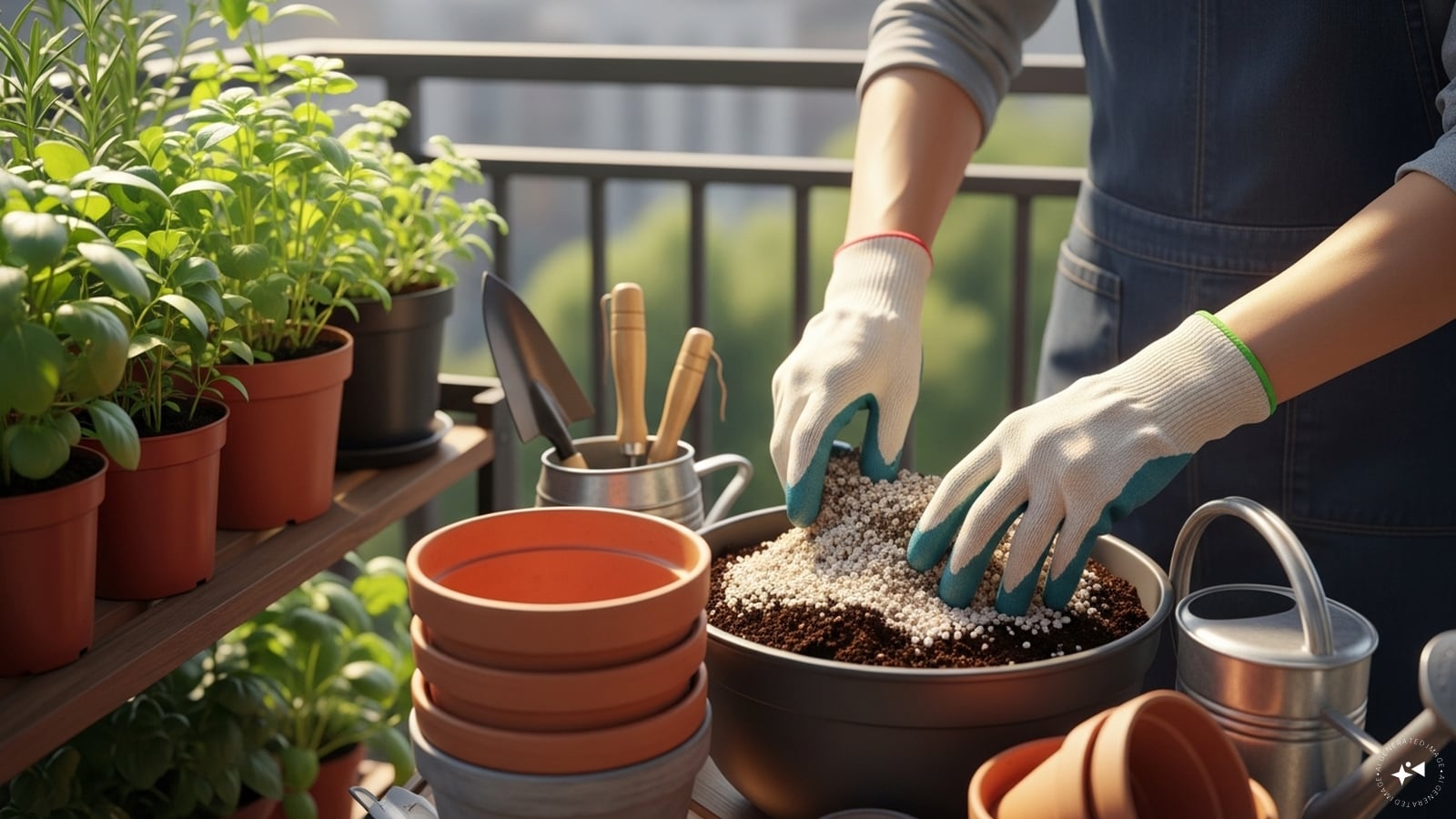
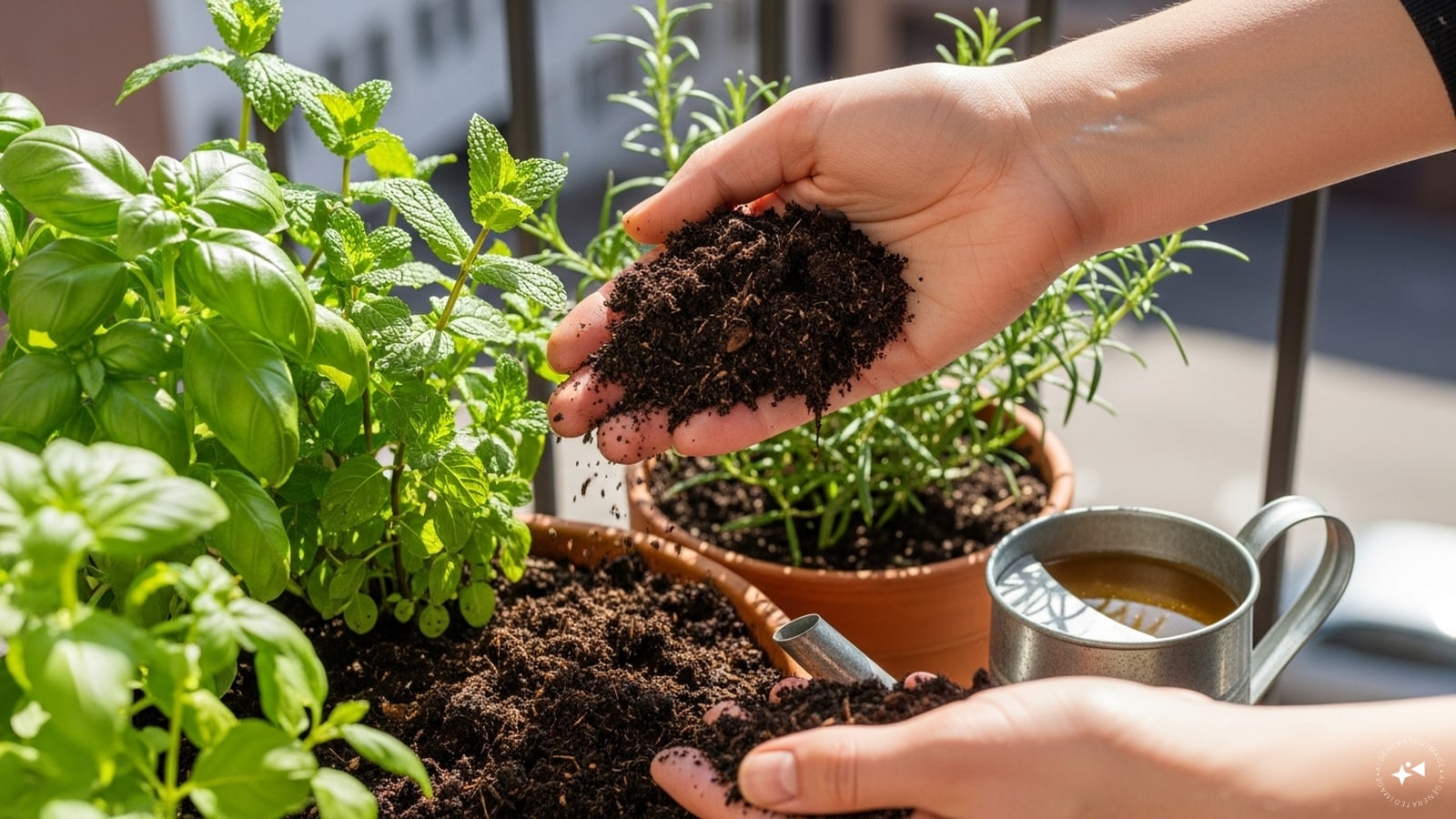
Balcony pots need a soil mix that balances drainage and nutrition. Use lightweight potting soil as the base, mix in compost for nutrients, and add sand or perlite for drainage. Most herbs prefer slightly alkaline soil with a pH between six and seven. Avoid using garden soil because it compacts in pots and restricts root growth.
Step 5: Planting Your Herbs
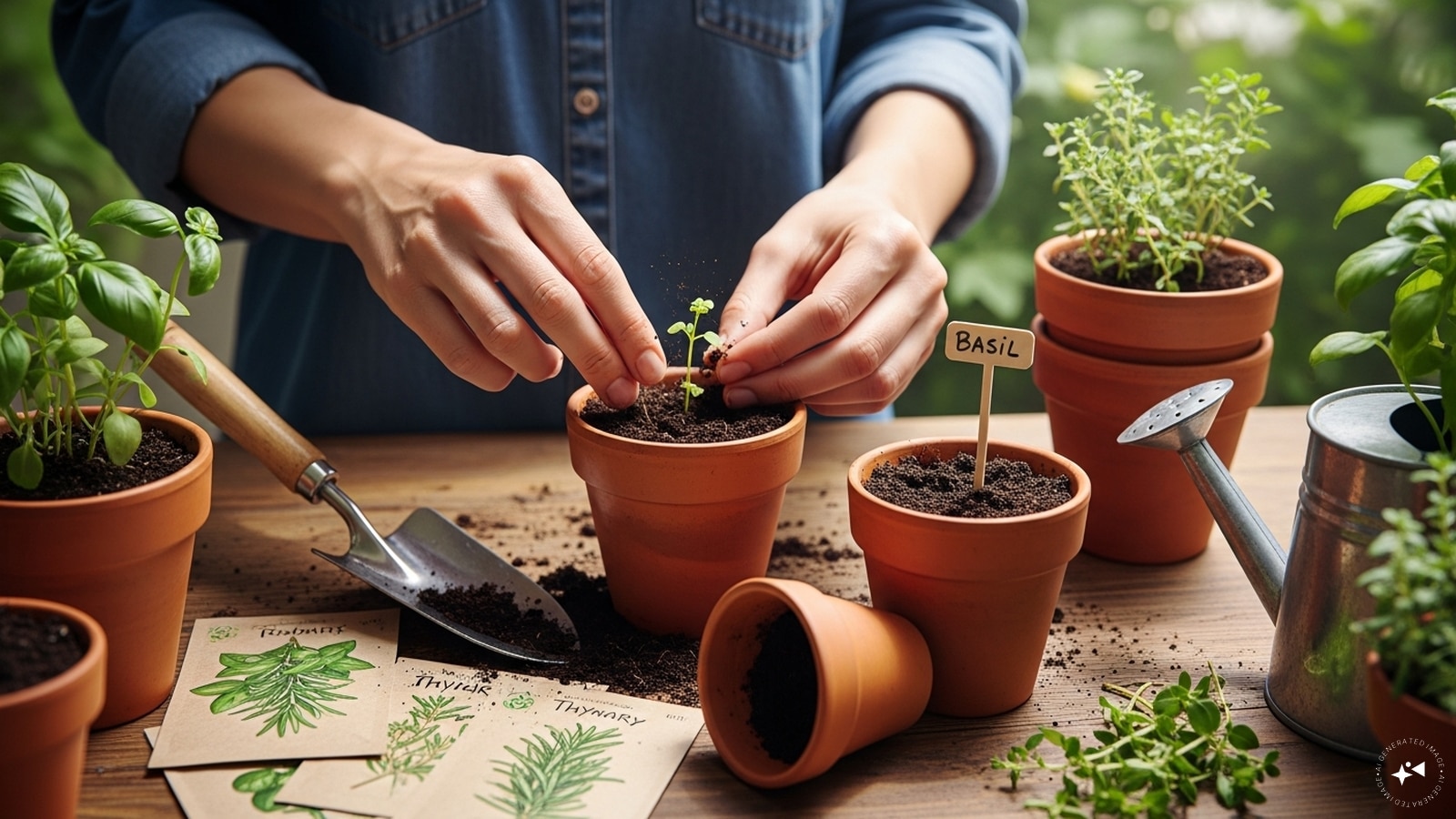
You can start herbs from seeds or nursery saplings. Seeds are economical but require patience and consistent care, while saplings give faster results and are ideal for beginners. Fill the pot with soil mix, leaving two to three centimeters at the top, plant seeds or saplings at the recommended depth, water gently to settle the soil, and label each pot to avoid confusion later.
Step 6: Establishing a Watering Routine
Balcony herbs dry out faster due to wind and sun exposure. Water in the morning to hydrate the plants before the day’s heat. Check soil moisture by inserting a finger; if it feels dry two centimeters below the surface, it’s time to water. Avoid overwatering, as herbs dislike soggy roots. Mint and coriander need more frequent watering, while thyme and oregano prefer drier soil.
Step 7: Fertilizing for Healthy Growth
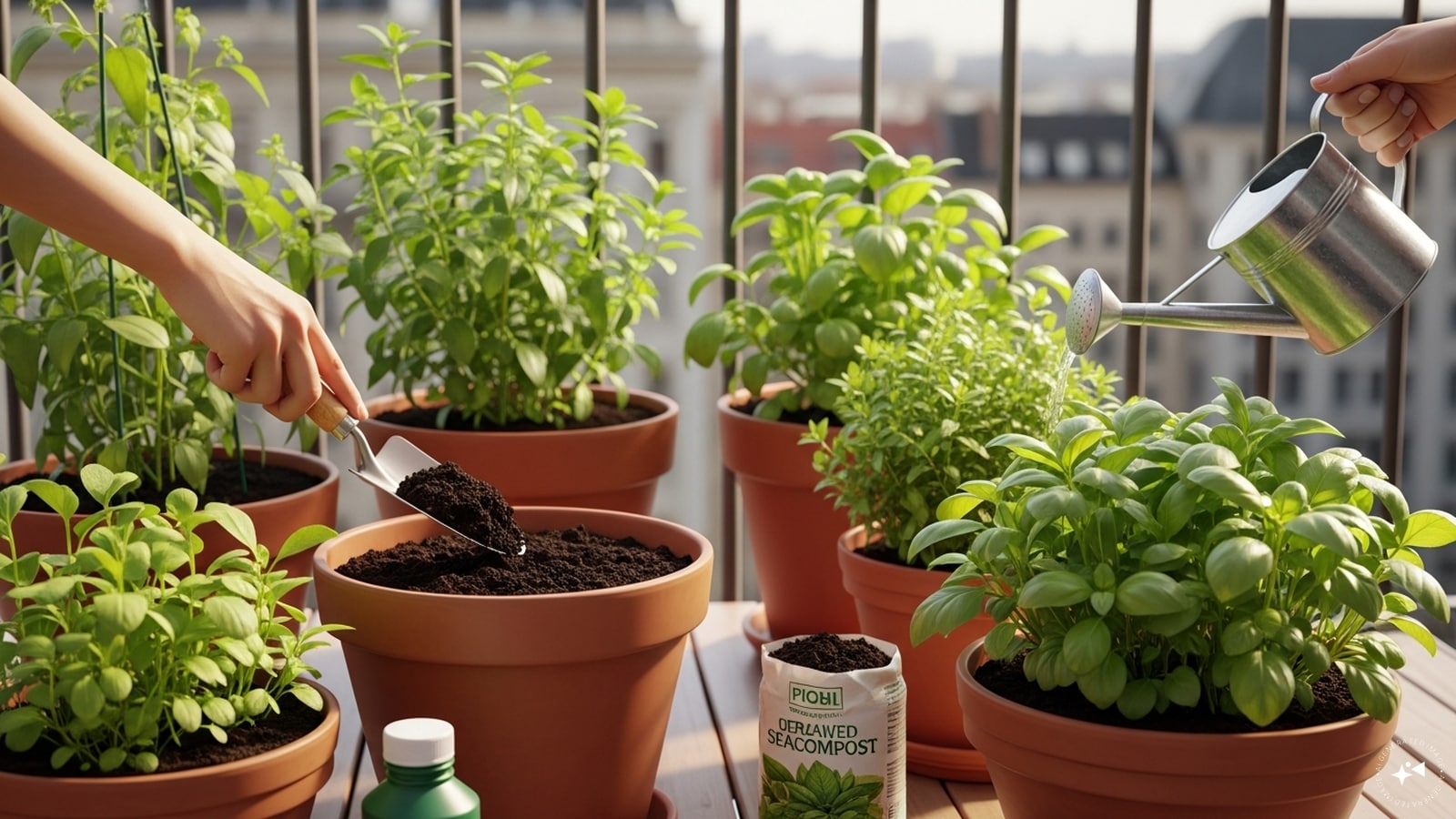
Herbs don’t need heavy feeding, but a little boost helps. Add organic compost every three to four weeks, or use liquid seaweed or vermicompost tea for gentle nourishment. Avoid chemical fertilizers, as they can alter flavor and aren’t balcony-friendly.
Step 8: Pruning and Harvesting
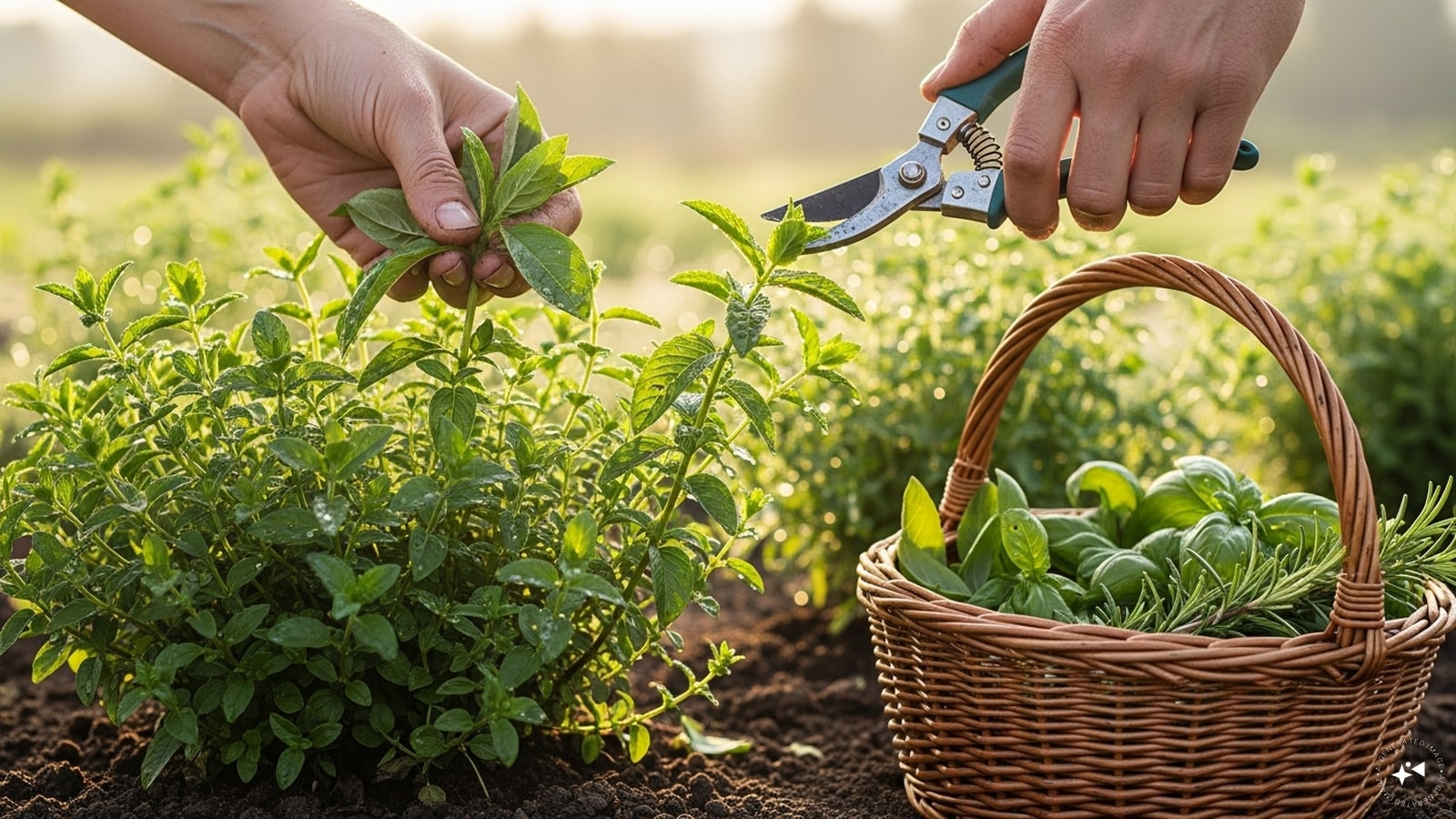
Regular trimming encourages bushier growth. Begin harvesting once plants are six to eight inches tall. Pinch off leaves or cut above leaf nodes to promote branching. Harvest in the morning when oils are most concentrated, and never strip the plant bare, always leave enough foliage for regrowth.
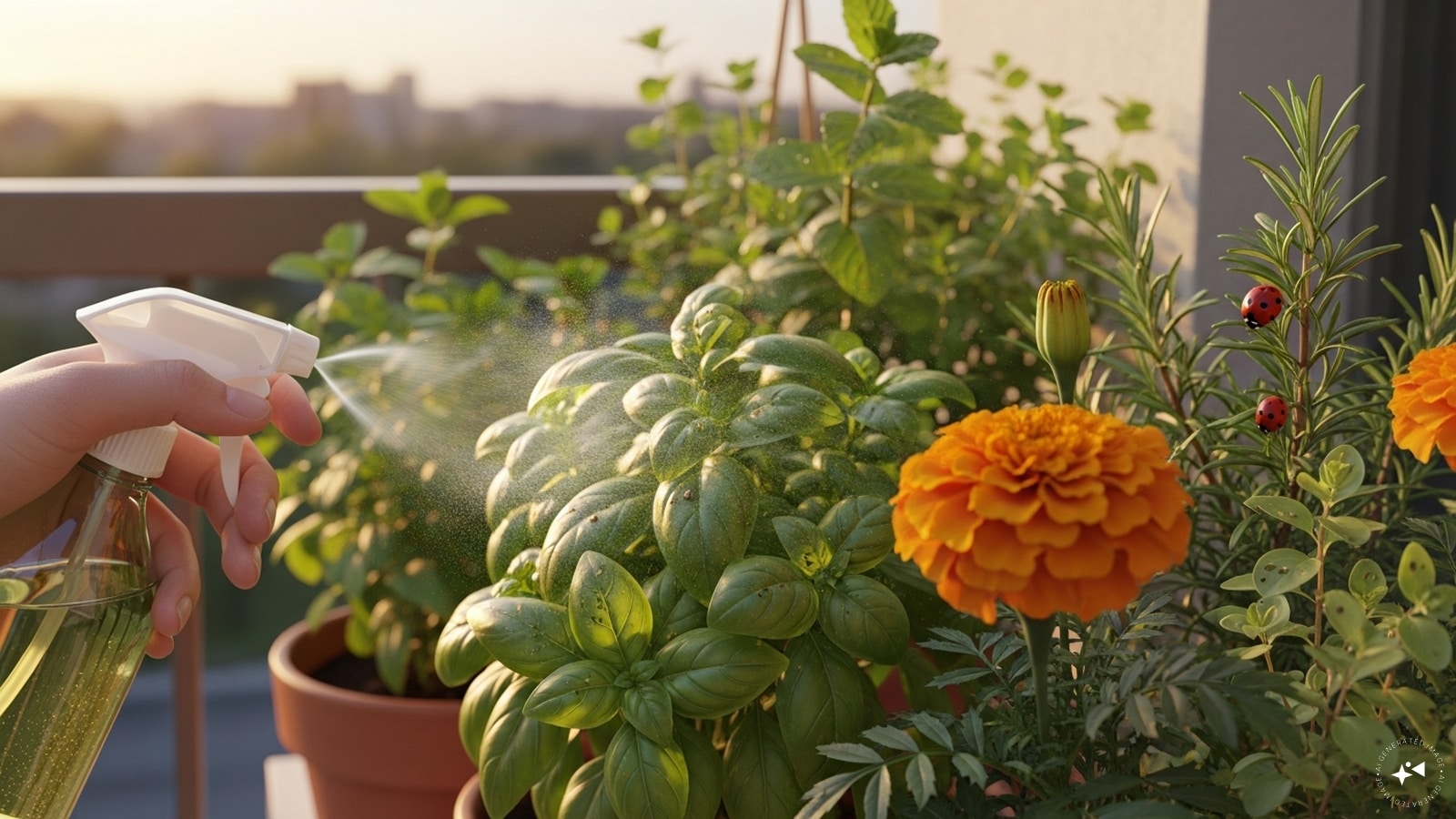
Step 9: Natural Pest Control
Balcony herbs are less prone to pests, but prevention is wise. Neem oil spray works well against aphids and mites, companion planting can deter pests, and regular checks help you spot discoloration or holes early. A quick weekly inspection keeps your herbs healthy.
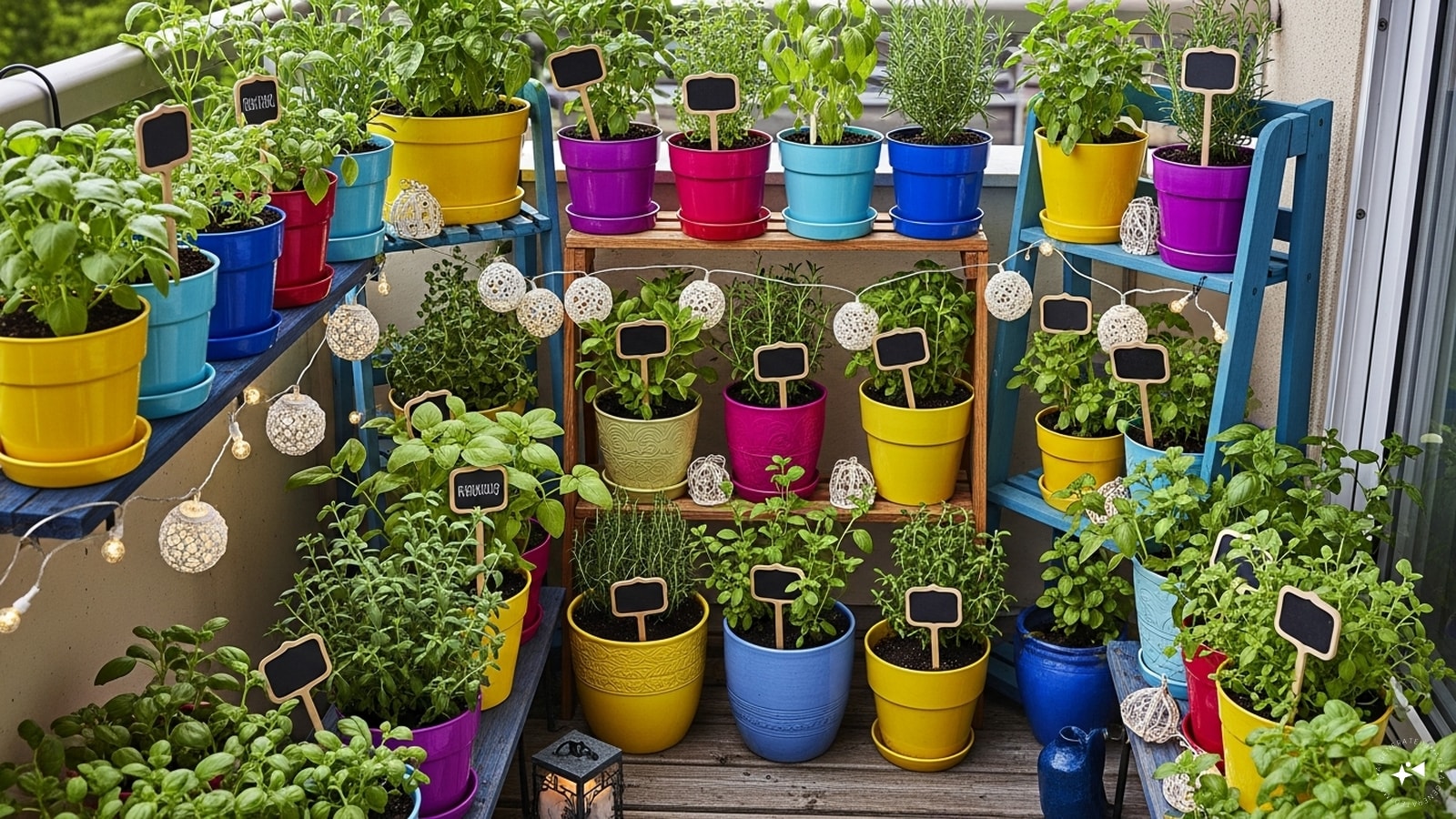
Step 10: Adding Aesthetic Touches
Your herb garden can be both functional and beautiful. Use colourful pots for vibrancy, add labels or chalkboard tags for charm, arrange herbs in tiers or shelves to save space, and incorporate small decorative lights for evening ambiance. A well-arranged balcony garden becomes a fragrant, edible oasis.


