


Whoop vs Oura Ring: Which wearable is right for you? I found out


If you’re looking for a fitness tracker to give you around-the-clock wellness insights, Whoop and the Oura ring are two of the best options out there. Both of these premium wearables track your activity, sleep, stress, and other biomarkers 24/7 to give an overall picture of your health and day-to-day wellness.
“They give you a simple way to notice patterns you might miss on your own,” says board-certified physician and sleep specialist Angela Holliday-Bell, MD, CCSH. “You can see how long you sleep, how consistent your schedule is, and how your habits or routines affect your nights.” Although she notes that the details aren’t perfect (particularly when it comes to sleep stages, which wearables notoriously struggle to detect), she feels both Whoop and Oura do a good job at showing trends over time.
But if they both track many of the same things, and both do a decent job at getting the numbers right, which is the better option? I tested both simultaneously, comparing them side by side to understand their differences and what makes each unique. Here’s what I found.
Read more: Best sleep trackers, tried and tested
How I tested
As a certified running coach and health and fitness writer who regularly covers fitness trackers, I’ve tested both Whoop (various models over the years) and the Oura ring multiple times. For this review, I compared the two directly. I wore both simultaneously so I could analyze and compare them. I slept, worked out, and even showered with them on. I assessed the apps at multiple points each day, starting from the moment I woke up and making a point to check in after every workout. I analyzed the data captured and compared the numbers across the two apps to note any discrepancies and any ongoing patterns around those differences. For context, I was tested Whoop’s MG with a life membership (the brand’s most comprehensive option) and an Oura ring 4.
Whoop vs Oura ring: Design
To an onlooker, the biggest difference between these two wearables is, well, where you wear them. The Oura ring, obviously, is a ring, while Whoop is typically worn on the wrist — though you can put it in compatible underwear, T-shirts, or shorts, or as an armband around your biceps.
The design you prefer is personal. The Oura ring is thicker than you might expect and can be uncomfortable when lifting heavy weights; otherwise, it’s pretty unobtrusive, and its elegant aesthetic doesn’t look out of place at formal events. The Oura ring 4 does get a little scratched with everyday wear; the brand’s ceramic option is apparently more scratch-resistant. Meanwhile, Whoop is probably the most comfortable wrist-based fitness tracker I’ve ever tried — it’s honestly the only one I’ve ever been able to forget is there — but I personally wouldn’t wear it to a black-tie event.
Whoop vs Oura ring: Data and coaching
Once you dive into each of these devices’ apps, much of the data collected is nearly identical. Yet the presentation is vastly different. To me, the Oura app felt like a gently encouraging yoga teacher who wants to motivate you to take care of yourself, while Whoop was more like a hardcore coach trying to maximize your potential with a Moneyball-style approach to all your stats.
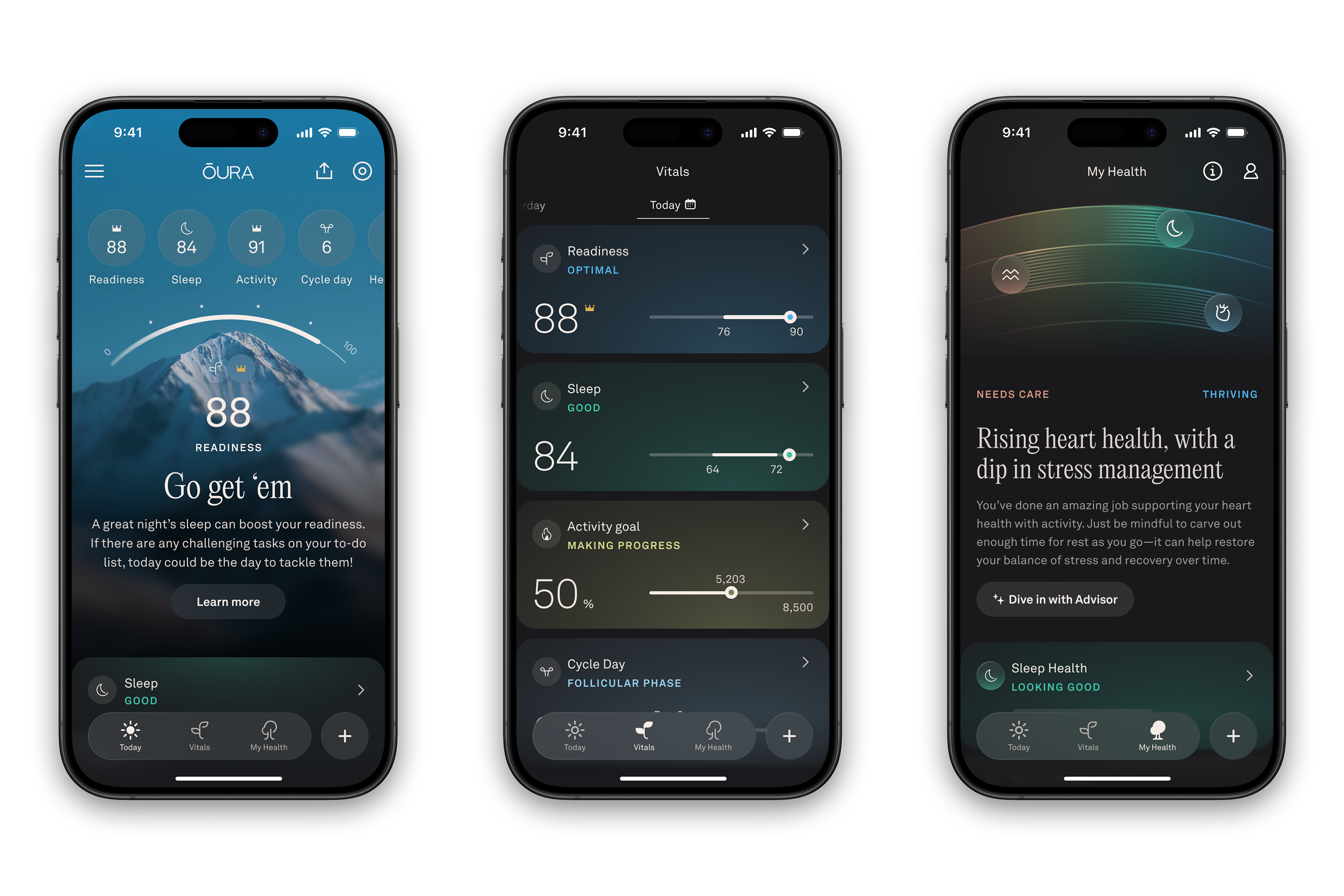
When you open the Oura app, you get an overview of the basics: readiness, sleep, and activity are given a score of one to 100. You can also see your heart rate as well as how many minutes you’ve spent stressed during the day. The app also displays short summaries of what the stats might mean and tips attached to each number. For instance, when I was stressed, I got a five-minute breathing exercise from Headspace. If you want to explore the exact metrics behind these summaries, you can open each one and dive further in, but what’s presented most prominently is just the high-level overview and accompanying suggestions.
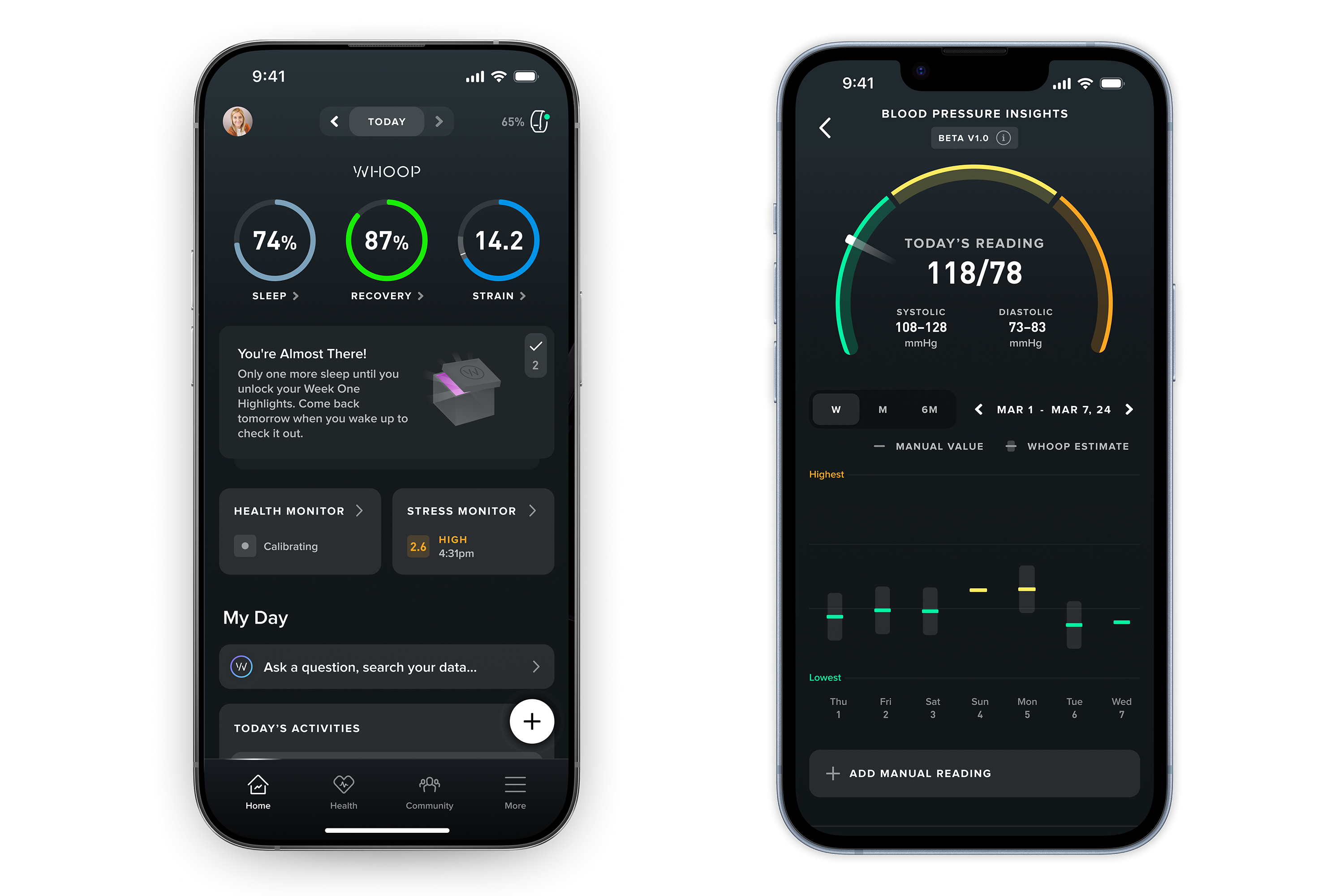
Meanwhile, Whoop is a biohacking data nerd’s dream, with a seemingly endless amount of charts and graphs to click into, starting right from the main dashboard. There are plenty of detailed explanations of the science behind each metric and why they matter (in both written and video formats). There’s also a “daily outlook” that sums up what that day’s numbers might mean for my recovery and what to do about it. But rather than the advice being put front and center, the numbers themselves are given the priority placement. Whoop also provides more numbers, period. The high-end MG model in particular can take an ECG, estimate blood pressure, and even give an idea of “healthspan,” or how quickly you’re aging. I was able to measure nearly anything a wrist-based wearable could possibly track.
But back to the coaching comparisons. Another reason Oura is more like a yoga teacher is that the suggestions are far more mellow. Although it usually gives me a higher “readiness” score for the day than Whoop, it still suggests relatively light activity targets. I even customized my plan to set more challenging fitness goals, but still easily exceeded the recommendations. In contrast, even when Whoop recommends taking an easy day, the suggestions can be a little lofty. It once told me to go for a low-key run and do a 20- to 30-minute strength-training session as a way to keep things “light.” (Though to be fair, I made boosting fitness my primary goal in the app, so it might go easier if that’s not the case.)
Then there’s the language used. When Oura suggests more exercise, it emphasizes balancing that out by eating well and getting plenty of rest. Both apps told me to get more sleep — Oura’s wording phrased in a way of “giving your body a chance to recover,” while Whoop is about hitting “optimal” windows to “boost efficiency.” (You can customize the type of coaching given on Oura’s app to make it more straightforward, but I personally enjoy the compassionate approach.)
Read more: Amazfit’s $99 subscription-free tracker vs Whoop’s $200 a year band
Whoop vs Oura ring: Accuracy
When it comes to accuracy, both of these trackers are top of the line — I found Oura has the edge when it comes to sleep, while Whoop is better if heart rate data is your top priority. A 2022 study comparing six different fitness trackers found Whoop was the most reliable (99 percent accurate) for measuring heart rate and heart rate variability, while the Oura ring slightly outperformed Whoop for sleep tracking. The research was done on older generations of both devices, but Dr. Holliday-Bell believes this remains the case. “Both offer solid trend tracking, but the Oura Ring usually stands out for sleep because of the sensors it uses,” she says, explaining that Oura considers multiple signals. Personally, I found it usually gave me a slightly lower sleep score than Whoop (though never by more than half an hour), and it sometimes picked up short naps that Whoop missed.
Let’s put it this way: On days when I’m struggling and want some kindhearted encouragement, I tend to open up the Oura app first; when I feel like I need a little kick in the butt, I click on Whoop.
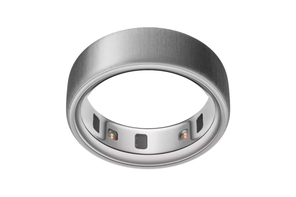
Oura ring 4
The Oura ring provides accessible feedback that didn’t make me feel guilty. I’d liken its soft approach to advice from a yoga teacher who wants to motivate you to take care of yourself, which certainly contrasts with Whoop, which offers a more no-nonsense approach. You can customize the type of coaching given on Oura’s app to make it more straightforward, but I personally enjoyed the compassionate approach. In terms of design, the Oura ring 4 is unobtrusive, and its elegant aesthetic means it doesn’t look out of place in a formal setting — just like a piece of jewelry.
Read the full Oura ring 4 review
What to know
- Dimensions: 7.9mm x 2.88mm
- Weight: 3.3g to 5.2g (depending on size)
- Battery life: 5-8 days
- Subscription required: Yes, $5.99 per month or $69.99 per year (on top of price of the ring, which is $349 or $499)
- Water resistance: Up to 100 meters
Why we love it
- Elegant design
- Prioritizes actionable takeaways
- Explains the data rather than just presenting numbers
- Customizable language
- Expert-recommended sleep tracking
Take note
- Ring is pretty thick, and gets a little scratched
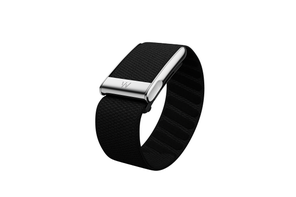
Whoop MG
Whoop is a biohacking data nerd’s dream, and promises to help you age backwards. It’s incredibly smart in the way it uses biometric data and provides you with a seemingly endless amount of charts and graphs to click into. The app offers personalized plans and advice from an AI coach, and takes a no-nonsense approach to health tracking. In terms of design, it is possibly the most comfortable wrist-based fitness tracker I’ve ever tried — it’s honestly the only one I’ve ever been able to forget is there.
What to know
- Dimensions: 34.7mm x 24mm x 10.6mm
- Weight: 27.3g
- Battery life: 14-plus days
- Subscription required: Yes, from $149 (on sale) to $359
- Water resistance: Up to 10 meters
Why we love it
- User-friendly app
- Tons of health and wellness metrics
- Can be worn in multiple places
- Comfortable, elegant strap
- Long battery life
Take note
- The amount of stats can be overwhelming
- Doesn’t always detect naps
Whoop vs Oura ring: Which tracker should you choose?
After testing them directly side-by-side, the choice between Whoop and Oura ring comes down to three main things: Do you want a tracker on your finger or wrist (or in Whoop-specific clothing)? Are you someone who loves diving into exact numbers, or do you just want a high-level overview? And do you thrive on more of a tough love or low-key approach? Either of these two premium trackers can get into the nitty-gritty of all your data, and both do a great job at getting that data right (most of the time). Whoop will appeal to those who crave all the specifics and a no-nonsense approach to motivation, while the Oura ring will be a better fit for people who mainly want the takeaways and some gentle encouragement.
Read more: Whoop 5.0 promises to help you age backwards — so I put it to the test
How were the Oura Ring and Whoop tested?
I wore both the Oura Ring and Whoop MG continuously for a month (after previous experiences using both trackers separately). During testing, I considered the following criteria:
- Health and fitness insights: I assessed all the data each device provided, including sleep statistics, steps, and heart rate variability. I compared recovery insights to how I physically felt and noted discrepancies between the reports in both apps. I also considered how helpful the AI suggestions were at optimizing my sleep or energy levels.
- Usability: I noted how easy it was to navigate the app and make sense of the data given — including how it translated into actionable changes I could make.
- Comfort and design: I paid attention to what the physical device felt and looked like, and whether it was something I’d actually want to wear long-term.
- Battery life: I carefully monitored battery life and how long it took to recharge.
Why you can trust Independent’s product reviews
Jennifer Heimlich has more than a decade of experience as a journalist within the wellness industry — and has written everything from the best fitness trackers to shoes for standing all day for IndyBest. But above all, she is a reliable and knowledgeable voice when it comes to fitness gear recommendations. When not writing, she’s a UESCA-certified running coach and hosts running tours, and has personally completed multiple ultramarathons and more than a dozen marathons, making her the perfect fit to review the Oura Ring and Whoop.


