


Why Do Feet Feel Cold In Winters?


Last Updated:
Feet often feel cold in winter because the human body naturally tries to protect its vital organs during low temperatures.
Reduced Blood Circulation: In winter, the body reduces blood flow to the feet to conserve heat for essential organs like the heart and brain. This reduced circulation means less warm blood reaches the feet, causing them to feel noticeably colder. (Image: AI Generated)
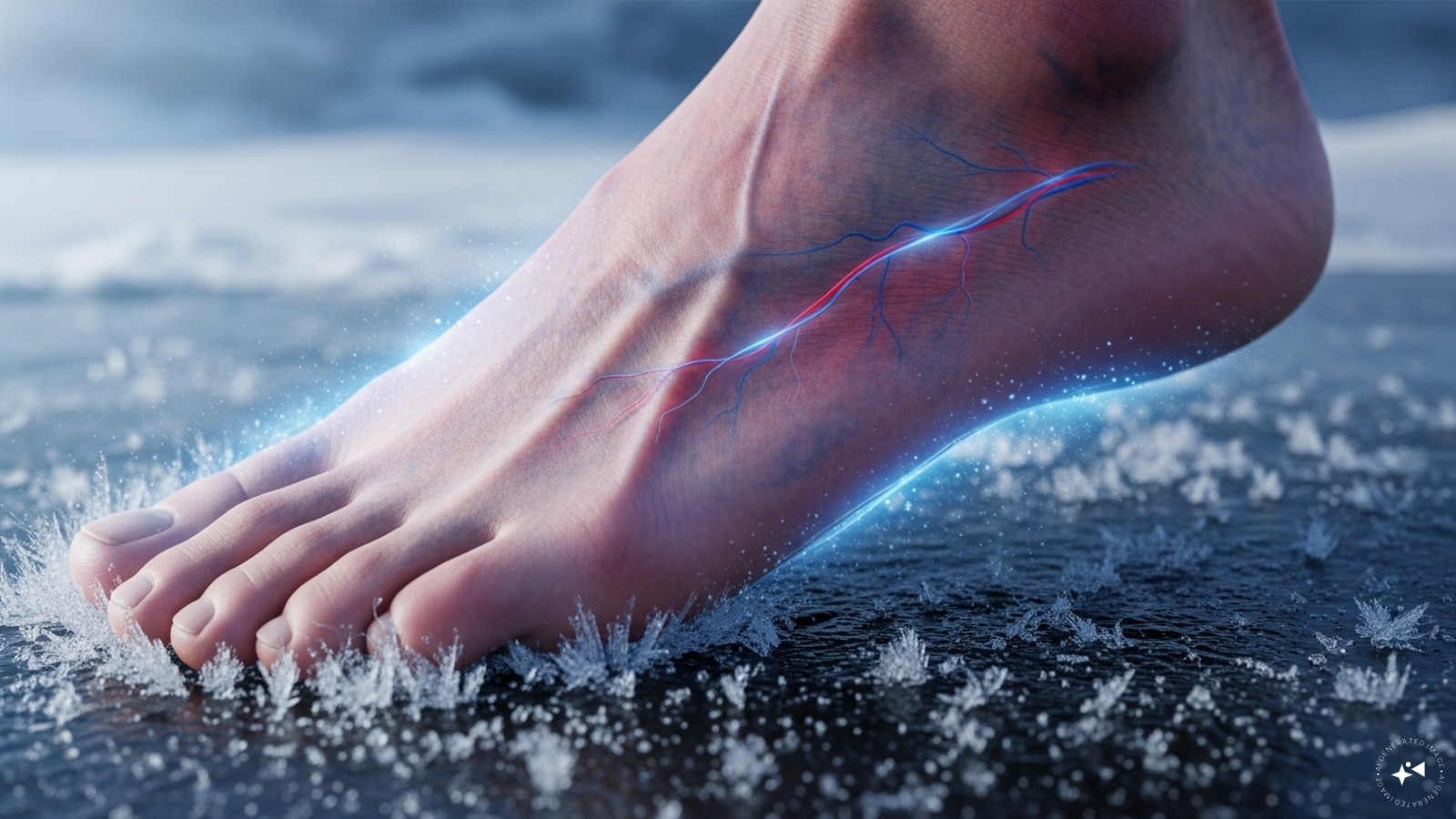
Vasoconstriction: Cold temperatures cause blood vessels to narrow, a process called vasoconstriction. This limits heat loss but also decreases warmth in extremities. Since feet are at the body’s edge, they are more affected by this response. (Image: AI Generated)
Distance from the Heart: Feet are located farthest from the heart, so it takes longer for warm blood to reach them. During winter, this distance becomes more significant, making it harder to maintain warmth in the feet compared to other body parts. (Image: AI Generated)
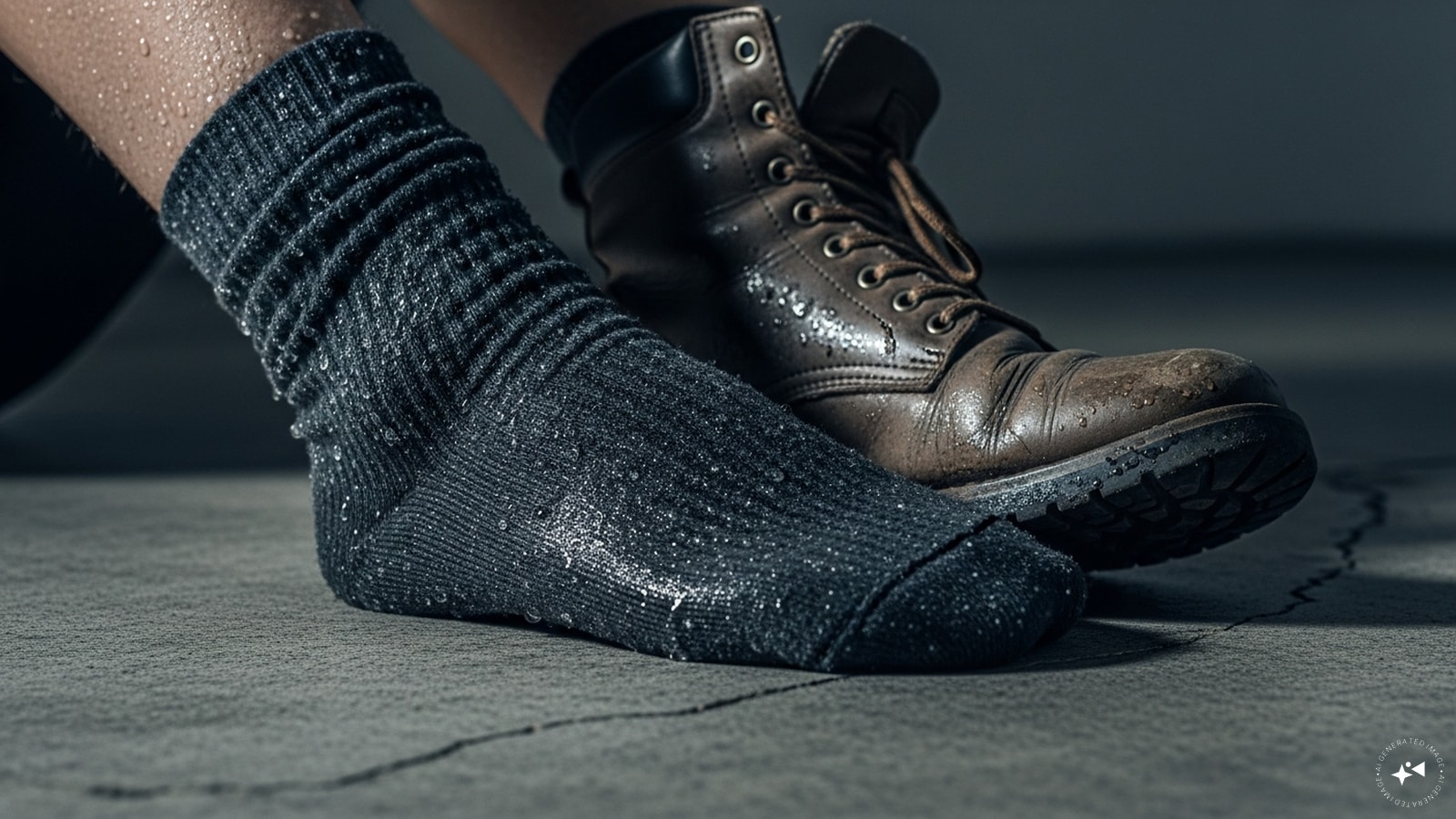
Moisture and Sweat: Sweaty or wet feet lose heat more rapidly due to evaporation. Moisture inside socks or shoes increases heat loss, making feet feel colder. This is especially common in winter when ventilation is poor. (Image: AI Generated)

Sensitive Nerve Endings: Feet contain many nerve endings that are sensitive to temperature changes. These nerves quickly detect cold, sending signals to the brain, which enhances the sensation of cold even if the temperature drop is mild. (Image: AI Generated)
Wind and Environmental Exposure: Cold winds and low temperatures increase heat loss from the feet. Wind removes the thin layer of warm air around the body, intensifying the cold sensation, particularly when feet are exposed outdoors for long periods. (Image: AI Generated)
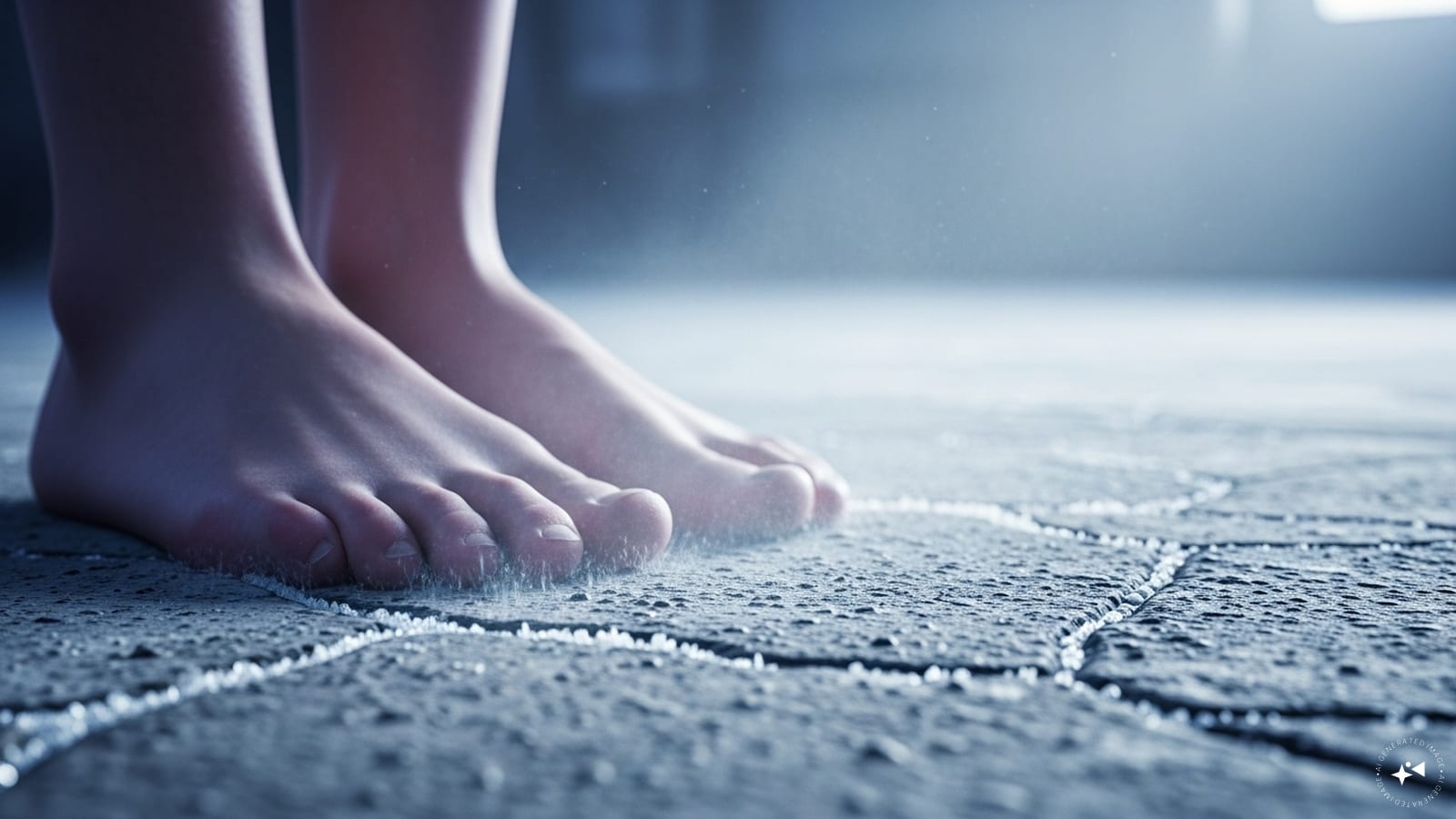
Cold Ground Contact: Feet often come into direct contact with cold floors or ground surfaces. These surfaces absorb body heat quickly, leading to faster heat loss through the soles, especially when walking barefoot or wearing thin footwear. (Image: AI Generated)


