


Zomato’s New Move Wants Restaurants To Think Beyond Food And Aesthetics — Inside Its Accessibility Push


Last Updated:
Many people with disabilities stick to familiar restaurants as new places often mean inaccessible entrances, cramped spaces, unreadable menus, or no elevators.




According to the 2011 Census, India is home to more than 2.68 crore persons with disabilities, many of whom continue to face challenges while navigating public spaces. (Image: Canva)
For many people, dining out is spontaneous: picking a new cafe, trying a trending restaurant, or meeting friends over dinner without much thought. But for millions of Indians living with disabilities, something as ordinary as eating out can involve uncertainty: Will there be a ramp? Is the washroom accessible? Can the menu be navigated independently? Will staff know how to assist without making the experience uncomfortable?
In an attempt to address these often-overlooked barriers, District by Zomato on Thursday launched what it calls an “Inclusive Dining Toolkit” — a guide aimed at helping restaurants become more accessible and welcoming for persons with disabilities (PwDs), senior citizens, pregnant women, and others with mobility or accessibility needs.
Developed in collaboration with the Department of Empowerment of Persons with Disabilities, accessibility organisation Samarthyam, and The Association of People with Disability, the toolkit has been shaped through consultations with people with disabilities, restaurant owners, and accessibility experts.
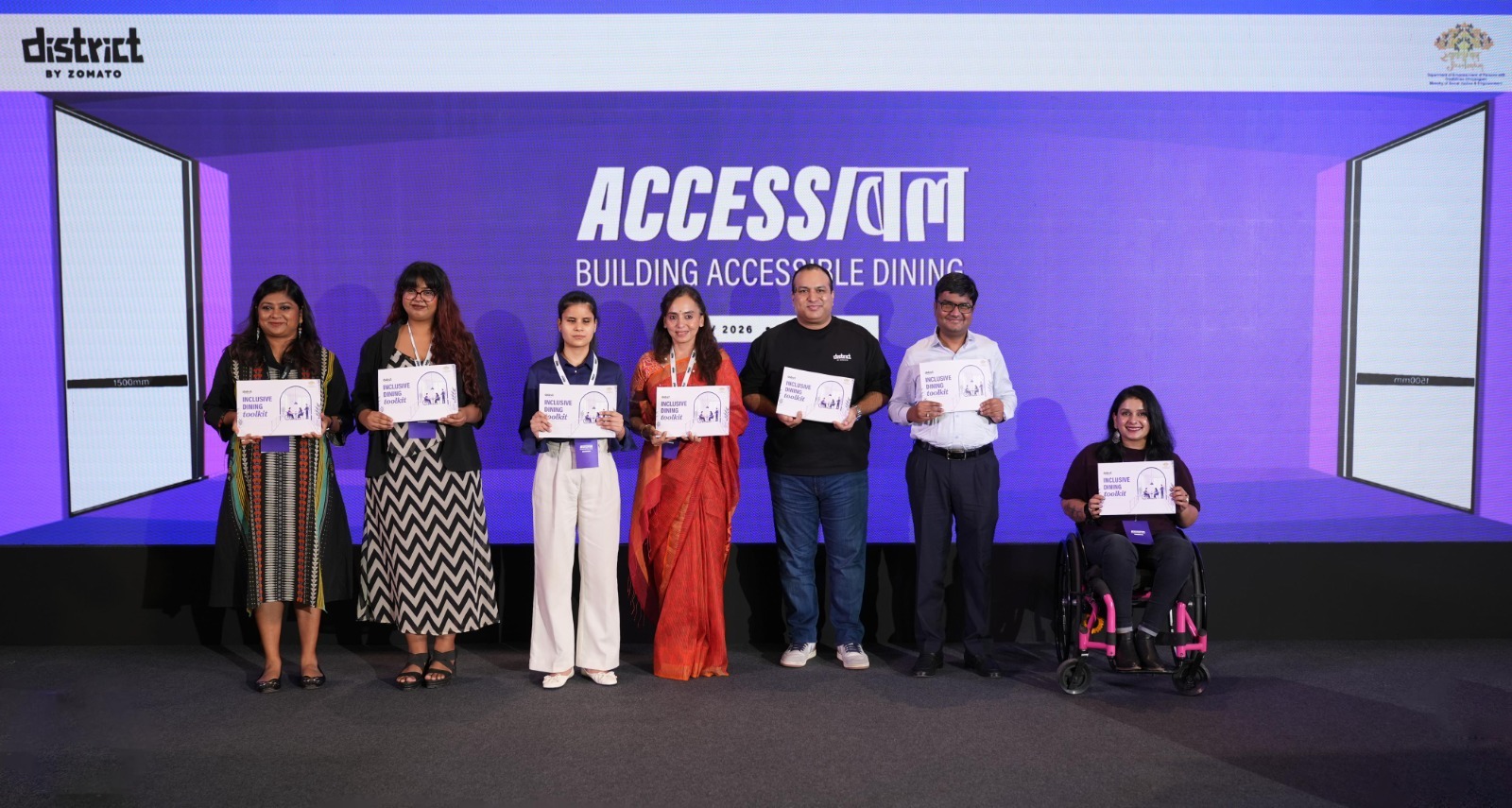
The initiative comes at a time when conversations around accessibility in India are slowly moving beyond public infrastructure and transport into everyday lifestyle spaces such as restaurants, cafés, and entertainment venues.
According to the 2011 Census, India is home to more than 2.68 crore persons with disabilities, many of whom continue to face challenges while navigating public spaces.
Dining out, in particular, often requires planning and familiarity. Many people with disabilities tend to revisit the same places repeatedly because trying somewhere new can mean confronting inaccessible entrances, cramped layouts, unreadable menus, or the absence of elevators and accessible washrooms.
Restaurant owners, too, have often acknowledged the problem but cited limited guidance, infrastructure constraints, and challenges in modifying leased properties as hurdles to making their spaces more accessible.
The toolkit attempts to bridge that gap with practical suggestions for restaurants — from identifying accessibility blind spots to making small operational improvements that can make dining experiences more inclusive.
Speaking at the launch, Manmeet Kaur Nanda, Additional Secretary, Department of Empowerment of Persons with Disabilities, said accessibility must become a standard rather than an exception.
“Dining spaces are an important part of social life. Inclusion should not be treated as an added feature but as a basic expectation in how we design public experiences,” she said, while noting that India has made progress since the implementation of the Rights of Persons with Disabilities Act and the Accessible India Campaign.
The initiative also highlights a growing shift in how businesses are beginning to view accessibility, not merely as compliance, but as part of customer experience and hospitality itself.
Rahul Ganjoo, CEO of District by Zomato, said restaurants are often celebrated as spaces that bring people together, but accessibility is rarely discussed as part of that experience.
“We don’t often stop to ask whether everyone can enter a restaurant comfortably, move around independently, or access the menu without assistance,” he said.
Alongside the toolkit, District has also rolled out new accessibility-focused features on its platform. These include improved support for screen readers, accessibility filters for restaurant discovery, wheelchair and elevator accessibility indicators on restaurant pages, AI-curated accessible dining recommendations, and a “special assistance needs” option while booking tables.
At the event, Meenakshi Chaturvedi, who is visually impaired, spoke about how accessibility is as much about empathy as infrastructure.
“Sharing a meal is a universal joy,” she said. “People with disabilities don’t just want food served to them — they want to feel welcomed, valued, and included in the experience.”
The launch builds on Zomato’s earlier inclusion-focused efforts. In 2024, the company received the National Award for Empowerment of Persons with Disabilities from the Union Ministry of Social Justice for engaging over 6,000 persons with disabilities in food delivery roles.
As India’s urban lifestyle and dining culture continue to evolve, initiatives like these signal a broader conversation: who gets to participate comfortably in public life, and what truly makes a space welcoming.


