


Global ‘Day Zero Drought’ by 2030? Scientists warn water crisis could hit THESE regions first


Imagine a day when your country declares a ‘Day Zero Drought.’ Scientists are warning that it may no longer be a distant scenario. They say that the world’s first wave of ‘Day Zero Drought’ is a growing risk for this century. A new study has found that many regions, including Southern Africa, parts of North America, and the Mediterranean region could be at risk. They could face unprecedented water scarcity as early as the late 2020s and 2030s. This will primarily be driven by human-caused climate change, rising water wastage, and demand.
What is a Day Zero Drought and why is it spreading?
If ‘Day Zero’ sounds familiar to you, it is because the term has entered headlines already. Remember when Cape Town nearly had to turn off household taps during a multi-year drought? Researchers are now calling it a global crisis. ‘Day Zero Drought’ is being defined as a compound event where several things go wrong at once over several years. Namely reduced rainfall, falling river flows, booming water use, and reservoirs that drain faster than they can refill.
In simple terms, it is when a region’s total demand outstrips its total sustainable supply.
To understand when this kind of crisis first becomes unavoidable in different places, the team ran one hundred climate simulations under a high-emissions pathway. They calculated the “Time of First Emergence” for Day Zero Drought in each grid cell on the planet.
By their estimates, about three-quarters of drought-prone land areas will face unprecedented, drought-driven water scarcity by 2100, and roughly one third of those areas could see their first event between 2020 and 2030. In about 14 percent of reservoirs in the global GRanD database, the modeled droughts are severe and long enough to empty storage during that first Day Zero decade.
Why are the Mediterranean, Southern Africa and the US at higher risk?
The bad news does not stop at the first crisis. The study finds that in many hotspots, especially the Mediterranean, southern Africa and western United States, Day Zero Droughts tend to last for years while the gap before the next one is often shorter than the drought itself. In some regions, more than half of future events have this pattern, leaving very little recovery time for aquifers, reservoirs, ecosystems and economies.
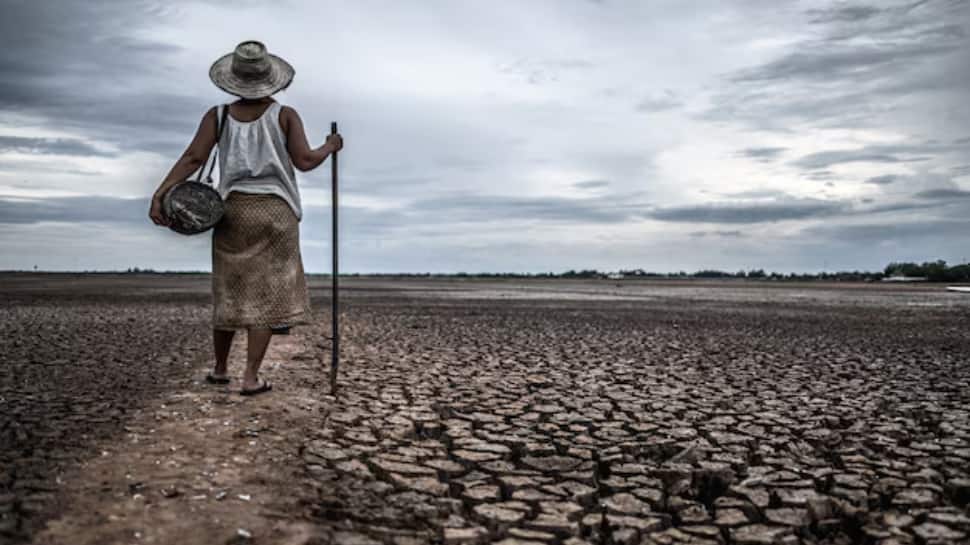
For people, the numbers are sobering. The authors estimate that more than 753 million people, nearly 9 percent of today’s global population, could be living in areas that experience their first Day Zero Drought, with city dwellers hit harder than rural communities.
Urban exposure peaks around a global warming level of about 1.5 degrees Celsius, when roughly 488 million people are projected to be in newly affected zones. That includes large populations in the Mediterranean and rapidly growing regions of India, China and Australia.
What can governments and communities do to avoid Day Zero?
So what does this mean for the water that comes out of your kitchen faucet or for the next summer’s electric bill? When droughts last longer than the time needed to refill reservoirs, traditional “wait for the next wet year” strategies break down. The authors argue that societies need more proactive water planning, not just emergency restrictions.
That includes cutting waste across agriculture, industry and households, rethinking how reservoirs are operated, and investing in diversified supplies such as desalination, rainwater harvesting and wastewater recycling, alongside better governance and community-driven conservation.
At the end of the day, the study suggests that keeping global warming as close as possible to 1.5 degrees, while curbing unsustainable water use, will go a long way toward avoiding the harshest Day Zero futures. The study was published in Nature Communications.
(This article is intended for your general information only. Zee News does not vouch for its accuracy or reliability.)


