


Video assistant referee causes controversy every week in the Premier League, but how are decisions made and are they correct?
This season, we take a look at the major incidents to examine and explain the process both in terms of VAR protocol and the Laws of the Game.
Andy Davies (@andydaviesref) is a former Select Group referee, with over 12 seasons on the elite list, working across the Premier League and Championship. With extensive experience at the elite level, he has operated within the VAR space in the Premier League and offers a unique insight into the processes, rationale and protocols that are delivered on a Premier League matchday.
Referee: Sam Barrott
VAR: Craig Pawson
Incident: VAR intervention for foul in penalty area
Time: 11th minute
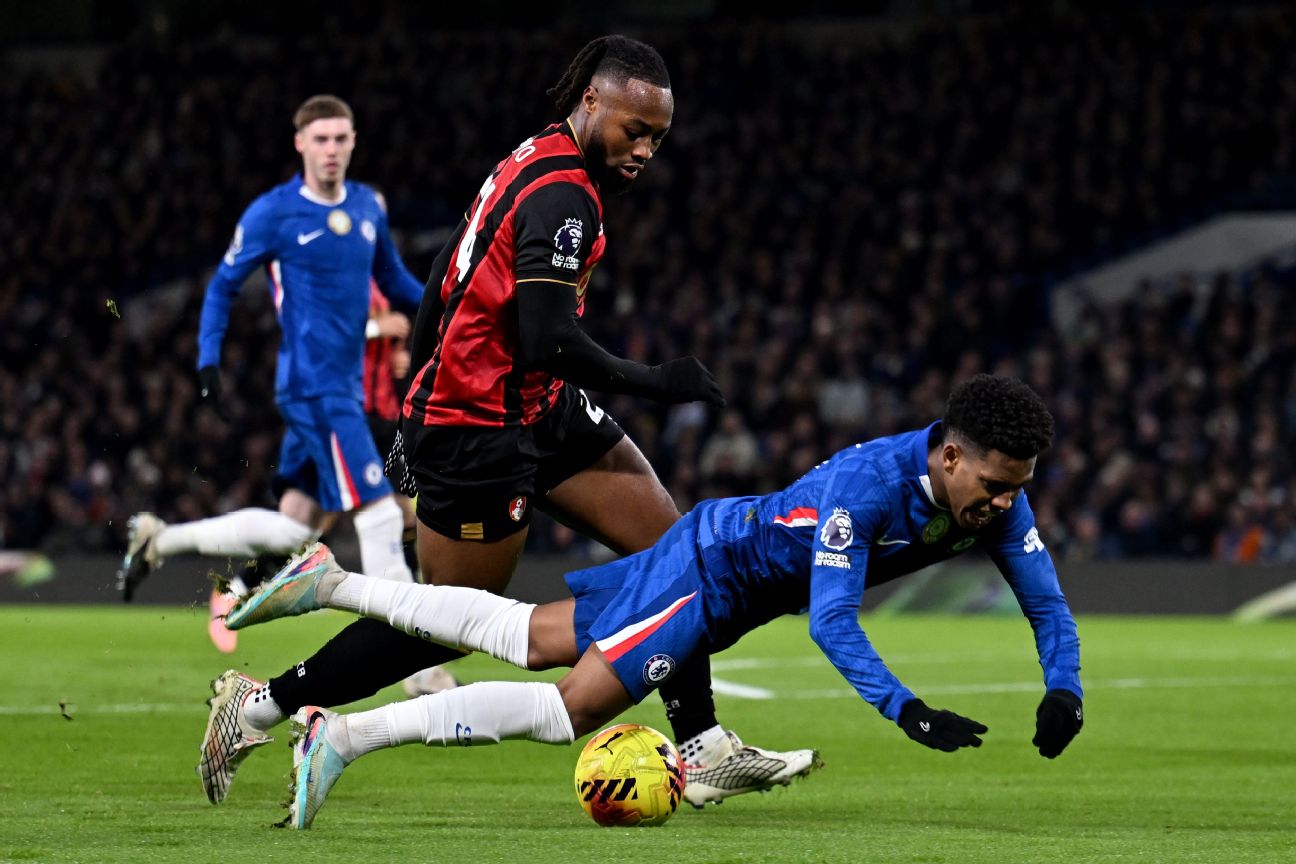
What happened: Chelsea forward Estêvão attacked the Bournemouth penalty area, closely tracked by Antoine Semenyo. Estêvão goes to ground following contact with Semenyo, with referee Barrott waving away Chelsea penalty appeals citing that there was no foul contact by the Bournemouth defender, and contact was created by both players whilst in their normal, respective running actions and Estêvão eventually tripping himself.
VAR decision: An on-field review was recommended by VAR Pawson, for a possible penalty kick to Chelsea for a clear trip by Semenyo on Estêvão.
VAR review: VAR Pawson had to determine if the contact in this coming together was created, as described by match referee, a combination of both players normal running actions or was this a foul action by Semenyo. The final action of the Chelsea attacker tripping himself was clear, however, the detail was around how the original contact had occurred.
On first viewing, it would have been difficult for Pawson to disagree with the on-field decision of no penalty as the main TV footage was inconclusive. However, having viewed both the tight touch-line angle and the behind view, Pawson identified that the contact was initiated by Semenyo as he stepped into the running path of Estêvão, enough contact on his trailing leg that forced the Chelsea player to trip himself.
Pawson recommended an on-field review for a possible penalty kick, to which referee Barrott, having viewed the replays, agreed and awarded the penalty.
Verdict: A credible VAR intervention when considering the current thresholds, however, this will certainly be viewed at the lower end of expected involvement.
Barrott looked unsure whilst at the screen, he took a little convincing, via the various angles, that what he judged in real-time was not what happened.
So often, this type of contact is indeed created by both players’ natural running actions causing one or both players to go to ground — for a penalty to be awarded there needs to be a definitive foul action by a defender on an attacker. In this situation, you can argue that this threshold has been met, however a low bar for a VAR intervention.


