


Long Island Rail Road workers go on strike after MTA, unions fail to reach new contract


Tens of thousands of commuters in southeastern New York will be impacted after a strike officially shut down the Long Island Rail Road just after midnight on Saturday.
The work stoppage, the railroad’s first since a two-day walkout in 1994, went into effect after the Metropolitan Transportation Authority and five unions representing 3,500 workers failed to reach a deal on a new four-year contract. The sides agreed to the terms of the first three years, but disputes arose over the final year.
Picketers from the unions were spotted outside Penn Station, and the Ronkonkoma and Jamaica stations on Saturday.
Michael Nagle / Bloomberg via Getty Images
Kevin Sexton, national vice president of the Brotherhood of Locomotive Engineers and Trainmen, said no new negotiations have been scheduled.
“We’re far apart at this point,” Sexton said early Saturday. “We are truly sorry that we are in this situation.”
The LIRR is the busiest commuter railroad in North America, carrying about 250,000 passengers each weekday, according to its website.
Why negotiations broke down
The unions are looking for a 5% pay increase. The MTA said it was offering a 3% raise with options that could bring it up to 4.5%, provided some work rules concessions are made.
MTA officials previously said the 5% hike would mean higher fares systemwide, including the subways, buses and Metro-North.
In a statement, Gov. Kathy Hochul said, in part, the walkout “is the direct result of reckless actions by the Trump administration to cut mediation short and push these negotiations toward a strike,” adding, “For weeks, the MTA has attempted to negotiate in good faith and put multiple fair offers on the table that included meaningful wage increases, but you cannot make a deal if one side refuses to engage in good faith.”
Trump responded on his Truth Social platform on Saturday saying he had nothing to do with the strike and “never even heard about it until this morning.”
Hochul said the unions’ leadership is also responsible for the work stoppage.
“Commuters are dealing with unnecessary dysfunction and thousands of union LIRR workers are being forced to go without a paycheck because of decisions made by a small group of union leaders,” Hochul said. “I stand with LIRR riders and will fight to preserve the long-term stability of the MTA. I believe a deal can be done and I urge both the MTA and these unions to return to the table and bargain non-stop until a deal is reached.”
Lev Radin/Pacific Press/LightRocket via Getty Images 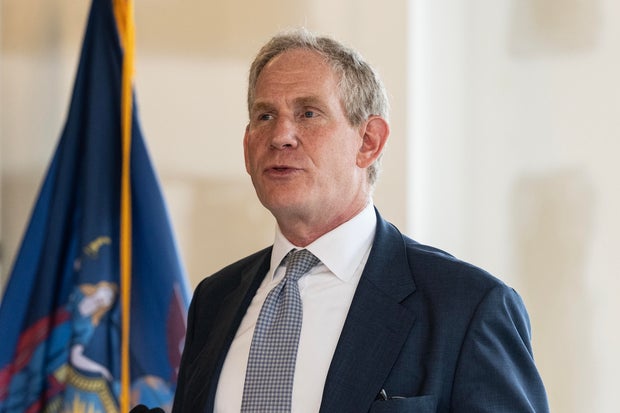
Lieber agreed with the governor, adding, in part, in a statement, “everybody loses in a strike — the MTA, the thousands of workers who are going to lose wages, and most of all, the riders who rely on the railroad every day.”
“But I — and this MTA Board — have been clear that we cannot responsibly make a deal that implodes MTA’s budget. Under the Governor’s leadership, we’ve fought too hard to get back on stable footing coming out of COVID. And we refuse to make a deal that puts it on riders and taxpayers to fund outsized wage increases — far beyond what anyone else at the MTA is getting — and for folks who are already the highest-paid railroad workers in the country,” Lieber said.
“We cannot and will not do a deal that shifts huge costs to our riders by forcing fare hikes. And we can’t expect taxpayers to foot a big new bill. They’re already doing enough. It’s no secret that the Long Island Rail Road is the most highly subsidized operation at the MTA,” he added.
Lieber went on to say the LIRR unions “have those outrageous work rules that allow these workers to pile up overtime, rules which they have refused to even discuss at the bargaining table.”
Lieber said the MTA “upped our proposals again and again, even as the other side reciprocated little or nothing,” adding, “Our last offer literally gave them everything they said they wanted in terms of pay but they rejected even that.”
CBS News New York 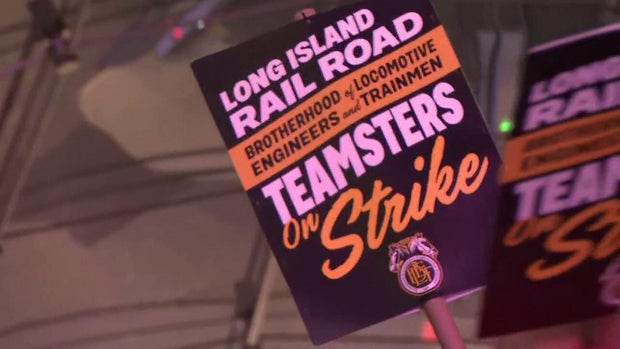
Sexton said his union believes management is at fault for the strike.
He said the MTA introduced health care contributions that were “never discussed in bargaining,” adding, “There were things that we had tried to talk about that they had previously discussed, and they flat out said they weren’t interested. We were far apart at this point, and we feel it’s unnecessary, because we went through the process.
“Wages in the fourth year, we were negotiating, we were willing to move down a little bit, but there’s a far distance again,” Sexton said.
Nassau County Executive Bruce Blakeman, who is running for governor, blamed Hochul for the work stoppage.
“Hundreds of thousands of Long Islanders woke up to chaos because Kathy Hochul failed to do her job. This strike didn’t come out of nowhere — Hochul knew this deadline was coming and still allowed commuters, small businesses, nurses, teachers, and tourists to become collateral damage. Hochul can’t pass a budget on time, can’t keep the trains running, and cares more about bailing out Zohran Mamdani than the commuters stranded on platforms. Hands down, Hochul is the worst governor in America,” Blakeman said in a statement.
Will ticketholders be refunded?
The LIRR website stated that there will be prorated refunds issued to May monthly ticket holders for the days the strike is impacting the trains.
Details on how to apply for a refund will be released, the website said.
LIRR shuttle bus service during strike
A bus service will run from five places on Long Island to take riders to subway stations in Queens.
Buses will run from the following LIRR stations and take commuters to the Howard Beach-JFK Airport A train station:
Buses will run from the following LIRR stations to the Jamaica-179th Street F train stop:
The agency is also encouraging people to use NICE Bus service to Flushing, Main Street and the Jamaica Bus Terminal, which are both near subway entrances.
Riders are also encouraged to work from home during the strike, if possible.
“Unfortunately, there is no substitute for the Long Island Rail Road, and its shutdown will cause severe congestion and delays,” the LIRR website stated.
“Headaches and more traffic gridlocks”
As mentioned before, more than a quarter million people ride the LIRR every day, so a strike means they have to find another way to get to work, not to mention big events around the city, including this weekend’s Subway Series between the Yankees and Mets at Citi Field, and, potentially, the Knicks’ run in the Eastern Conference finals next week.
Jason Russell, a SUNY Empire professor, said commuters will likely use their cars or work from home.
“But working remotely only really applies to about 40% of workers, so it will mean headaches and more traffic gridlocks in the short term,” he said.
“It’s going to be hard. It’s going to be confusing,” said Ugo Ibeabuchi, of Centereach. “I don’t know how to use the shuttle bus, the F train, nothing.”
“Hopefully, the app is pretty updated, to help us figure it out, otherwise, I don’t know,” added Lauren Bellizzi, of Holbrook.


