


New study suggests the T-Rex dinosaur grew in a very different way than previously thought | – The Times of India


New research using fossil bone analysis is overturning traditional scientific views on the growth and lifespan of Tyrannosaurus rex. Analysis of growth marks left inside leg bones at a cellular level has led researchers to determine the age and growth pace of several T. rex specimens and their closest relatives. Results reveal that the dinosaur had a very quick growing stage in its teenage years, thus attaining full size much sooner than had been assumed. The data further imply a smaller lifespan on average than what had been suggested. Collectively, these findings give us a more accurate idea of the physiology of one of the most famous prehistoric creatures, and they are also helping to resolve some of the ongoing issues in palaeontology regarding the metabolism, growth, and survival of dinosaurs. The research is based mainly on the really tangible fossil record rather than on predictions, making it a valuable new source of factual data from the anatomical records.
T-Rex experienced a short period of extremely rapid growth
In this study, “Prolonged growth and extended subadult development in the Tyrannosaurus rex species complex revealed by expanded histological sampling and statistical modeling”, the researchers examined 17 Tyrannosaurus rex species-complex individuals by taking detailed bone (femur and tibia) samples for histological analysis. The researchers analysed the bones, similar to how one counts the rings in a tree.
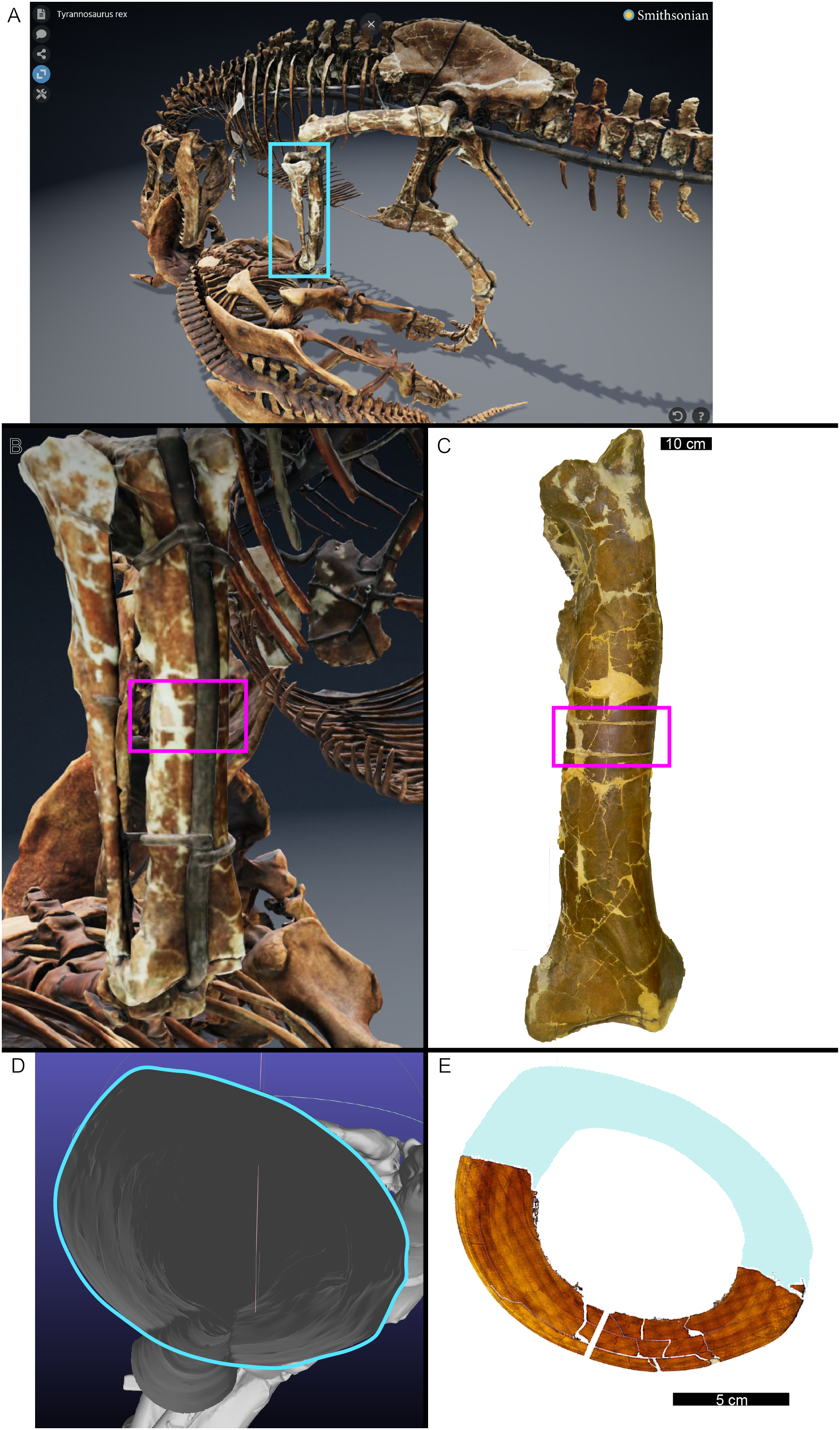
Detailed bone (femur and tibia) samples for histological analysis(Image Credit – Woodward HN, Myhrvold NP, Horner JR. 2026. Prolonged growth and extended subadult development in the Tyrannosaurus rex species complex revealed by expanded histological sampling and statistical modeling. PeerJ )
Here’s how it works, step by step, in simple terms.When a T. rex was alive, its bones did not grow all the time. Each year, growth slowed or paused, often because of seasonal changes like food availability. These pauses left behind thin lines inside the bone called growth rings or lines of arrested growth.After millions of years, those bones were fossilised. Scientists take a small sample from a weight-bearing bone, usually the leg bones, like the femur or tibia, because they record growth most clearly. The sample is sliced extremely thin and examined under a microscope.Each visible ring represents about one year of life. By counting those rings, researchers can estimate how old the dinosaur was when it died. The spacing between the rings also matters. Wide gaps mean rapid growth. Narrow gaps mean slower growth.
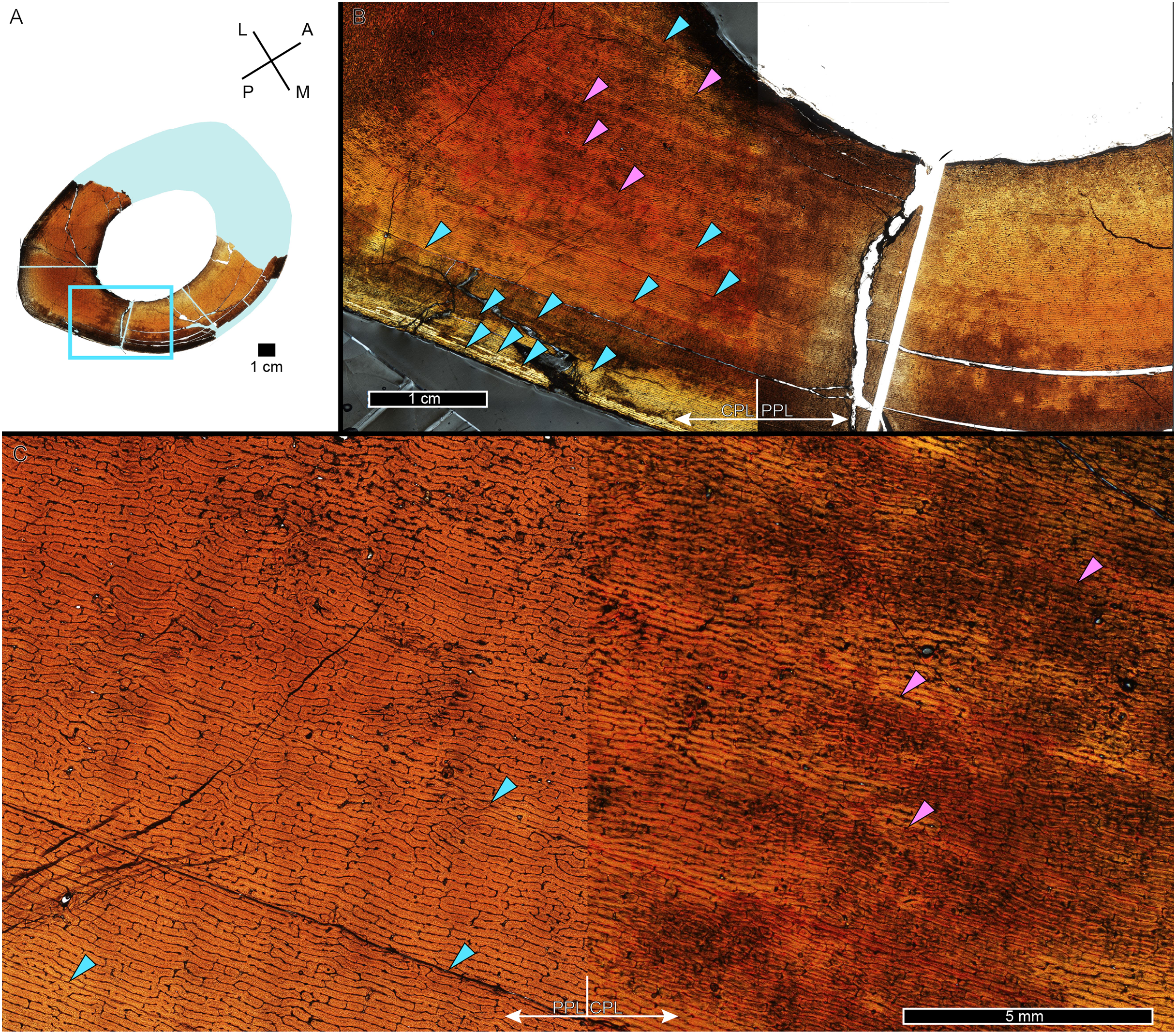
Detailed bone (femur and tibia) samples for histological analysis(Image Credit – Woodward HN, Myhrvold NP, Horner JR. 2026. Prolonged growth and extended subadult development in the Tyrannosaurus rex species complex revealed by expanded histological sampling and statistical modeling. PeerJ )
Using this method, scientists can tell:
- How old was a T. rex
- How fast it grew at different stages of life
- When it hit its teenage growth spurt
- When growth slowed as it reached adulthood
It is not perfect. Some rings can be lost as bones remodel themselves over time, especially in older animals. But by comparing many fossils and using related species for reference, scientists can make very reliable estimates.


