


Ukraine makes fastest gains in years as Russia talks stall, exploiting cracks in Kremlin command


NEWYou can now listen to Fox News articles!
As U.S.-backed negotiations between Russia and Ukraine in Geneva ended without a breakthrough, Kyiv made gains on the battlefield, recapturing territory at its fastest pace in years through localized counterattacks along the southeastern front.
The advances come as analysts point to disruptions in Russian battlefield communications and shifting operational dynamics, developments that could strengthen Ukraine’s leverage even as talks remain stalled.
Ukrainian forces retook about 78 square miles over five days, according to a report by Agence France-Presse based on an analysis of the Institute for the Study of War battlefield mapping. The gains represent Kyiv’s most rapid territorial advances since its 2023 counteroffensive in the Donetsk and Zaporizhzhia regions.
Lt. Gen. Richard Newton, USAF (Ret.), said Ukraine’s battlefield performance should not be underestimated as the war drags on. “As this war grinds on, the world too often forgets that Ukraine’s determination, innovation and moral clarity are force multipliers. Its ability to defend against a larger, better-resourced enemy should never be counted out,” Newton told Fox News Digital. “There are growing signs that Russia’s supposed invincibility is no longer a safe assumption, particularly as pressure increases on the Kremlin and its partners.”
UKRAINE SAYS IT CARRIED OUT FIRST-EVER UNDERWATER DRONE STRIKE ON RUSSIAN SUBMARINE IN NOVOROSSIYSK
Ukrainian soldiers from the 115th Brigade Mortar Unit conduct mortar training, as members of the Anti-UAV unit test an FPV drone inhibitor in Lyman, Ukraine. (Jose Colon/Anadolu via Getty Images)
The fighting has centered east of Zaporizhzhia, where Russian forces have steadily advanced since mid-2025. Open-source battlefield monitoring and mapping indicate Ukrainian troops pushed forward around Huliaipole and nearby settlements, though analysts caution the front remains fluid, and some areas are not fully secured, The Telegraph reported.
The Institute for the Study of War assessed in mid-February that the counterattacks appear to be exploiting disruptions in Russian command-and-control. ISW said Ukrainian forces are likely leveraging limits affecting Russian battlefield communications, including reported restrictions tied to the use of Starlink satellite terminals and messaging platforms cited in open-source reporting.
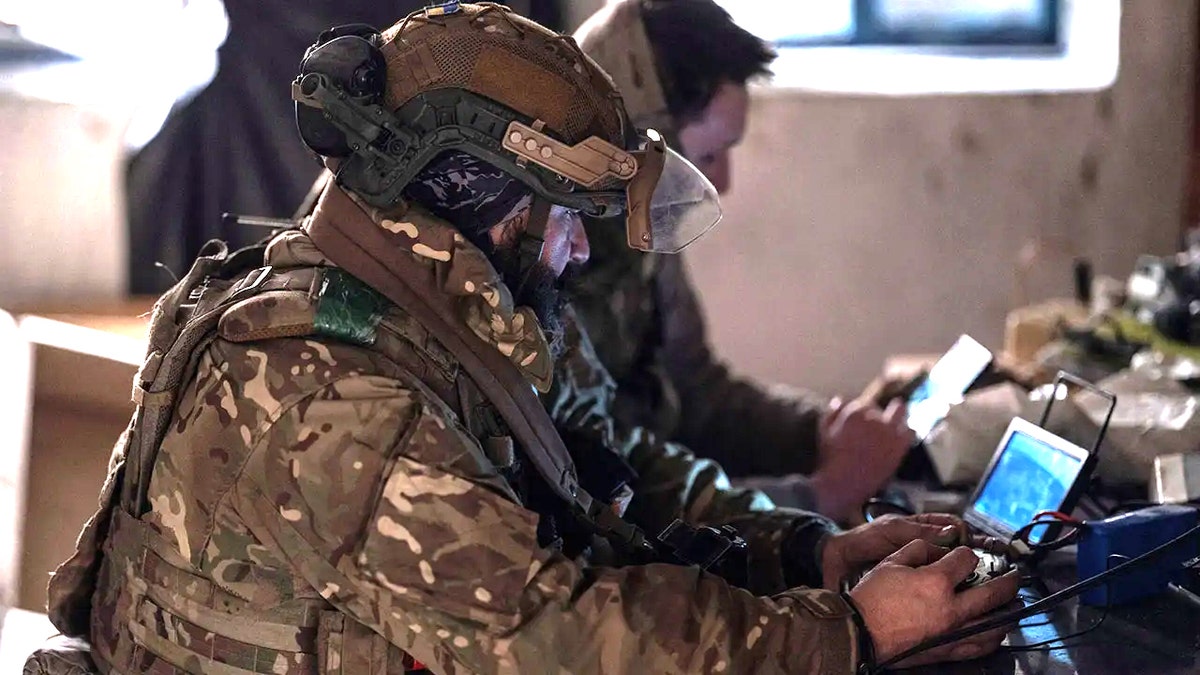
Service members of the strike UAV platoon of the 93rd Kholodnyi Yar Separate Mechanized Brigade of the Ukrainian Armed Forces control an FPV drone with optical fiber guidance with a parcel containing items attached for delivery to their brothers-in-arms at a position in the frontline town of Kostiantynivka amid Russia’s attack on Ukraine. Kostiantynivka, Donetsk region, Ukraine, on Feb. 17, 2026. (Iryna Rybakova/Press Service of the 93rd Kholodnyi Yar Separate Mechanized Brigade of the Ukrainian Armed Forces/Reuters)
Analysts say reduced connectivity can create short windows for Ukrainian units to move through contested zones that are typically dominated by drone surveillance and electronic warfare. ISW and other observers emphasize that such opportunities are temporary and do not signal a broader collapse in Russian defenses.
The evolving fight is also shaped by the growing role of drones. In a Feb. 10 special report, ISW said Russia’s expanding use of first-person-view drones reflects a campaign to “weaponize and institutionalize intentional civilian harm as a purposeful tool of war,” warning the tactic is becoming embedded in operational doctrine and could influence future conflicts.
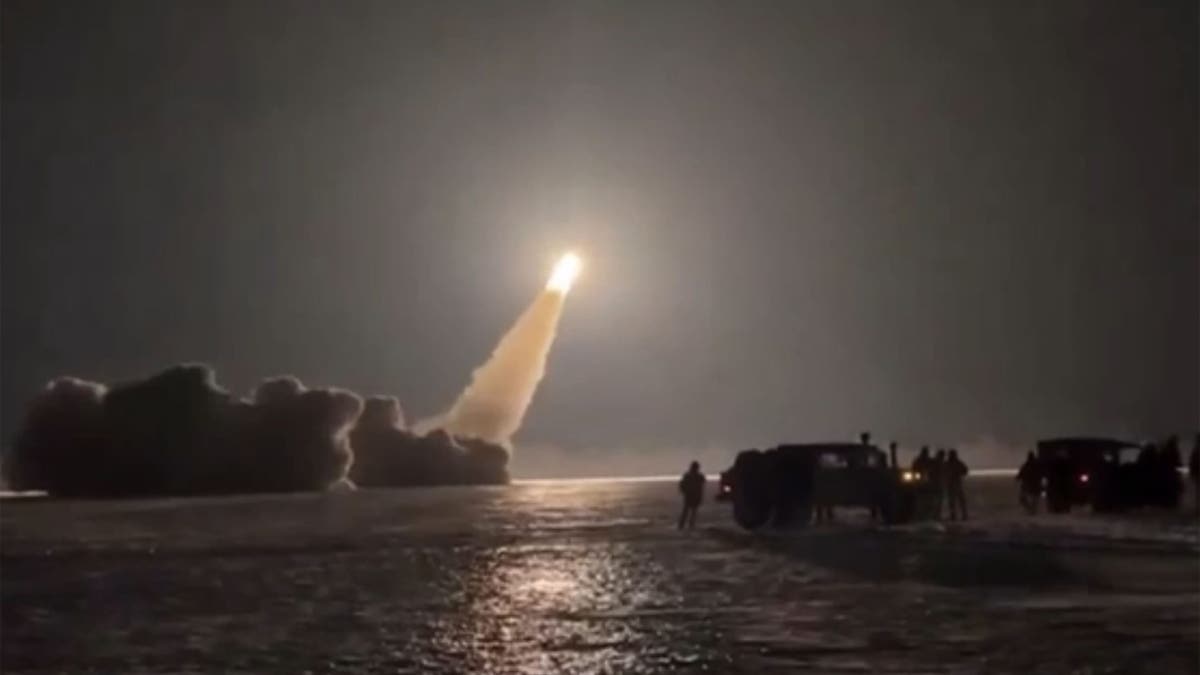
Ukraine fires six FP-5 Flamingo missiles in a night strike on Russia’s 117th GRAU arsenal. Kotluban, Volgograd Region. (East2west)
Despite the recent gains, analysts caution against viewing the developments as a decisive shift in the war. Newton argued that sustained Western military support remains essential. “Putin responds to force,” he said. “The United States and Europe should continue providing Ukraine with both defensive and offensive capabilities, including long-range systems capable of striking deep inside Russia.”
Vice Adm. Robert S. Harward, USN (Ret.), said battlefield gains are increasingly tied to diplomacy. “Both sides are trying to use battlefield advances to strengthen their position at the negotiating table,” Harward said. “It’s a sign neither side is ready to strike a deal yet.”
Harward pointed to Ukrainian President Volodymyr Zelenskyy’s stated willingness to hold elections following a ceasefire as evidence Kyiv is signaling flexibility, while Moscow continues to press its demands. “If a lasting and fair diplomatic agreement is achievable, the current U.S. team is well-positioned to help deliver it,” he said. “But negotiations must be paired with sustained pressure on Russia and its partners.”
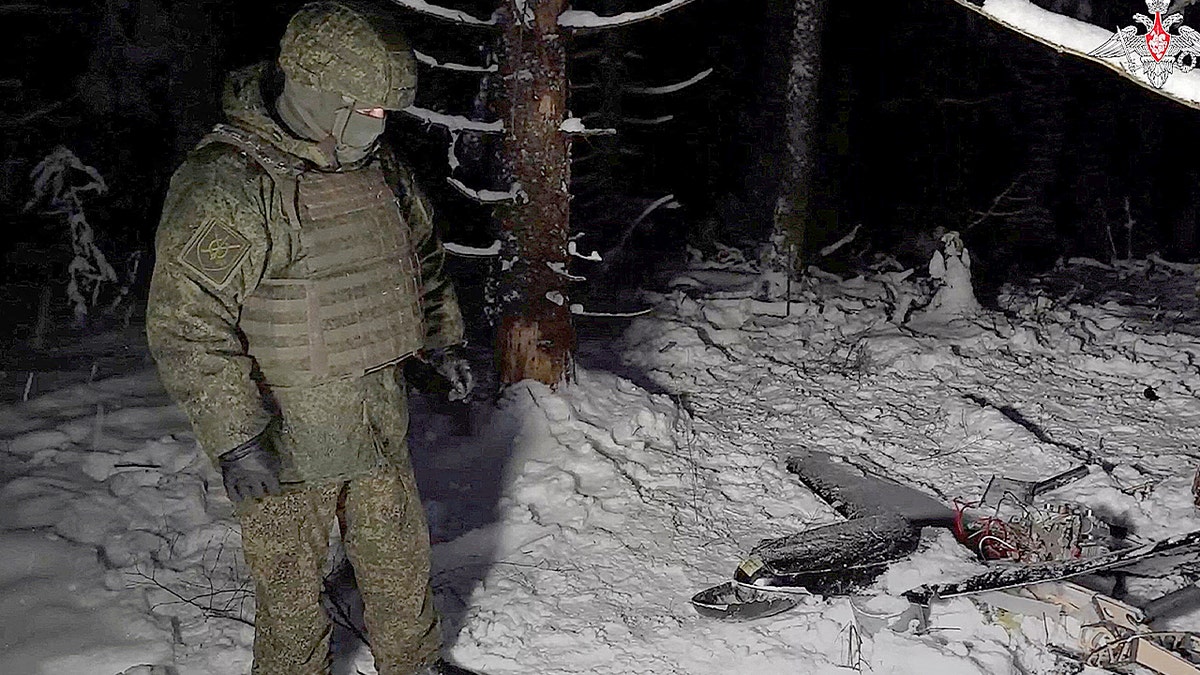
Russia releases drone footage of an alleged Ukraine attack on Putin residence. (Russian Defence Ministry/Handout via REUTERS )
CLICK HERE TO DOWNLOAD THE FOX NEWS APP
Nearly two years after Ukraine’s last major offensive stalled, the war remains defined by incremental territorial changes rather than sweeping breakthroughs. Both sides continue to rely heavily on drones, artillery and electronic warfare, with front lines shifting village by village.
“As U.S.-led talks continue, it is critical to increase pressure on Putin to end the war on terms that restore deterrence and prevent further aggression,” Newton said.


