


US prisons battle evolving drone technology used to smuggle contraband to inmates


NEWYou can now listen to Fox News articles!
COLUMBIA, S.C. – More drones are being detected flying over U.S. prisons than ever before and federal regulations make it harder for state prisons to do anything about it.
Advancements in drone detection technology have shown a dramatic increase in airborne smuggling operations over U.S. prisons since 2018. The Federal Bureau of Prisons reported 479 drone incidents at federal prisons in 2024, a substantial rise from 23 incidents in 2018. Unlike the federal government, states cannot shoot down a drone or jam its radio frequencies.
Joel Anderson, director of South Carolina’s Department of Corrections, said his team is leading the nation in developing drone detection systems. South Carolina reported 262 drone incursions over its prisons in 2022, up from 69 in 2019.
“We get assaulted nightly,” Anderson said. “We get assaulted at multiple institutions at night.”
Within seconds of being alerted to a drone incursion, a drone response team scrambles to the location of a payload drop. (Fox News)
Anderson has watched drone smuggling missions become more elaborate in recent years. When smugglers first went airborne, he said drones only carried about four pounds and reached a top speed of 45 miles per hour. Now, massive heavy-lift drones traveling more than 75 miles per hour are hauling 25-pound duffle bags of contraband over prison fences.
“At some institutions, it’ll be nights just one right after another… They may have multiple drops in one night, just flying back and forth to the controller and back to the institution,” Anderson said.
Most of the criminal drone pilots are former inmates who already have connections inside and know the layout of the facility. Many inmates contact them with illegal cellphones obtained in prison.
Most of the time, Anderson said drone pilots will try to camouflage their payloads, making it harder to spot from a distance.
“If they’re lying on the grass out there, say, on a green day during the summer months, a lot of times they’ll take duct tape and put grass on it and lay it across the yard,” Anderson said. “It’s not easy to see from here. You know, you have to be right on top of it to be able to see and detect it.”
UFO-LIKE ‘DRONES’ TARGET POLICE HELICOPTER OVER AIR BASE BEFORE VANISHING: REPORT
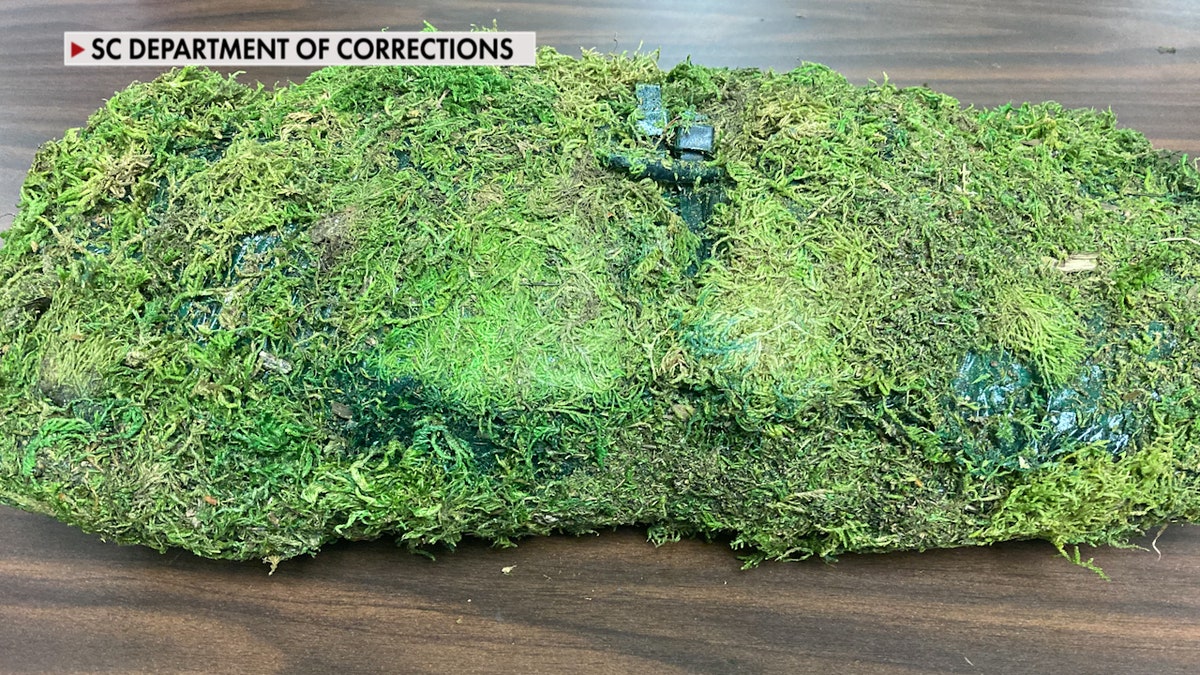
A drone payload wrapped in grass in South Carolina. (Fox News)
South Carolina has developed a drone detection system for all of its medium and maximum security prisons. When a drone is over a facility, select prison staff get a cellphone alert that a drone is in the area. Seconds later, a dedicated drone response team scrambles to the location of the drop.
Within minutes, the drone is out of sight unless it crashed or the prison’s drone team followed it back to the controller.

The South Carolina Department of Corrections uses a system that alerts specific prison staff when a drone flies over a prison. (Fox News)
“We’ve had drones caught in our nets. We’ve had drones caught in our fences. We’ve had drones crash on the yard. We’ve had drones where the battery ran out,” Anderson said.
The drone team confiscates disabled drones and pulls their in-flight records, which show investigators the drone’s previous flights, the paths it took and the images it created.
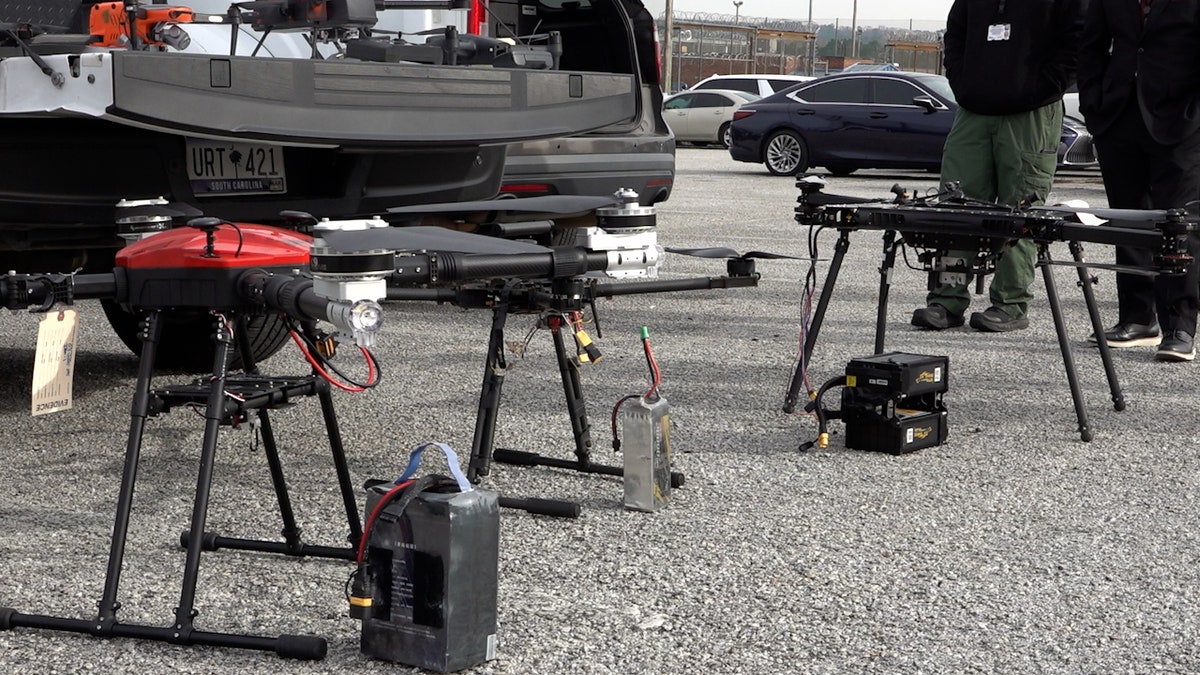
The South Carolina Department of Corrections drone team confiscates disabled drones before pulling their in-flight data.
Anderson said flight data can lead law enforcement to a drone pilot’s front door for an easy arrest.
“In some cases, our crooks are so smart that they’ll fly them in their own yards,” Anderson said. “We had one fly and took a picture of his mailbox, and that’s how we went and got him.”
Currently, detection and confiscation is all states can do when a drone flies over its prison. The Federal Aviation Administration prohibits states from bringing down drones because they are considered registered aircraft.
Anderson agreed that shooting down a drone could be dangerous for people inside and outside the prison because they often carry deadly drugs.
“We picked up enough fentanyl, one institution to kill the entire prison system one time. Four hundred and sixty-four grams of fentanyl in one bag with one drone,” Anderson said. “We would hate to disable a drone, and it flies off into a subdivision somewhere, and then we don’t know where it is.”

The Federal Aviation Administration prohibits states from taking down drones because they are considered registered aircraft. State prisons can only detect and confiscate drones and their payload. (Fox News)
Anderson said drone smuggling wouldn’t be as big of an issue if inmates didn’t have access to the illegal cell phones they pay people thousands of dollars to smuggle in.
The Federal Communications Commission is looking to allow states to use radio-jamming technology, which would prevent inmates from contacting people outside the prison walls.
“I applaud our staff for being as steadfast as they are. They’re good at what they do,” Anderson said. “I’d much rather be using them in the living areas, watching inmates, than running around out here chasing illegal packages, because a lot of it is caused by these illegal cell phones that we have that give them direct communication with their counterparts outside the fences.”
CLICK HERE TO GET THE FOX NEWS APP


