


Total Lunar Eclipse 2026: Chandra Grahan Date, Sutak Kaal, And City-Wise Visibility Timings In India


Last Updated:
Lunar Eclipse 2026 Date And Time In India: Lunar Eclipse 2026 coincides with Holi on March 3. Find the best city-wise timings and experience the spectacular Blood Moon.




Lunar Eclipse 2026: The March 3, 2026 lunar eclipse will coincide with Holi. (Image: Shutterstock)
Lunar Eclipse 2026 Date And Time In India: India will witness its first lunar eclipse of 2026 on March 3, the same day as Holi. A lunar eclipse occurs when Earth moves between the Sun and the Moon, casting its shadow on the Moon. This time, it will be a total lunar eclipse, meaning the Moon may turn copper-red during totality – a phenomenon popularly known as a Blood Moon.
In many Indian cities, the eclipse will appear as a rare “Grastodaya” event, where the Moon rises already darkened. Instead of watching the eclipse begin, viewers will see the Moon emerge above the horizon partially or fully eclipsed, creating a dramatic twilight spectacle.
IN PICS: First Lunar Eclipse Of 2026 To Fall On Holi; These 4 Zodiac Signs May Face Trouble
In parts of Northeast India, the Moon may glow deep red at rise, offering one of the most dramatic celestial views of the year.
Here’s what to expect, and exactly when to look up in your city.
Lunar Eclipse 2026: Date And Time
The eclipse unfolds through several phases on March 3, 2026:
- Penumbral begins: 2:14 PM
- Partial begins: 3:30 PM
- Totality begins: 4:58 PM
- Maximum eclipse: 5:25 PM
- Totality ends: 5:32 PM
- Partial ends: 6:47 PM
- Penumbral ends: 7:53 PM
(Timings based on astronomical data from NASA and timeanddate.com.)
However, most Indians will only see the eclipse around moonrise, making location critical.
Will this Total Lunar Eclipse be visible in India?
Yes, the Total Lunar Eclipse on March 3, 2026, will be partially or fully visible across India depending on your city. Northeastern states will see the most dramatic view, with the Moon rising already in eclipse, while other regions may catch only the later partial phases.
IN PICS: GK: Why Moon Turns Red During Lunar Eclipse?
Chandra Grahan Sutak Kaal Timings In India
The Sutak period for a Chandra Grahan begins exactly nine hours before the eclipse starts. For March 3, 2026, the Sutak in India will begin at 6:20 AM and continue until the eclipse ends in the evening.
City-wise Visibility: Where Total Lunar Eclipse will be seen in India
| NORTHEAST INDIA: BEST VISIBILITY | ||
| City | Moonrise | Visible Phase |
| Guwahati | 5:45 pm | Total eclipse at rise |
| Dibrugarh | 5:40 pm | Deep totality |
| Itanagar | 5:35 pm | Total at moonrise |
| Shillong | 5:44 pm | Blood Moon visible |
Skywatchers here may witness a copper-red Moon shortly after it rises.
| EASTERN INDIA | ||
| City | Moonrise | Visible Phase |
| Kolkata | 6 pm | Late total / partial |
| Bhubaneswar | 6:05 pm | Partial |
| Patna | 6:12 pm | Partial |
| DELHI, NORTH & CENTRAL INDIA | ||
| City | Moonrise | Visible Phase |
| New Delhi | 6:26 pm | Ending partial |
| Jaipur | 6:28 pm | Partial |
| Lucknow | 6:18 pm | Partial |
| Bhopal | 6:24 pm | Partial |
Totality may have ended before moonrise in these regions.
| WESTERN INDIA | ||
| City | Moonrise | Visible Phase |
| Mumbai | 6:30 pm | Late partial |
| Ahmedabad | 6:35 pm | Brief partial |
| Pune | 6:32 pm | Final phase |
| SOUTHERN INDIA | ||
| City | Moonrise | Visible Phase |
| Chennai | 6:15 pm | Partial |
| Bengaluru | 6:28 pm | Partial |
| Hyderabad | 6:22 pm | Partial |
| Thiruvananthapuram | 6:23 pm | Partial |
Why It’s Called a Grastodaya Eclipse
Grastodaya refers to a lunar eclipse where the Moon rises already eclipsed. On March 3, many Indian cities will not see the eclipse begin, only the later stages at moonrise.
Holi and Sutak: What It Means
Since the eclipse coincides with Holi, it holds cultural relevance. In some traditions, a Sutak period may be observed if the eclipse is visible locally. Practices vary by region and personal belief.
ALSO READ: Lunar Eclipse To Coincide With Holi This Year: Timing, Visibility And Sutak Explained
Astrology-based interpretations suggest impact on Aries, Cancer, Libra and Capricorn — though these claims are not supported by scientific evidence.
What Is a Lunar Eclipse?
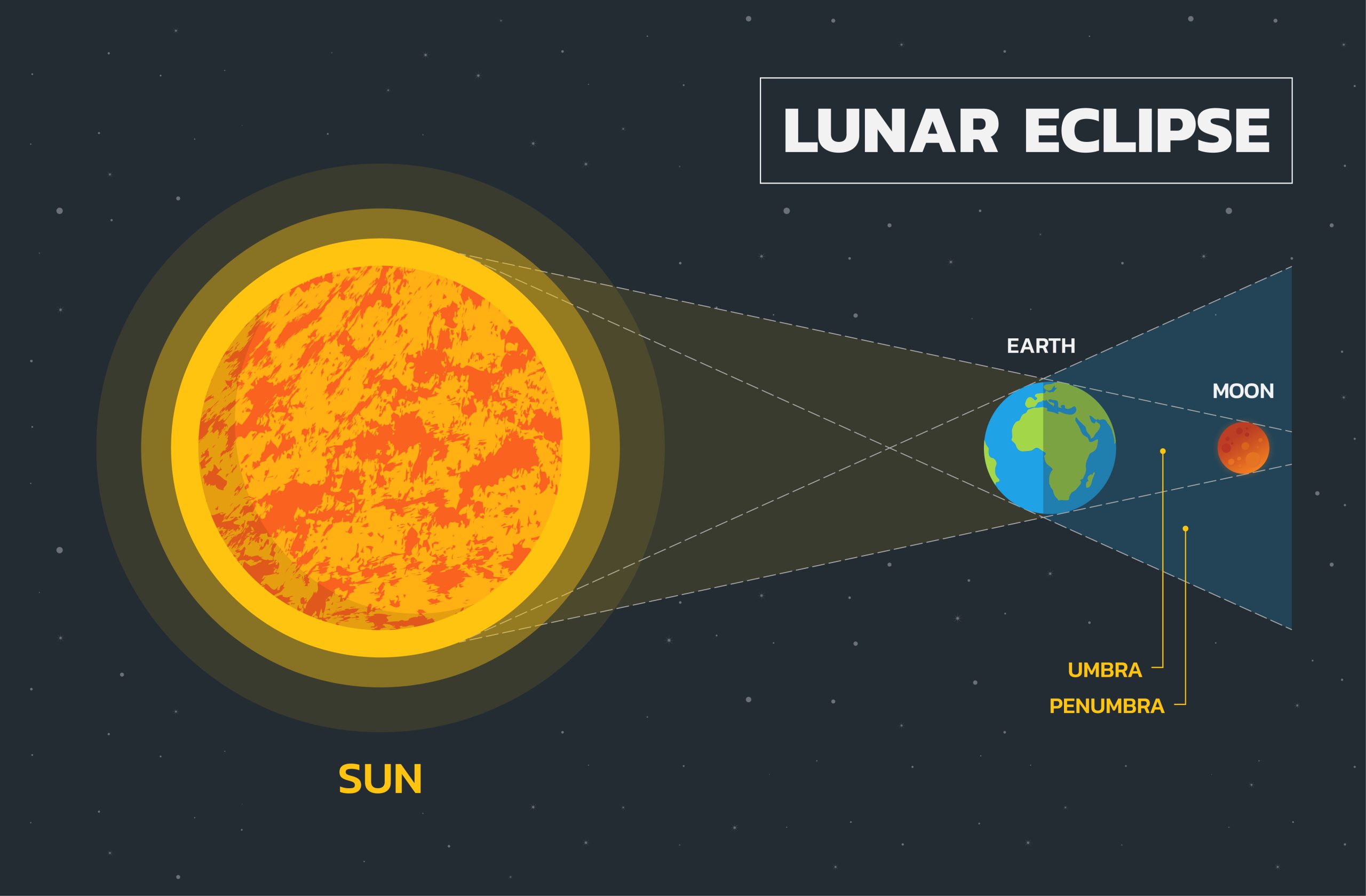
A lunar eclipse happens when Earth moves between the Sun and the Moon, casting a shadow on the Moon. During totality, the Moon can turn red — often called a Blood Moon — due to atmospheric light scattering.
Why Does the Moon Turn Red? (Blood Moon Explained)
During a total lunar eclipse, the Moon may turn copper-red. This is popularly known as a Blood Moon.
IN PICS: Four Eclipses In 2026, But India Will See Just One, Here’s When
The red colour occurs due to atmospheric scattering. Earth’s atmosphere filters out blue light and bends red wavelengths toward the Moon — similar to how sunsets appear red.
Types of Lunar Eclipses
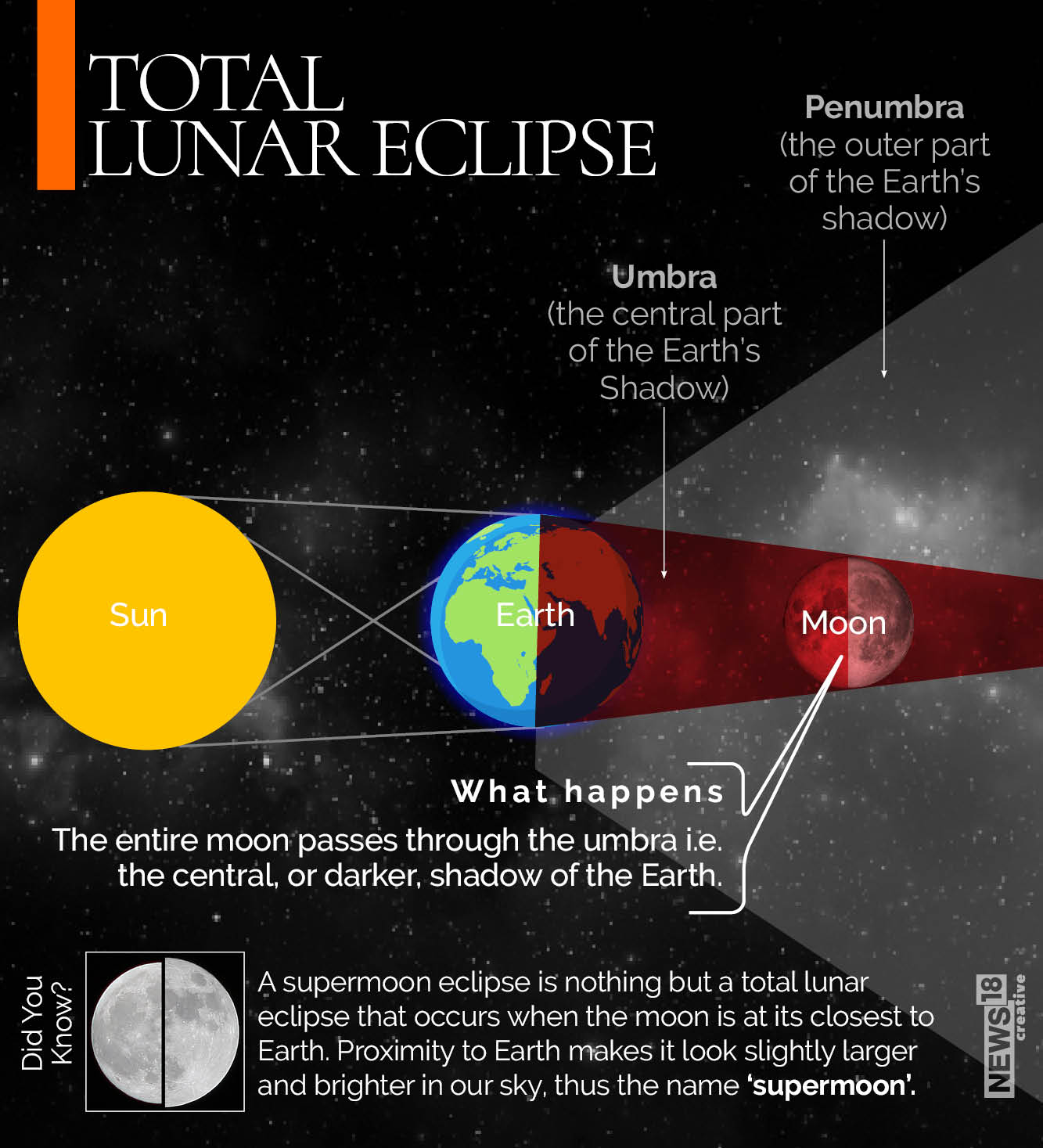
- Total Lunar Eclipse: The Moon fully enters Earth’s umbra and may appear red.
- Partial Lunar Eclipse: Only part of the Moon enters the umbra, creating a dark “bite.”
- Penumbral Lunar Eclipse: The Moon passes through Earth’s outer shadow, causing subtle dimming.
Why Isn’t There a Lunar Eclipse Every Month?
Even though a full Moon occurs every month, the Moon’s orbit is tilted about 5 degrees relative to Earth’s orbit. Most months, the alignment is not perfect, so no eclipse occurs.
Is It Safe to Watch?
Yes. Lunar eclipses are completely safe to view with the naked eye.
No glasses are required.
ALSO READ: Lunar Eclipse March 3, 2026: Pregnancy Myths, Facts And Safety Tips
How to watch Lunar Eclipse?
If clouds block your view, live coverage will likely be available on:
NASA
timeanddate.com
You can also watch it live on Space.com. Click Here
Why This Eclipse Matters
- It’s the first lunar eclipse of 2026
- It coincides with Holi
- Northeast India gets prime visibility
- Appears as a rare Grastodaya event
- For skywatchers, photographers and festival observers alike, March 3 could offer a rare blend of culture and cosmic drama.
Mark your calendar, and check your city’s moonrise time before stepping out.
February 26, 2026, 10:31 IST


