


Can You Indulge In Chocolate During Navratri?


In the purest form, cocoa is a bean—a seed from a fruit. Technically, it fits within the plant-based requirements of a Navratri diet. However, the chocolate bars we find on supermarket shelves are rarely pure. (Image: AI Generated)
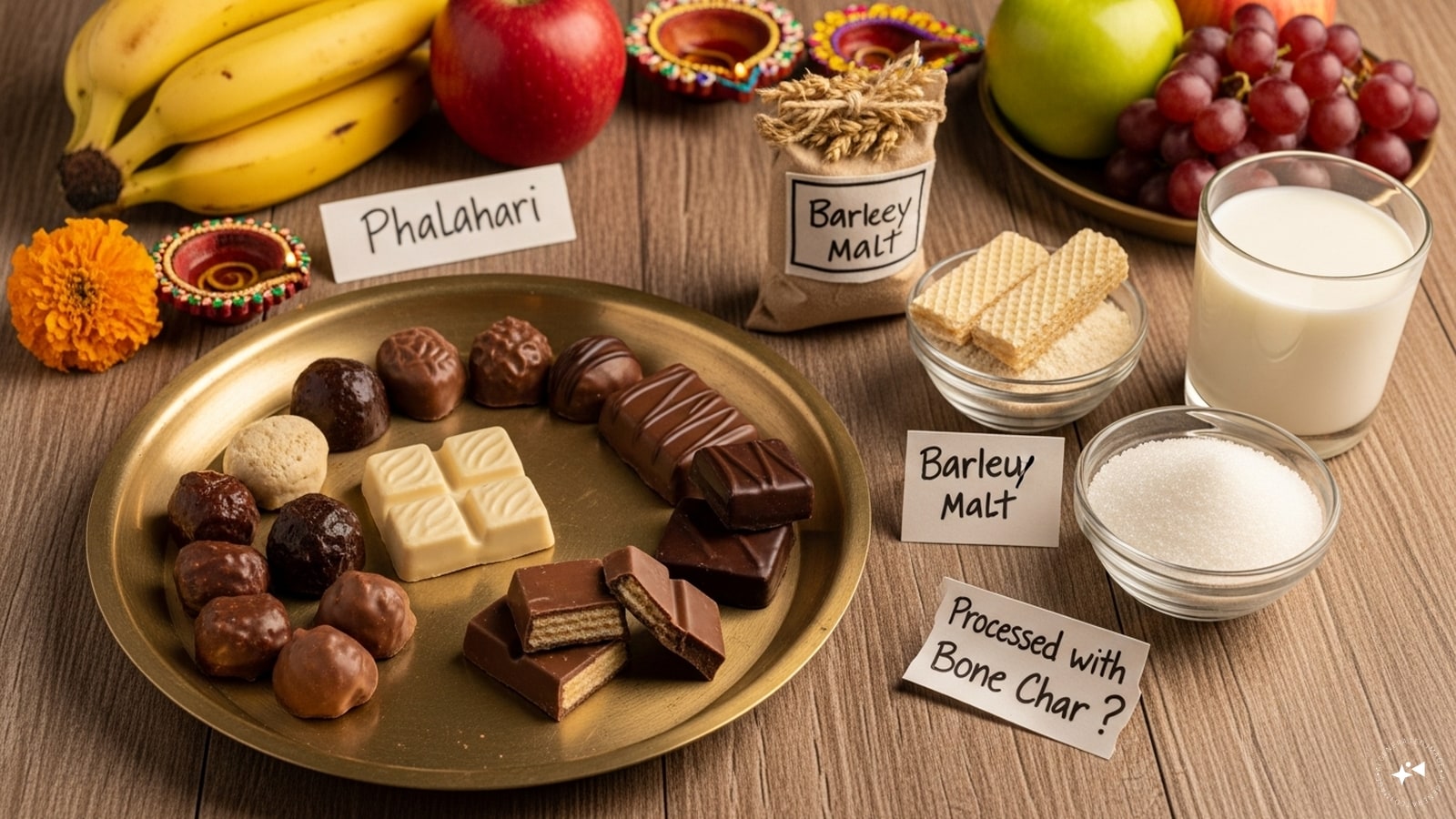
To determine if your chocolate is Vrat-friendly, you need to look at three main components:
– Grains and Flours: Some chocolates use malt (derived from barley) or wafer fillings (wheat flour). These are strictly forbidden during Navratri.
– The Sweetener: Standard white sugar is generally accepted, but some ultra-strict observers avoid it if it’s processed using certain bone-char methods.
– The Dairy: Most milk chocolates are fine since dairy is a staple of the Navratri diet. However, if you are following a “Phalahari” diet that excludes all processed foods, chocolate might be a grey area. (Image: AI Generated)
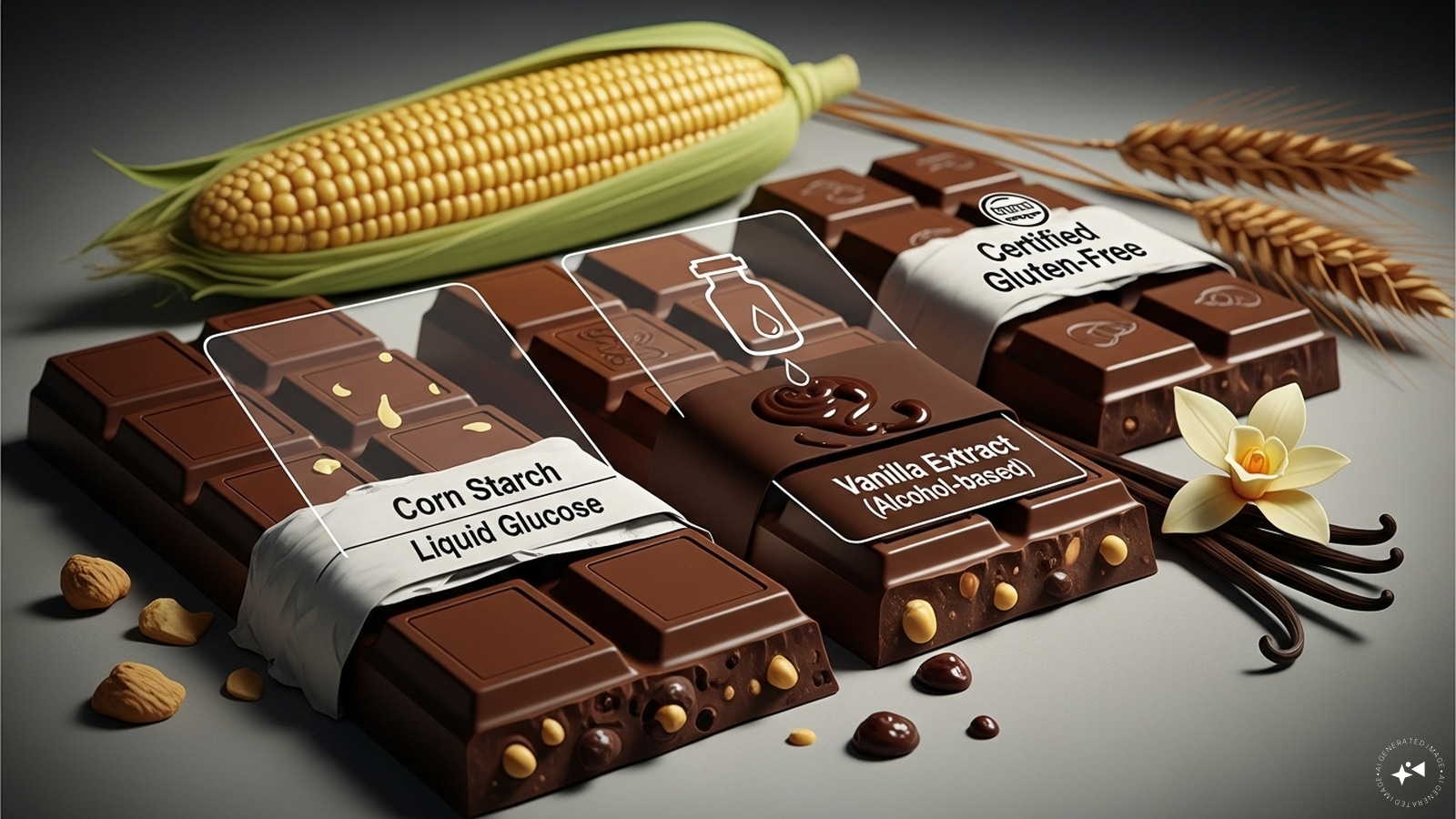
The biggest trap isn’t the cocoa itself; it’s the industrial additives. When you pick up a standard commercial chocolate bar, you aren’t just getting cocoa and sugar. You are often getting:
– Corn Starch or Liquid Glucose: Many cheap chocolates use these as thickeners or stabilizers. Since corn is a grain, it is traditionally excluded from the Navratri diet.
– Vanilla Extract (Alcohol-based): Most high-end chocolates use vanilla extract. While the alcohol content is negligible, some strict observers avoid it because alcohol (even as a solvent) is considered Tamasic. Look for “Vanillin” or actual vanilla bean pods instead.
– Contamination Risks: Most chocolate is processed in facilities that handle wheat and cereals. If your fast is driven by a strict gluten-free “cleansing” logic, look for a “Certified Gluten-Free” label. (Image: AI Generated)
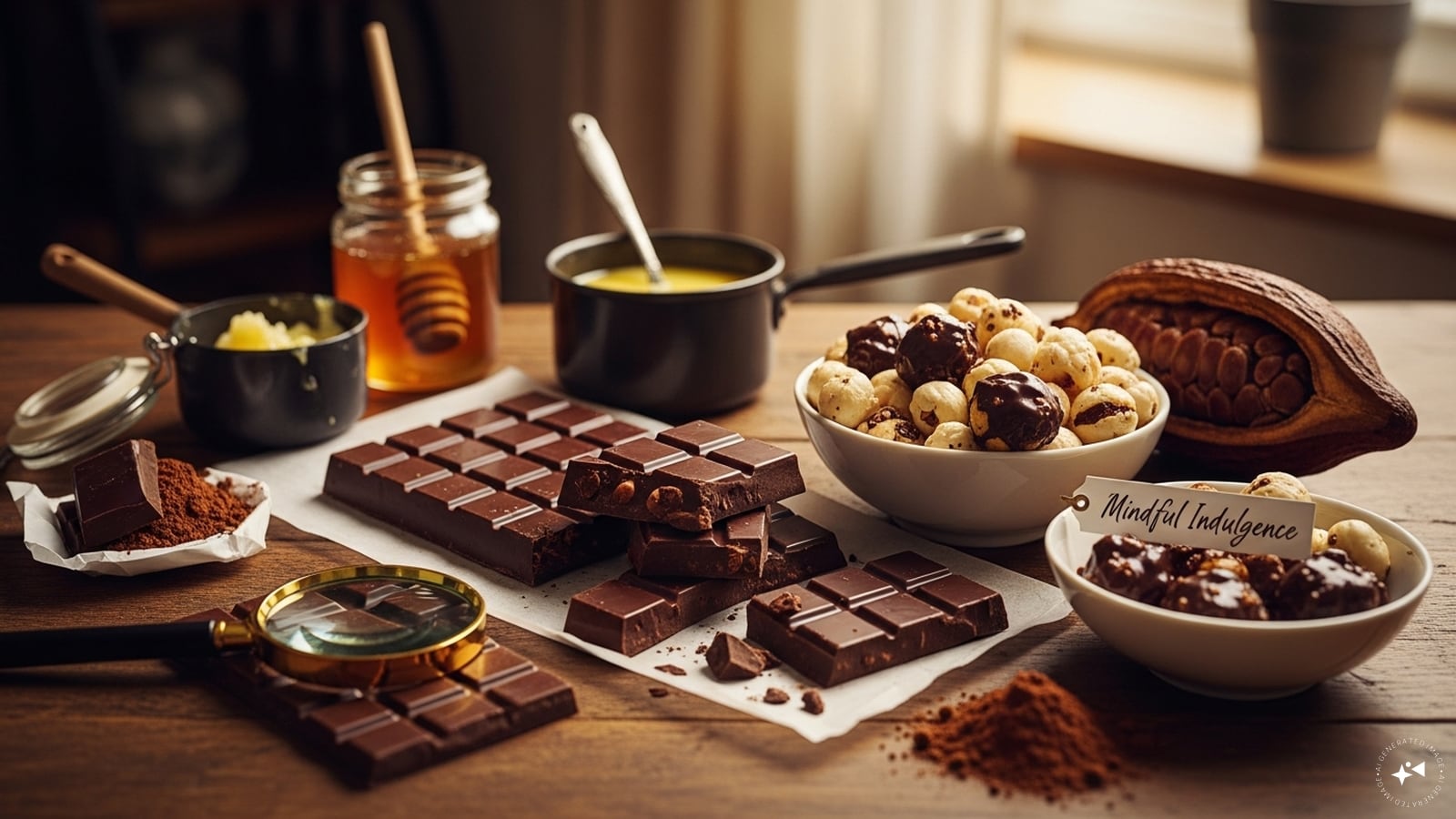
How To Enjoy Chocolate Mindfully?
If you’re looking for a cocoa fix without breaking your spiritual discipline, follow these golden rules:
– Opt For Dark Chocolate: Aim for high-quality dark chocolate (70% cocoa or higher). These usually have fewer additives and no grain-based fillers.
– Check for “Lecithin”: Most chocolates contain soy lecithin. While soy is a legume (usually avoided), many people find it acceptable in the tiny quantities found in chocolate. If you are a purist, look for sunflower lecithin instead.
– Read the Fine Print: Avoid anything with “biscuit,” “wafer,” or “malt.”
– Homemade Chocolate: The safest way? Make your own! Mix cocoa powder with melted ghee or coconut oil and a bit of honey or jaggery. Pour it over some roasted Makhana (fox nuts) for a crunchy, chocolatey treat that is 100% Navratri-approved. (Image: AI Generated)
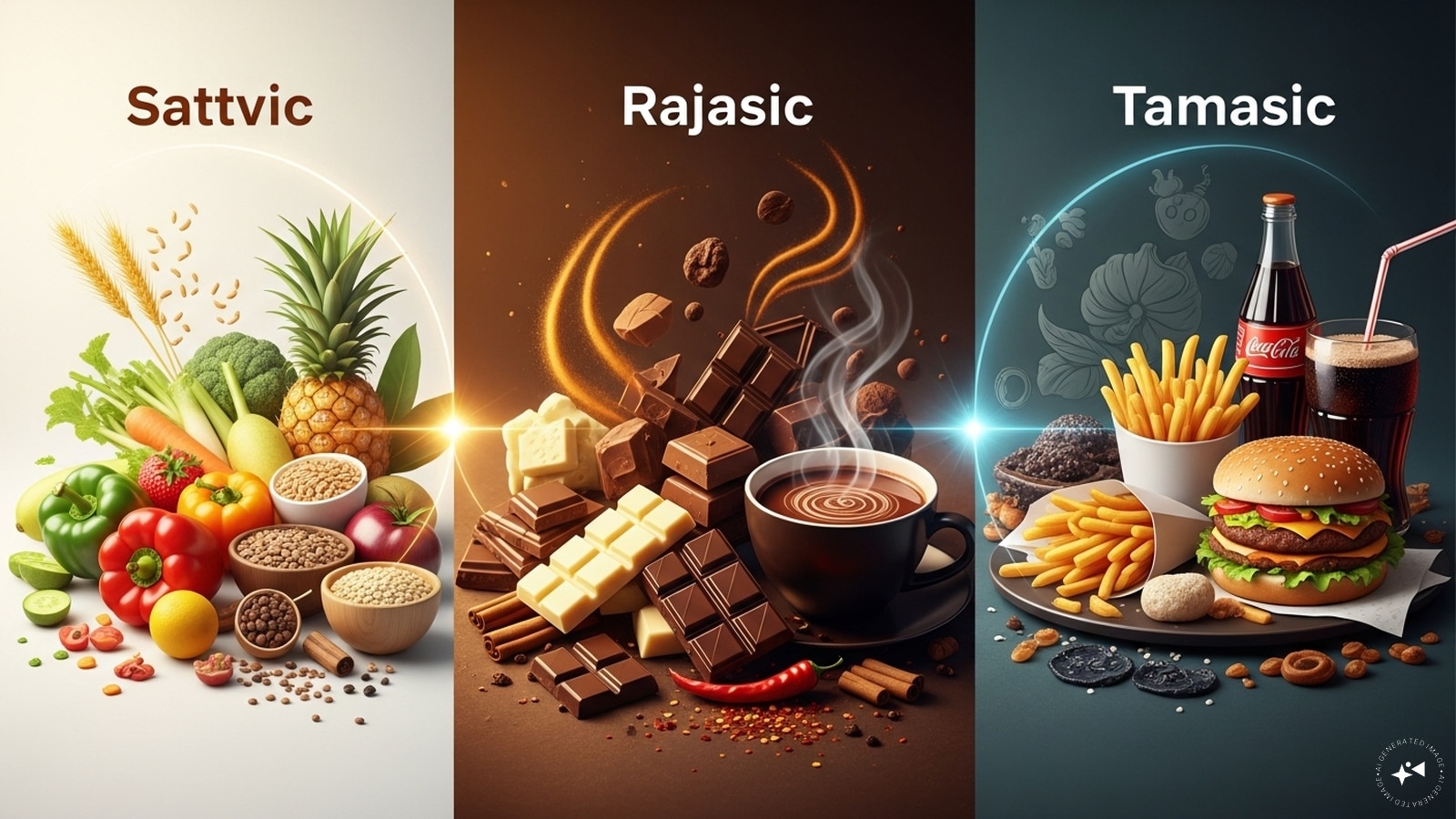
In Ayurveda, food is categorized as Sattvic (pure), Rajasic (stimulating), or Tamasic (dull). Chocolate is inherently Rajasic—it stimulates the mind and body. (Image: AI Generated)
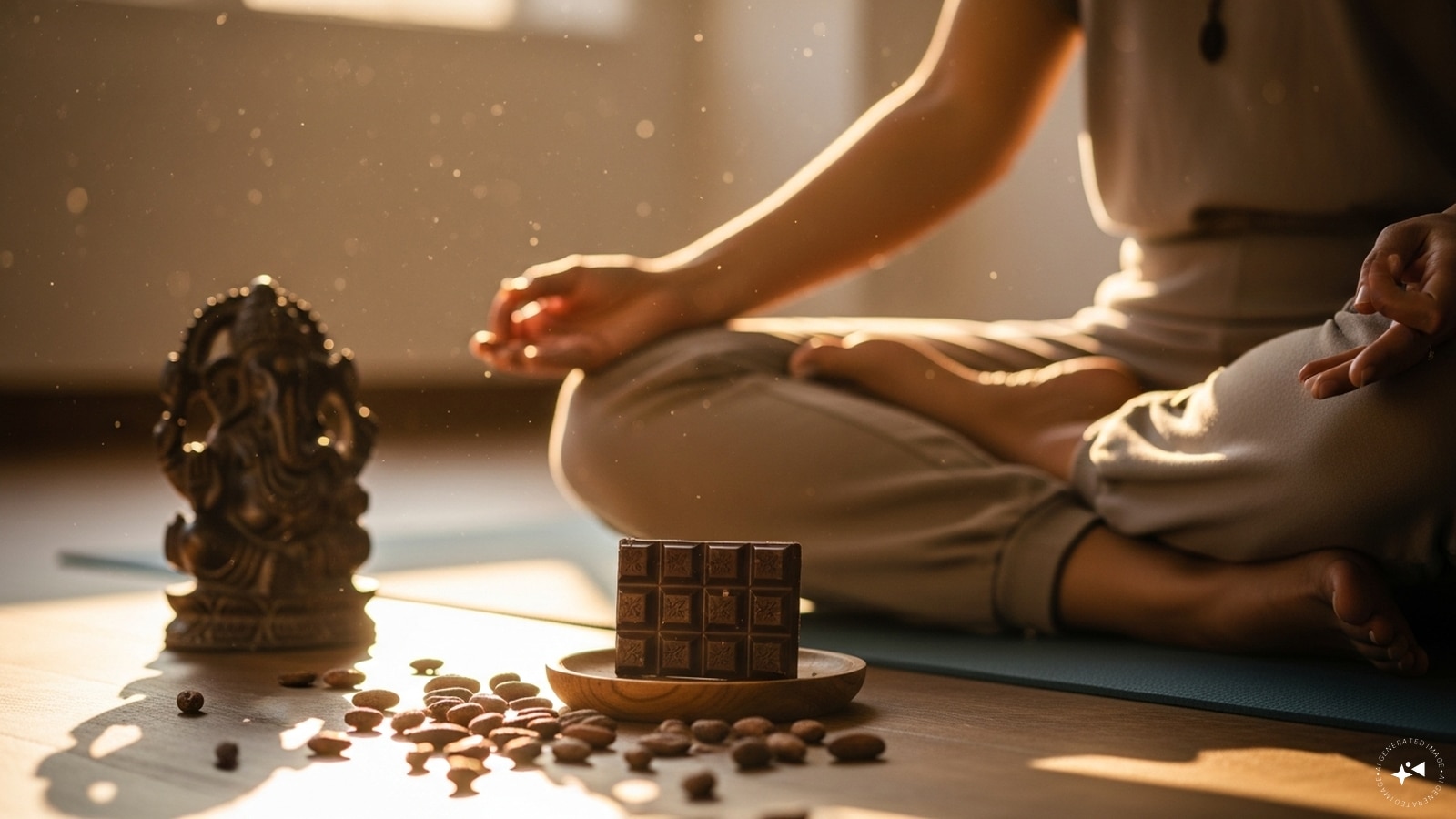
While Navratri aims for a Sattvic state, many modern practitioners find that a small amount of “stimulating” dark chocolate is better for their temperament than being irritable from low energy! (Image: AI Generated)


