


Of course British women are the angriest in Europe – let me list the reasons


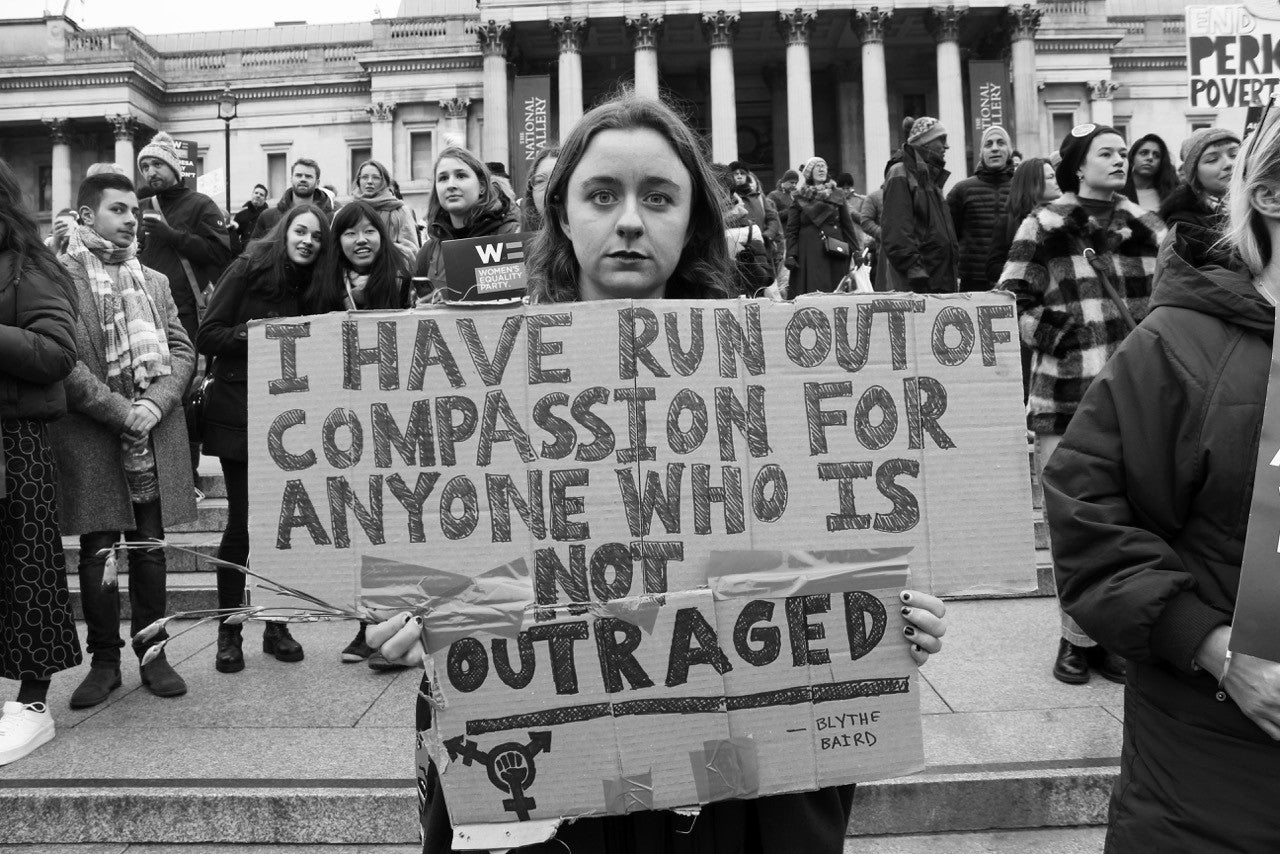
No one wants to hear about how angry women are any more, do they? It was bad enough in the wake of Sarah Everard’s murder. Not to mention the endless #MeToo saga. And the roiling wrath sparked by the Epstein files. It’s all a bit… yawn, right? I think we’re pretty much “over” female rage by now.
The problem is – and I’m terribly sorry to be the one to point it out – there always seems to be more and more bulls*** for us to be angry about. Especially in the UK. It was depressingly unsurprising to hear that women in Britain are apparently the angriest in Europe, according to newly published data.
Nearly a quarter of us report feelings of rage compared to just one in seven on the continent, per the Hologic Global Women’s Health Index, an annual league table based on polls of more than 76,000 women and girls around the world.
The index revealed that British women had experienced a remarkable upsurge in fury: rates were 47 per cent higher than the previous year. By comparison, anger levels in other European countries have remained fairly stable during that time.
As these figures derive from a health index, let’s start there – specifically women’s, which seems to be getting worse.
1) The UK has dropped to its lowest-ever position on the index, plummeting from position 41 to 48 out of 142 countries in the space of just one year. This fall from grace pushed the UK out of the top third of nations, which, considering we have the world’s fifth-largest economy by GDP, is little short of a disgrace.
Nearly a third of British women reported being in physical pain the previous day, the highest level recorded since the Index began and an increase of 10 per cent year on year. Two in five women reported feelings of “frustration” or “anxiety” over difficulties with healthcare in a separate global women’s health survey, while almost 70 per cent had experienced delays when seeking NHS care in the past five years.
“Men struggle with accessing healthcare too!” you might cry, outraged, and you’d be right. But the situation is substantially and provably worse for women, I’m afraid. I won’t even go into the entrenched and systemic medical gaslighting that sees women’s pain treated as less serious than men’s – I don’t have that kind of time – but, of the 7.36 million-strong NHS waiting list backlog, women make up 57 per cent. We face disproportionately longer waits for both hospital appointments and treatment; data published last year showed that 58.1 per cent of the 194,650 people waiting more than a year for treatment were female. One top doctor recently blamed “medical misogyny” for the discrepancy, which is hard to argue with when you consider that the largest specialty among everyone on the waiting list aged between 18 and 64 is gynaecology, comprising 12 per cent of all cases for this age demographic.
2) Speaking of gender gaps, guess what? We still have a significant one when it comes to pay in this country.
Median pay for all employees was 12.8 per cent less for women than for men as of April 2025, equating to women missing out on £2,548 a year – we essentially worked for free for the first six weeks of the year. You’re welcome, lads.
The index revealed that British women had experienced a remarkable upsurge in fury: rates were 47 per cent higher than the previous year
3) That’s not the only time we end up working for free either.
Women are around 29 per cent more likely than men to take on unpaid caring responsibilities in the UK, and perform more than double the amount of unpaid childcare supplied by men, according to a report from think tank the Centre for Progressive Policy.
4) Oh, and we keep getting murdered.
You only have to browse the homepages of any news site, this one included, to be accosted by headlines that make your head spin. Just today the UK had these two choice examples: “Electrician guilty of murdering partner before blowing up their London home” and “YouTuber who faked GTA livestream while murdering pregnant girlfriend Natalie McNally jailed for life”. Of course, femicide isn’t an exclusively British pastime, but in a Eurostat study from 2023, the UK does rank sixth highest for the rate of women killed by a partner or family member out of 23 European countries analysed…
5) We’re still being blamed for men’s crappy actions.
Just look at all the stick Nicola Sturgeon has received for her estranged husband’s embezzlement. Last month, Peter Murrell pleaded guilty to splurging £400,000 of SNP money on a host of luxury goods, but you’d think it was Sturgeon who’d embarked on the lavish spending spree – which included, among other things, a £1,200 space telescope – given much of the media’s vilification of her.
“I think my picture has been on more front pages in Scotland this week than my former husband’s has and I don’t think that is right,” she pointed out in the aftermath. “It’s the age-old cry of when a man does something wrong, well, the woman must have known about it, somehow it’s her fault.”
She added, completely reasonably: “I do not think it is fair that I get held responsible for the crimes of somebody else.”
6) Our maternity policies leave women, quite literally, holding the baby.
Before you accuse me of man-bashing, most of this isn’t even men’s fault – it is a failure of policy. Last year, a report from the cross-party Women and Equalities Committee recognised that the UK’s statutory parental leave system is “one of the worst in the developed world” and that current paternity leave rules “entrench outdated gender stereotypes”.
British men get a paltry two weeks of paid leave – capped at 90 per cent of earnings or £187.18 a week, whichever is lower. Comparable nations put us to shame: in Spain, new dads are entitled to take 16 weeks off work at full pay; in Sweden, 90 days; in France, 28 days.
7) Gender equality – or lack thereof, should I say.
KCL’s 2025 Gender Equality Index UK, the first comprehensive analysis of gender equality across all 372 UK local authorities, revealed significant disparities in outcomes for women and men; not a single one had achieved full gender parity.
The saddest thing about all this is that men, rather than suffering in a more equal society, stand to benefit from it as much as women do. The Gender Equality Index UK found a positive association between more gender-equal areas and better outcomes for everyone: greater economic activity, higher productivity, better wages and lower levels of deprivation.
As the researchers concluded: “Gender equality is not a zero sum game: it flourishes where women and men do well.”
So yes, women are angry. Vexed. Livid. FUMING. Of course we are. But men – maybe it’s about damn time you got angry on our behalf too. Because when women are happy, we’re all happy.


