


Bill Poon: The chef who introduced authentic Chinese food to Britain dies at 81


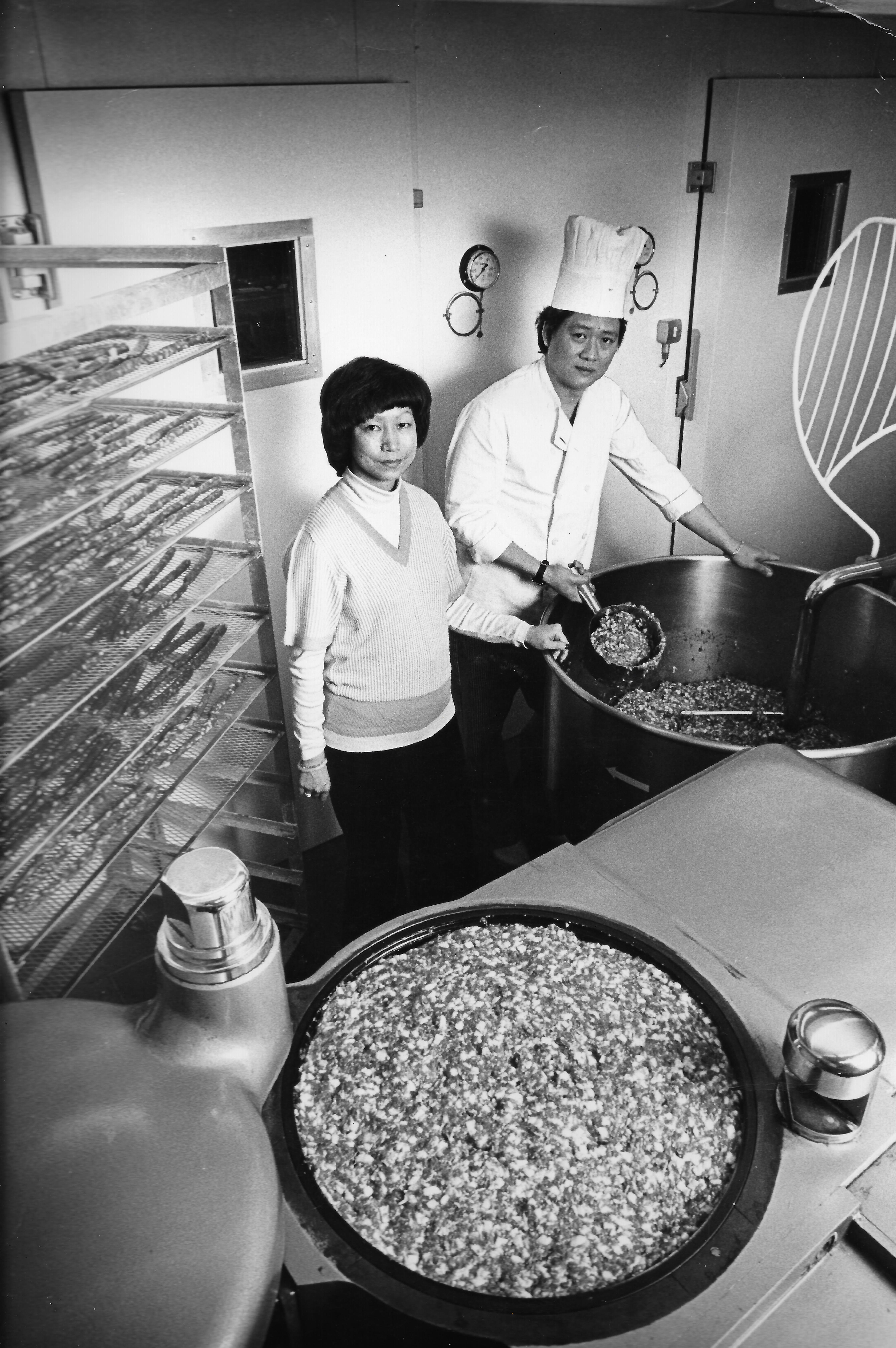
In the early 1970s, a young Chinese chef was driving Playboy Bunnies home from Mayfair after his night shift – supplementing his wages as a pastry cook at the Playboy Club – while quietly, in whatever hours remained, producing wind-dried meats from an old family recipe.
That chef was Bill Poon. Within a decade, Frank Sinatra was ordering his food to his room at the Savoy.
Poon, who has died aged 81, came from a family of chefs stretching back seven generations. He was born in Shunde, in China’s Guangdong province, under Japanese military occupation – his family later fled to Macau, where his parents ran a celebrated restaurant and his mother’s skill with a knife was the stuff of local legend.
The lineage ran deep: somewhere in the family’s distant past sat an ancestor who cooked for a Chinese emperor and another, it is said, who effectively invented the stock cube.
Poon found his way to Hong Kong, trained with a Swiss patissier, and in the mid-1960s travelled to England chasing Cecilia, who would become his wife.
He was not impressed with what he found there.
She passed muster. The food, on the other hand, did not. Chinese food in Britain at the time was largely an Anglo-Chinese hybrid – Cantonese dishes adapted for local ingredients and British tastes, barely recognisable as the food being cooked in Hong Kong or Guangdong. For anyone seeking the real thing, London offered almost nothing. So, with Cecilia, Poon set about providing it.
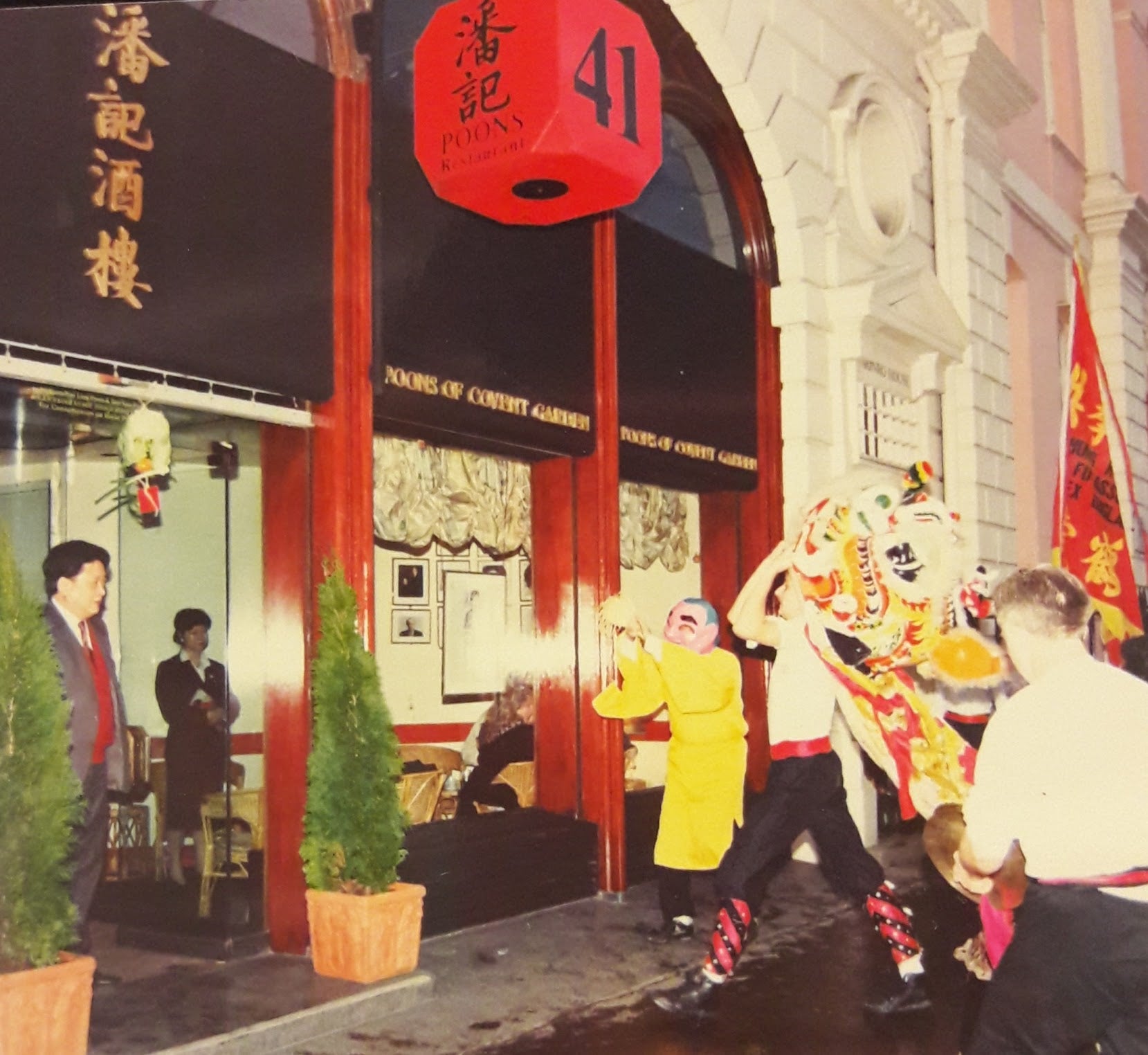
Poon’s & Co opened at 27 Lisle Street in Chinatown in 1973, and it was there that he met Lord and Lady Tanlaw – first as regulars, before long as business partners – a relationship that made the next chapter possible. That chapter was Poon’s of Covent Garden, which launched at 41 King Street in 1976 and was, from the start, a different kind of proposition.
Poon built the kitchen in the centre of the dining room, enclosed in glass, so that every diner could watch the food being cooked. The open kitchen concept today is unremarkable; in the 1970s, when kitchens were routinely hidden and Chinese food routinely mistrusted, it was a statement.
British diners carried deep prejudices about Chinese cuisine and the people who prepared it. Poon’s response was not to argue with them but to show them – to make the cooking visible, the techniques legible, the food undeniable. He wanted, in his daughter Amy’s words, to educate people as much as to feed them.
It worked. In 1980, Poon’s of Covent Garden became one of the first Chinese restaurants in the country to be awarded a Michelin star. Mick Jagger came. Jerry Hall came. Sean Connery came. Barbra Streisand came. Sinatra was down the road ordering room service. At the brand’s peak in the 1980s, there were seven Poon’s restaurants across London and beyond, with outposts in Geneva and the City.
He pioneered claypot rice and introduced wind-dried meats to Britain – and his command of a cleaver was extraordinary, a precision so ingrained it became theatre. He was known to carve butterflies from ginger.
His Eight Treasure Duck – a family speciality on Chinese New Year, laborious beyond reason, braised until the bones gave up – was the kind of dish that took a day to prepare and a lifetime to perfect. “If there were an endangered dishes list,” Amy told The Independent in 2025, “this would be on it.” There may be nobody left who makes it quite as her father did.
For those who ate at Poon’s, the food left a mark that decades have not shifted. Henry Harris, one of Britain’s most acclaimed chefs, has spoken of a crispy garlic and chilli squid dish he shared with his wife at Poon’s nearly four decades ago as a single mouthful that changed his life. The Australian chef Iain Hewitson recalls a chilli and garlic calamari with equal reverence. The portrait photographer Michael Birth wrote about a noodle dish he ate there in the 1970s in his memoir.
Speaking of his friend’s death, restaurateur and family friend Jon Spiteri said: “When Poon’s opened in the early Seventies, Bill and Cecilia forever changed the way Chinese food was perceived in England … Bill was and is a giant in the British culinary world and has left a void. I loved Bill and he will be hugely missed.”
That was, in the end, the significance of what Poon achieved. At a time when running a Chinese restaurant was seen as work you did not with ambition but by default – something that sat nowhere near doctor, lawyer, engineer or artist in the estimations of parents everywhere – he made the case, emphatically, for Chinese cooking as a serious culinary endeavour demanding the same rigour and creativity as any other tradition. A generation of chefs who have since reshaped how Britain thinks about Chinese food can trace something of their ambition back to what he made possible.
He retired from the restaurant business in 2003, but he continued making wind-dried meats, the family recipe intact.
There was, it should be said, considerably more to Bill Poon than a Michelin star and a famous clientele. He was a poet and an artist. He was chair of the Euro-Chinese Literature Association and permanent president of the Shunde UK Association. He fed homeless people under Waterloo Bridge and gave unstintingly to causes close to his heart. In 2006, he was nominated for the Pearl Awards for the Promotion of Excellence in Chinese Cuisine. He gave, by every account, far more than he kept.
His daughter, Amy, has carried the name forward. Poon’s – this time at Somerset House – opened last year to considerable acclaim. And happily, Bill Poon lived to see it.
It looks out over Waterloo Bridge – at one end, the Savoy, where Ol’ Blue Eyes ordered in; beneath it, where Poon quietly fed those with nowhere else to go.
Bill Poon (3 December 1944-16 June 2026) is survived by his wife, Cecilia, daughter Amy and son Alan


