


Ganesh Chaturthi: 8 Ashtavinayak Temples In Maharashtra Every Devotee Should Visit


Last Updated:
From Morgaon to Ranjangaon, explore Maharashtra’s eight Ashtavinayak temples, each dedicated to a different form of Lord Ganesha and steeped in its own legend.




The pilgrimage covers eight revered Ganesha temples across Maharashtra. While the temples are united by their devotion to Ganesha, each one has its own identity
Every Ganesh Chaturthi, Maharashtra turns into a sea of celebrations as devotees welcome Lord Ganesha into their homes and temples. But for those who want to follow a more traditional trail of worship, the Ashtavinayak Yatra offers a journey through eight revered Ganesha shrines, each linked to a different form of the deity and a story from Hindu mythology.
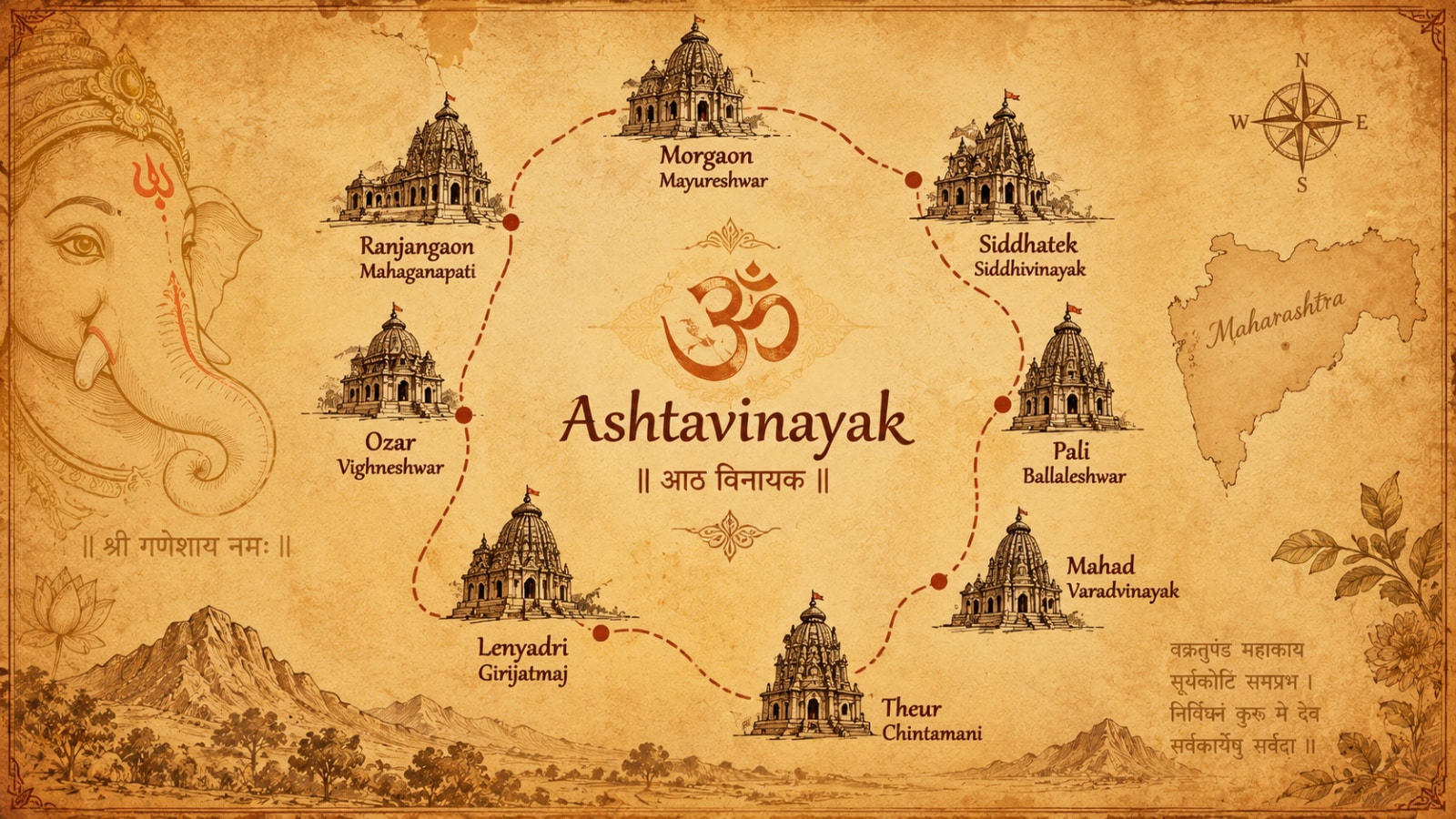
The pilgrimage takes devotees across Maharashtra, from the temple at Morgaon to the rock-cut shrine at Lenyadri and onwards to Ranjangaon. No two stops feel quite the same. At one temple, Ganesha is worshipped as the remover of obstacles; at another, he appears in his child form. Here is a look at the eight Ashtavinayak temples and the legends that make each one special.
Mayureshwar Temple, Morgaon
The traditional Ashtavinayak pilgrimage begins at Morgaon, where Ganesha is worshipped as Mayureshwar. According to legend, Ganesha took the form of a peacock-riding warrior to defeat the demon Sindhu and restore peace to the region.
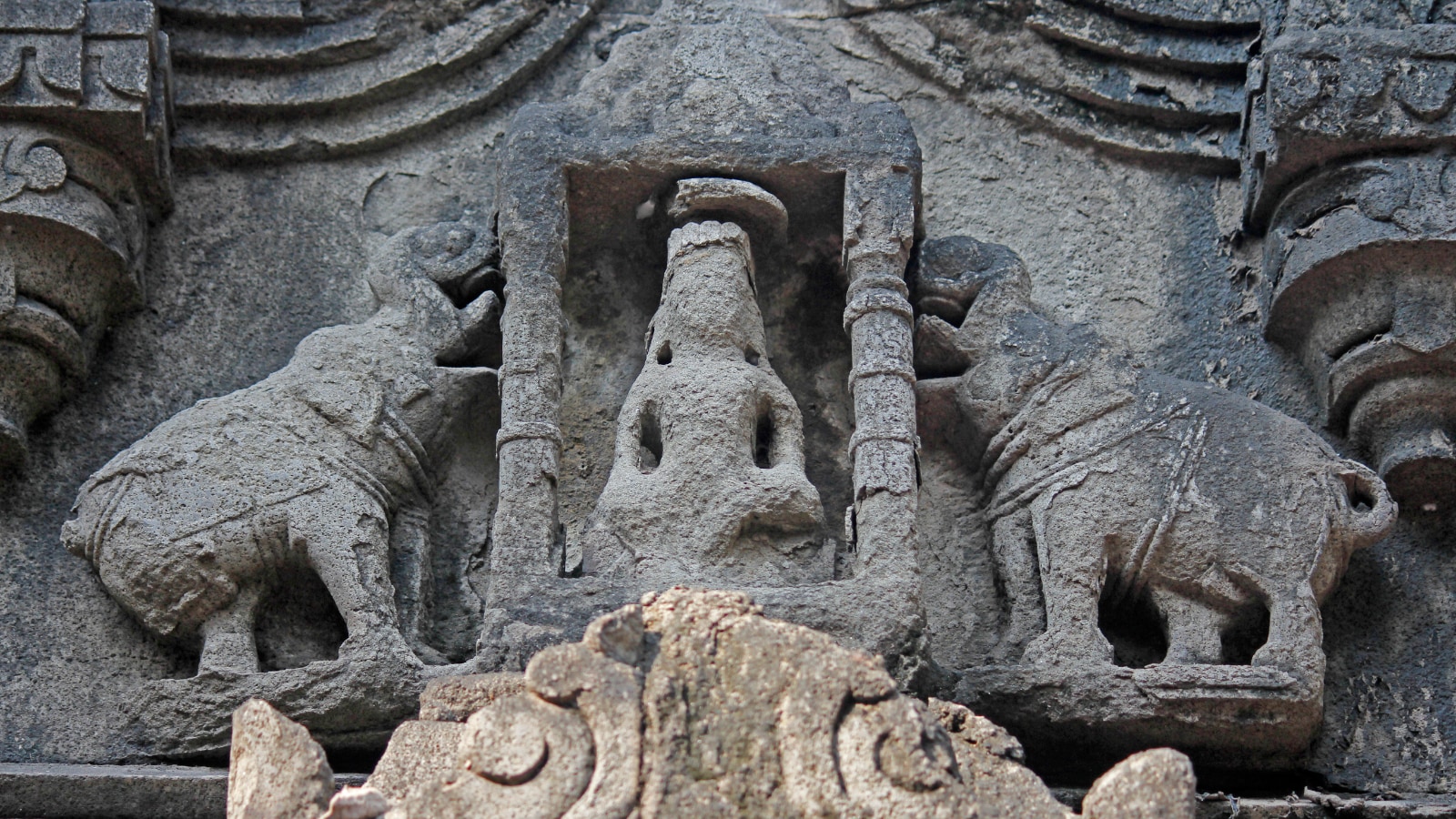
The village is traditionally associated with peacocks, which is also believed to explain the name Morgaon. The temple is regarded as the main shrine of the Ashtavinayak circuit. Devotees traditionally return to Morgaon after visiting the other seven temples, making it both the starting point and the conclusion of the pilgrimage.
Siddhivinayak Temple, Siddhatek
Located on the banks of the Bhima River, the Siddhivinayak Temple at Siddhatek is dedicated to Ganesha as the giver of siddhi, a term associated with spiritual accomplishment.
According to legend, Lord Vishnu worshipped Ganesha here before defeating two demons. The idol is carved from a single stone and has its trunk turned towards the right. This form of Ganesha is considered particularly auspicious by devotees.
The temple also has a distinctive pilgrimage tradition. Devotees can perform a full pradakshina, or circumambulation, around the hill on which the shrine is situated.
Ballaleshwar Temple, Pali
The Ballaleshwar Temple at Pali stands apart from the other Ashtavinayak shrines because it is named after a devotee of Ganesha. According to the legend, young Ballal was deeply devoted to Lord Ganesha. His devotion angered his father, who punished him for spending so much time worshipping the deity. Ganesha eventually appeared before Ballal and blessed him.
The temple also has an interesting architectural feature. It was designed so that the rays of the rising sun fall directly on the idol. Ganesha is worshipped here as Ballaleshwar.
Varadvinayak Temple, Mahad
At Mahad, Ganesha is worshipped as Varadvinayak, which means the giver of boons. The shrine is associated with the belief that sincere devotees can seek Ganesha’s blessings for the fulfilment of their wishes.
The idol is considered swayambhu, meaning self-manifested, and faces east. The temple has another unusual feature: a second idol is placed outside the sanctum. A lake located beside the temple also adds to the setting.
Chintamani Temple, Theur
At Theur, Ganesha takes the form of Chintamani, who is believed to remove worries and bring peace of mind. The temple is located near the meeting point of the Bhima, Mula and Mutha rivers.
The idol here has its trunk turned towards the left. The shrine has also been associated with the Peshwa rulers of Maharashtra, particularly Madhavrao I, who is believed to have contributed to the development of the temple.
During Ganesh Chaturthi, the temple draws large numbers of devotees who come to seek the blessings of Chintamani.
Girijatmaj Temple, Lenyadri
The Girijatmaj Temple at Lenyadri is perhaps the most distinctive stop on the Ashtavinayak circuit. Unlike the other shrines, it is carved directly into a rock-cut cave in the Lenyadri hills.
The temple is connected to the story of Goddess Parvati, who is believed to have performed penance here before Ganesha was born as her son. The idol therefore depicts Ganesha in his baal roop, or child form.
Reaching the shrine requires a climb of around 300 steps. The journey up the hill is part of what makes a visit to Girijatmaj different from the other stops on the pilgrimage.
Vighneshwar Temple, Ozar
At Ozar, Lord Ganesha is worshipped as Vighneshwar, the remover of obstacles. The temple’s legend revolves around the demon Vighnasura, who was creating trouble for people until Ganesha defeated him.
The temple is known for its traditional design and ornate entrance. It is also situated in the region around Shivneri, giving visitors an opportunity to explore the area’s historical landscape while travelling through the Ashtavinayak circuit.
Mahaganapati Temple, Ranjangaon
The pilgrimage traditionally concludes at Ranjangaon, where Ganesha is worshipped as Mahaganapati. The temple is associated with a powerful form of the deity and is considered an important stop on the Ashtavinayak Yatra.
The idol is also associated with the name Mahotkat. According to tradition, this form of Ganesha has ten trunks and twenty arms, although only the visible idol is worshipped in the temple today.
The visit to Ranjangaon marks the completion of the eight-temple circuit before devotees traditionally return to Morgaon.
The Ashtavinayak Yatra offers devotees a chance to encounter eight forms of Lord Ganesha, with every temple bringing its own story and setting to the pilgrimage.During Ganesh Chaturthi, it becomes an especially meaningful journey for devotees looking to experience Ganesha worship beyond the celebrations in their own cities.
Quick Answers
 Ask News18
The Shri Mayureshwar Temple in Morgaon, Shri Chintamani Temple in Theur, and Shri Siddhivinayak Temple in Siddhatek will be closed to devotees from May 10, 2026, to June 9, 2026.
Ask News18About the Author

Our life needs a bit of style to get the perfect zing in the daily routine. News18 Lifestyle is one-stop destination for everything you need to know about the world of fashion, food, health, travel, r…Read More
September 04, 2026, 20:37 IST


