


PCOS name changed to PMOS: Experts reveal why it is important to look beyond just ovarian health


PCOS name changed to PMOS: PCOS is one of the world’s most common women’s health disorders, and it is the most misunderstood. After a global consensus led by international endocrine and reproductive health experts, Polycystic Ovary Syndrome (PCOS) has been renamed to Polyendocrine Metabolic Ovarian Syndrome (PMOS). For nearly a decade, many Indian researchers had warned that the condition is underdiagnosed. PCOS was only viewed as a gynaecological disorder. However, now, after the new terminology, PMOS, the focus has shifted to the metabolic and hormonal aspects of the condition, which were ignored previously. It reflects a deeper shift in how this condition is perceived- medically, socially, and emotionally. The proposed renaming has been welcomed by the experts and will also help women to seek timely management and improve their quality of life.
PCOS affects the entire body, not just fertility
For years, there was disproportionate emphasis on “ovaries” and “cysts” even though polycystic ovaries are only one of the diagnostic features of the condition along with ovulatory dysfunction, and excess androgen activity. Poly Cystic Ovarian Syndrome (PCOS) was only associated with irregular periods, ovarian cysts, acne, and infertility. However, PCOS affects metabolic health, fertility, menstrual function, skin, hair, insulin resistance, emotional well-being and long-term cardio-vascular risk.
The new nomenclature- PMOS goes beyond reproductive health and will help to redirect the attention to metabolism, hormones, insulin resistance, obesity, and long-term lifestyle diseases.
Excess weight worsens hormonal imbalance
Dr Aparna Govil Bhasker – A Bariatric, Metabolic, Hernia and Laparoscopic Surgeon at MetaHeal Clinic, Mumbai, said, “Just like ovaries, weight fluctuation and insulin resistance can be important factors when it comes to the progression of this condition. In patients with PMOS, excess weight is mainly due to visceral obesity. This tends to worsen hormonal imbalance and take a toll on the ovulation, fertility, and menstrual cycles in women.
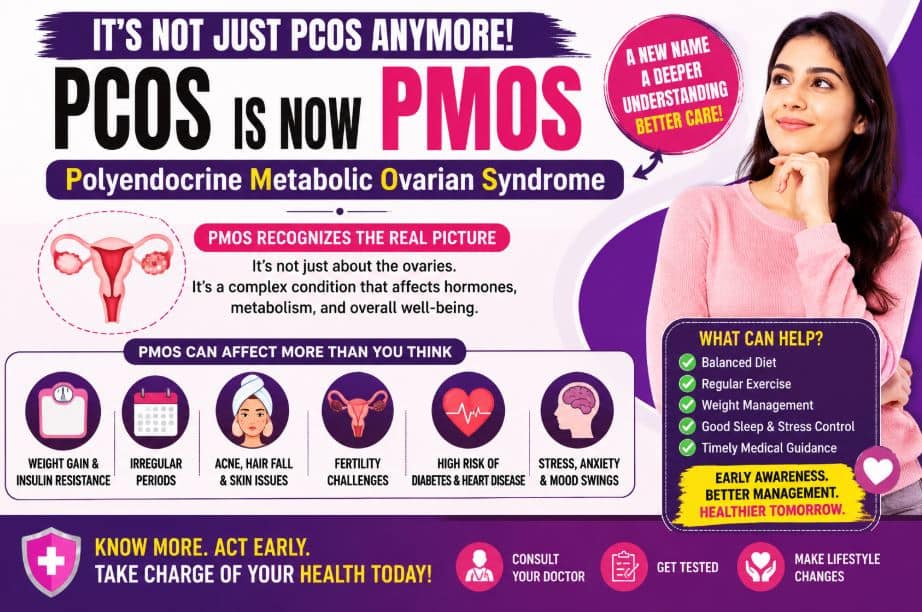
Hence the treatment of this condition must be multidisciplinary. It is also necessary to evaluate sleep, stress levels, metabolism, diet, exercise patterns, and long-term endocrine health. Lifestyle correction, structured weight management, metabolic screening, and insulin control are now important for women. In women with severe obesity and diabetes, metabolic and bariatric surgery can also be a treatment option. Timely weight loss surgery can help improve hormonal balance, ovulation, fertility outcomes, and overall health.
ALSO READ | From skincare, weight loss, to immunity: Why sea buckthorn berry is trending as a superfood
A well-balanced diet, exercise, and zero stress is the holy grail
Women seek timely help to prevent future metabolic complications. A well-balanced diet, exercise regimen, getting a sound sleep of at least 7-8 hours per day, and staying stress-free are the foundations for good metabolic health. It’s time to prioritize your well-being, and initiate timely treatment for PMOS.”
Dr Sandeep Talwar, Fertility Specialist, Nova IVF Fertility, East of Kailash, Delhi, says, “The evolving understanding of Polycystic Ovary Syndrome as Polyendocrine Metabolic Ovarian Syndrome now also sheds light on the hormones, metabolism, insulin resistance, and not only ovarian health. This condition is marked by irregular periods, weight gain, acne, or difficulty conceiving for years, and is neglected by women, thinking these symptoms are temporary and may improve on their own. However, this condition is linked to infertility. The IVF expert will recommend weight management, ovulation-inducing medications, and hormonal control, and many women conceive naturally or with basic fertility treatment. Some may also need procedures such as Intrauterine Insemination ( IUI) or in vitro fertilization (IVF) to conceive. So, women, don’t delay treatment.”
A broader name encourages patients to look beyond fertility
Jeevan Kasra, Chairman at Steris Healthcare, reveals, “The growing shift from PCOS to PMOS reflects a deeper understanding of the condition as a metabolic and endocrine disorder, not just a reproductive one. The majority of diagnosed PCOS women demonstrate insulin resistance combined with fluctuating body weight and an elevated risk for fatty liver disease and sleep problems and heart-related health issues. The term PCOS can sometimes be misleading because ovarian cysts are neither universal nor the primary issue in every patient. The disorder exists as PMOS, which stands for Polymetabolic Ovary Syndrome, to demonstrate its multiple effects across different body systems, which will aid in raising public understanding and helping doctors identify patients early and treat them completely. A broader name also encourages patients to look beyond fertility concerns and focus on long-term metabolic health and preventive care.”
ALSO READ | Is allergic asthma increasing in younger populations?
Dr Madhulika Singh, Senior Consultant Obstetrician & Gynaecologist, Ankura Hospital for Women and Child, Pune, says, “The term polycystic ovary syndrome is indeed a misnomer, as the condition is not only defined by ovarian cysts but even hormonal, metabolic, and reproductive factors. PCOS terminology may cause confusion among women and even delays in diagnosis and care. They will end up ignoring insulin resistance. PCOS is a multisystem disorder that can take a toll on the reproductive, physical, emotional, and dermatological health, yet its name reflects only one aspect that is reproductive as ovaries is highlighted in the name itself that is PCOS. As the condition is renamed to Polyendocrine Metabolic Ovarian Syndrome (PMOS), it’s a good move. It will help to improve clarity, reduce stigma, and also aid in patient understanding. Many women were unaware about the condition’s impact on metabolic health. But, after renaming the condition, we hope for improved awareness. The disorder also involves abnormalities in the endocrine system, metabolism and ovarian function and should be addressed on time.”
(This article is based on information available in the public domain and on input provided by experts consulted. This article is meant for informational purposes only and must not be considered a substitute for advice provided by qualified medical professionals. Always seek the advice of your doctor with any questions about medical conditions.)


