


Benjamin Netanyahu Reveals Prostate Cancer Diagnosis, Declares Himself Cancer-Free After Treatment


Last Updated:
Netanyahu’s decision to disclose his diagnosis was intentionally delayed by two months he explained, due to ongoing geopolitical tensions.




The report suggested that the cancer was confined to the prostate with no evidence of metastases. (Representational Image, AFP)
Israeli Prime Minister Benjamin Netanyahu reveals he successfully received treatment for early-stage prostate cancer. In a statement on social media that has drawn attention not only to the health of a world leader but also to a disease that remains one of the most common cancers affecting men worldwide.
At 76, Netanyahu’s medical report revealed that a small malignant tumour, less than a centimetre in size, was discovered during routine examination following surgery for benign prostate enlargement in 2024 carried out at Hadassah Medical Center, was reported to be successful and free of complications.
During a routine follow-up, however, an MRI scan detected a very small suspicious lesion in the prostate, measuring less than one millimetre. Subsequent diagnostic tests confirmed that it was early-stage prostate cancer. The condition was identified at a highly localised stage, allowing for timely and effective treatment.

The report suggested that the cancer was confined to the prostate with no evidence of metastases. He underwent targeted radiation therapy over approximately two and a half months, and his doctors confirmed the tumour has completely disappeared.
The decision to disclose his diagnosis was intentionally delayed by two months he explained, due to ongoing geopolitical tensions. “I chose to delay the report’s publication so it would not come out at the peak of the war and be used by Iran for propaganda,” he said in a statement. He added, “Today I can say I am in good health and excellent physical condition after treating a very early-stage prostate cancer that was completely removed.”
“Thank God, I am healthy,” Netanyahu stated, describing the issue as a minor medical problem that had been fully resolved.
All About Prostate Cancer And Early Symptoms
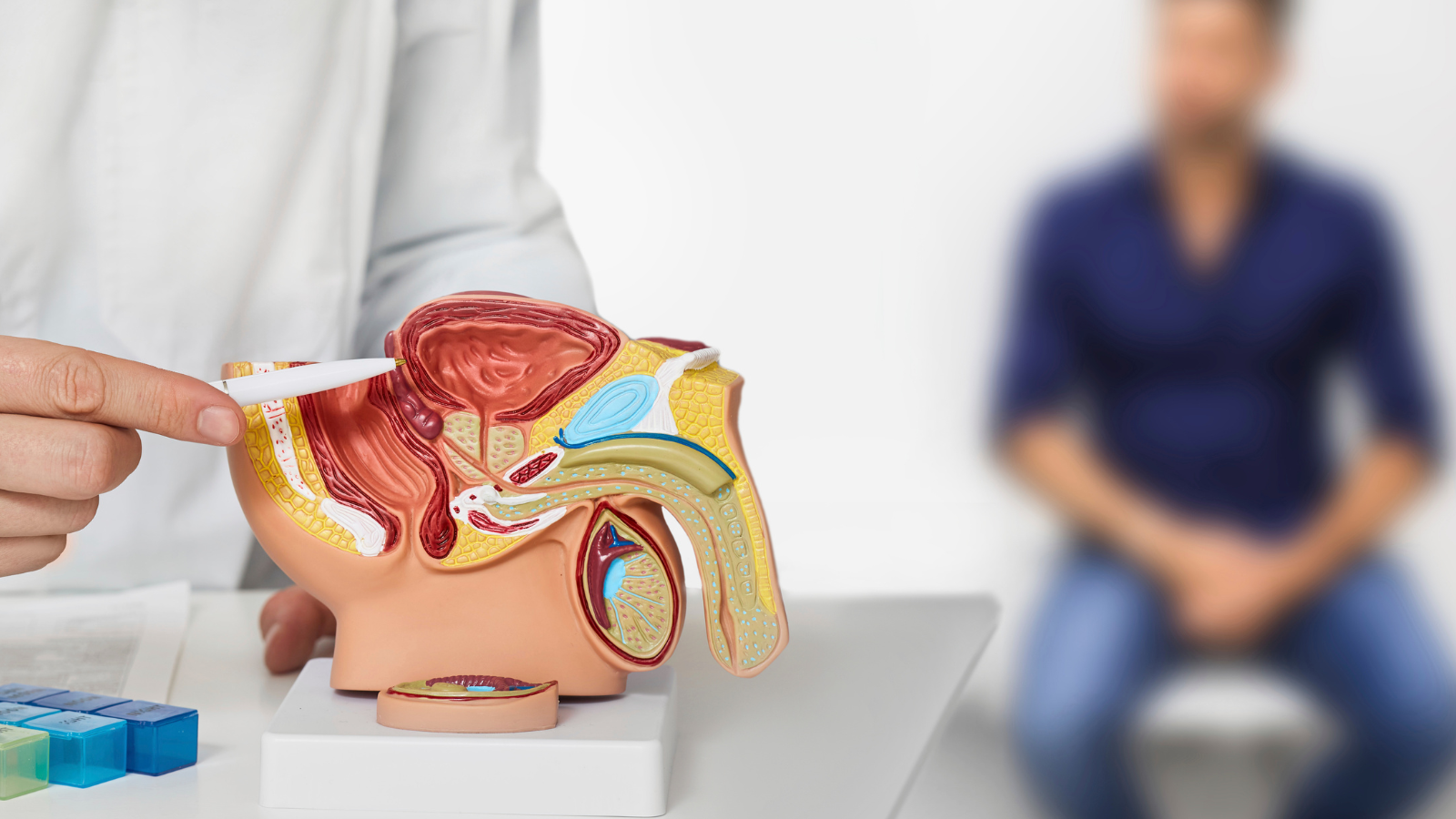
Prostate cancer begins in the prostate, a small, walnut-shaped gland situated just below the bladder and in front of the rectum in men. This gland produces a fluid that combines with semen, playing an essential role in protecting and supporting sperm for reproduction.
In its early stages, prostate cancer often does not present noticeable symptoms, which is why it is frequently detected through routine screening rather than discomfort.
As the condition progresses, certain signs may begin to appear. These include:
- A frequent or urgent need to urinate, especially at night
- Weak or interrupted urine flow
- Pain or a burning sensation while urinating
- Loss of bladder control
- Loss of bowel control
- Pain during ejaculation or erectile dysfunction
- Presence of blood in semen or urine
- Persistent pain in the lower back, hips or chest
These symptoms can also be linked to other conditions, but if they persist, medical evaluation becomes important.
How Common Is Prostate Cancer In Men?
Prostate cancer is not rare. In fact, it is one of the most common cancers affecting men globally. Around 1.47 million new cases were reported worldwide in recent years, making it the second most common cancer in men, as per the World Cancer Research Fund.
According to the American Cancer Society’s 2025 statistics, prostate cancer is the most common cancer diagnosis among men in the United States, accounting for about 30% of all male cancers, with an estimated 313,780 new cases and 35,770 deaths projected for 2025. Globally, the age-standardised incidence rate stands at approximately 29.4 per 100,000 men, with around 1.47 million new cases reported in recent GLOBOCAN data.
Why Is Prostate Cancer Detected Late?
Prostate cancer is typically slow-growing and, in its early stages, often shows no symptoms. Netanyahu’s case highlights the importance of routine check-ups. When caught at an early, localised stage — as in his situation — the five-year relative survival rate approaches 98–100% with modern treatments such as targeted radiation therapy or surgery. Studies from 2025 confirm that for localised prostate cancer, both radiation and surgical approaches offer excellent long-term outcomes, with many patients achieving complete remission and maintaining quality of life.
Many men do not experience noticeable warning signs until the disease has progressed. When symptoms do appear, they may include changes in urination, difficulty passing urine, or discomfort, signs that are easy to dismiss or attribute to ageing.
This silent nature is exactly why routine screening plays such a crucial role. Netanyahu’s case reflects this clearly. The tumour was identified early, before it had spread, allowing for targeted and successful treatment.
What Are The Key Risk Factors Of Prostate Cancer?
Age remains the most significant factor. The risk rises sharply after the age of 50, with the majority of cases occurring in older men. Family history, genetics and lifestyle factors such as obesity and diet may also contribute.
Meanwhile, research continues to show that disparities in awareness and screening can influence outcomes. In regions where routine testing is less common, diagnoses are often made at later stages.
Other major risk factors include:
- Advancing age
- Family history
- Genetic predispositions (such as BRCA mutations)
- Ethnicity, with higher rates observed in Black men and populations in Northern Europe and parts of the Caribbean.
Recent trends show incidence rates increasing by about 3% annually since 2014 in some regions, partly due to changes in screening practices and detection of advanced cases.
At What Age Should Men Get Their Prostate Checked?
Many men delay screening because there are no symptoms, or because the idea of testing feels unnecessary.
While routine screening is typically advised from around age 55, earlier PSA testing, between 40 and 54, may be recommended if you have a higher risk, such as having a first-degree relative, like your father or brother, diagnosed with prostate cancer.
April 25, 2026, 01:13 IST


