


Meet four eye-catching moths to spot in your garden


We all love butterflies – but what about moths?
Anyone who thinks they’ll only see a moth if they switch on an outdoor light in the evening is much mistaken, because hundreds of moths fly during the day, says Rebecca Levey, senior ecologist at Butterfly Conservation.
There are around 2,500 species of moths in the UK, with more establishing every decade after migration from continental Europe, the charity says. This is compared with 60 butterfly species.
“They support a lot of the other wildlife that we see in our gardens as part of the food chain. Caterpillars are the natural foods that a lot of birds like blue tits choose when they’re raising their young and they need hundreds of caterpillars to raise their chicks successfully,” says Levey.
“Some 10% of moths in the UK are day-flying – that’s 250 species of moths, and you can walk through a grassland and they’ll be disturbed and just flutter up. A lot of moths are pollinating just the same as butterflies.”
Their natural predators include bats, birds and even frogs.
You can often tell a moth from a butterfly by its antennae, she continues. Butterflies have a thick club-shaped antennae, whereas moth antennae will be quite feathery with little projections coming off them. They won’t be thick at the tip.
So which moths might we see through Big Butterfly Count, which runs to August 9, and throughout the summer, in our garden?
1. Hummingbird hawk-moth
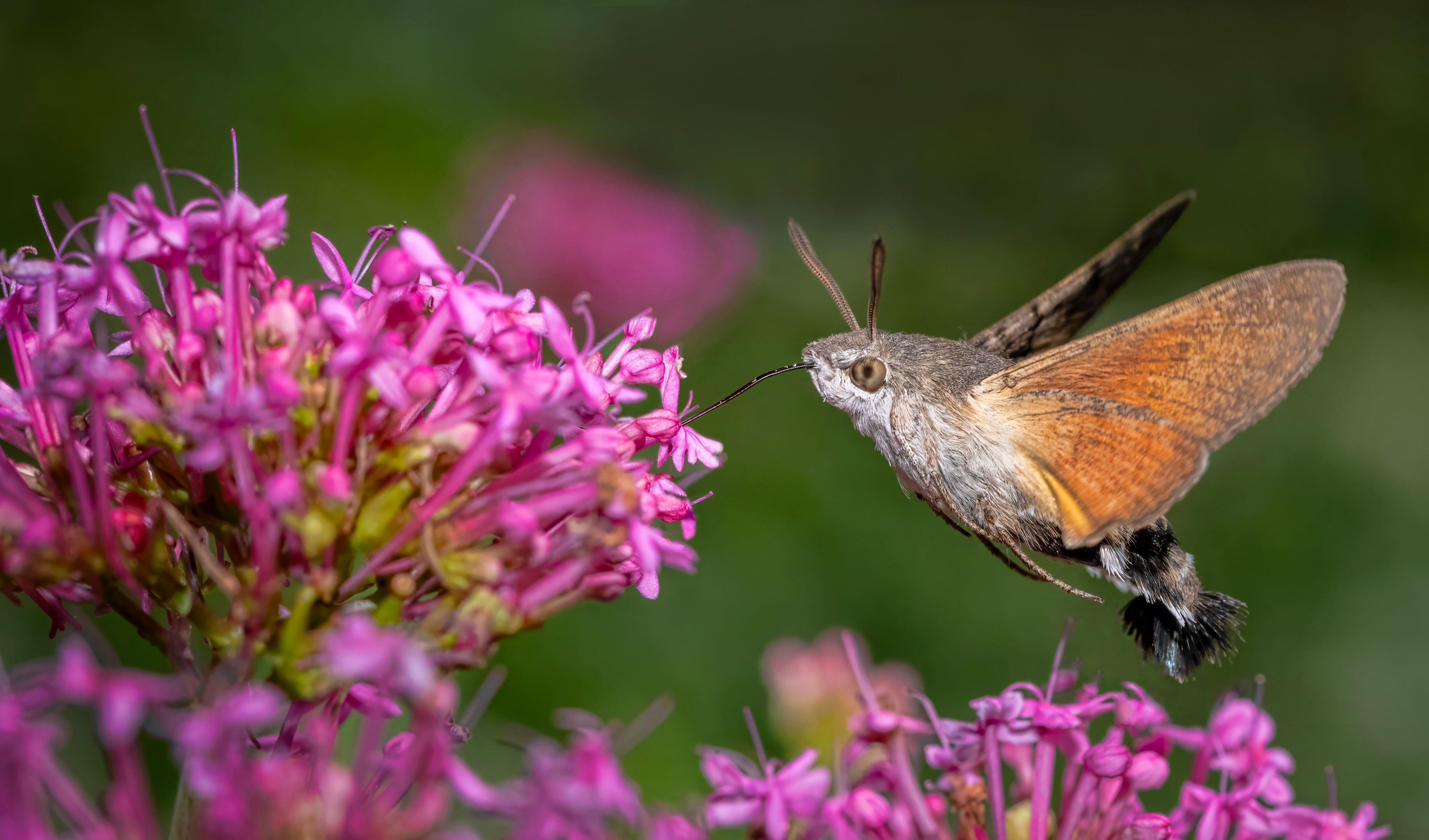
This large moth, which looks a bit like a hummingbird in flight, used to be a migratory species in the UK, flying across the Channel when Europe was having a heatwave and they’d run out of nectar there. They’d fly north and come to feed in British gardens, she explains.
“It’s just about warm enough here now that they are surviving our winters and breeding here, too. ” You can even find them in Scotland.
2. Jersey tiger moth
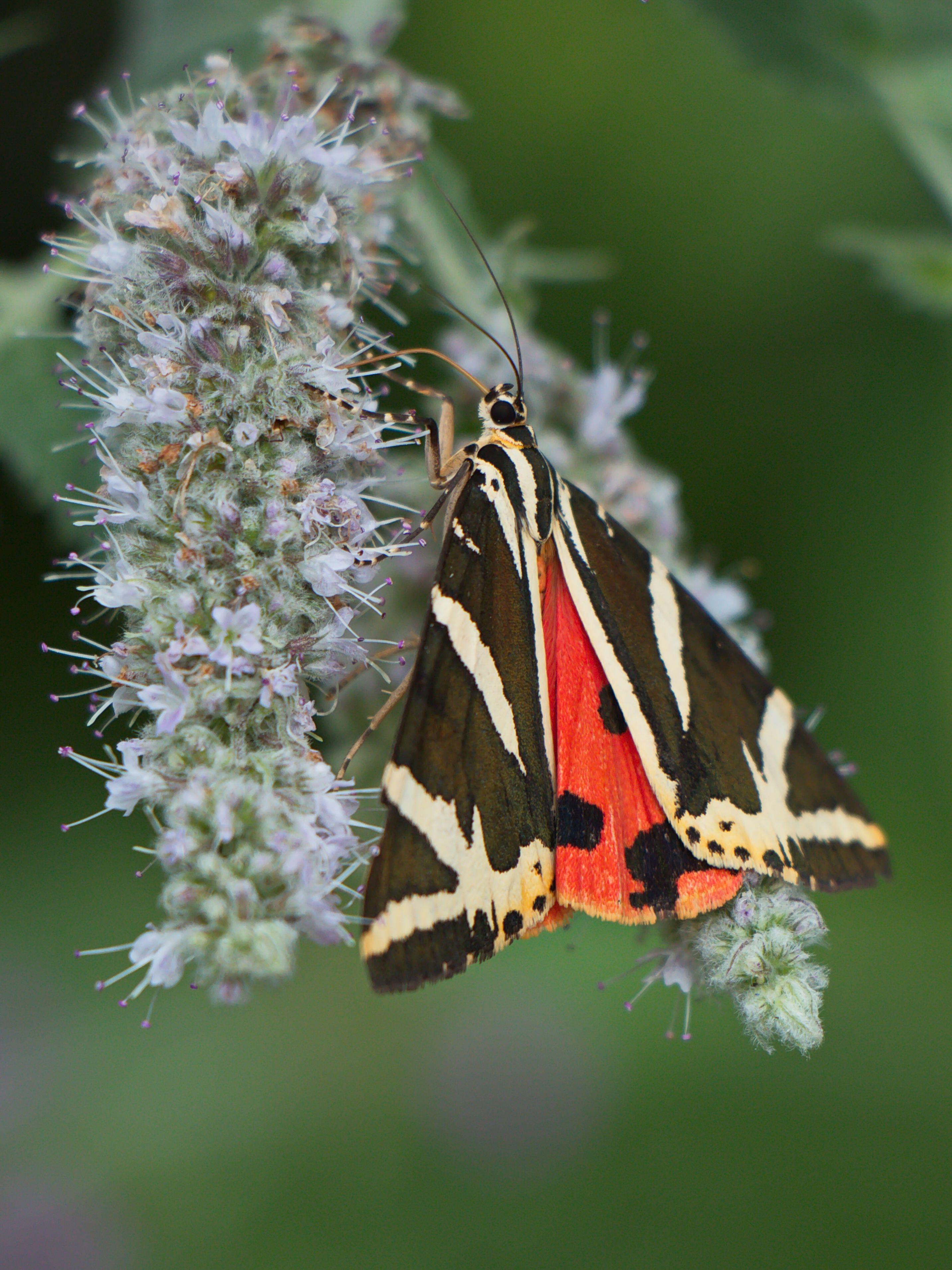
“As its name suggests, the first time we had it in the UK, it came to the island of Jersey, but it’s now spread and potentially, because the climate is warming, a population was found on the south-west coast, then in London and now its spreading out from there.”
The Jersey tiger moth has bright red underwings that flash when they fly. It feeds on nectar from many plants, includes scabious, buddleia and hemp-agrimony, which bears pink flowers and is found in damp grassland, marshes and bordering ponds.
3. Six-spot burnet
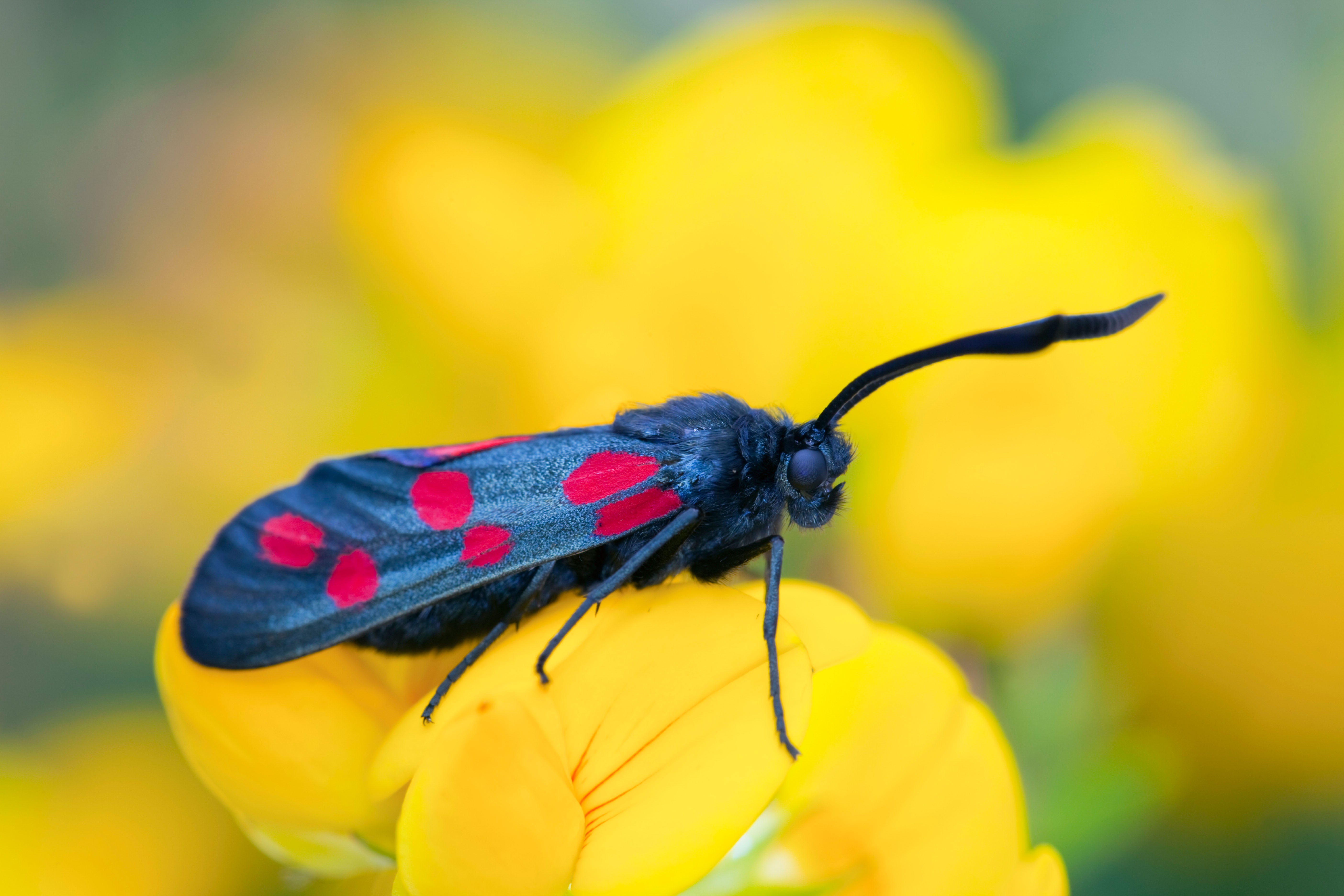
This common moth, which frequents flowery grasslands, has six red spots on each forewing, although in some cases the outermost spots can be fused. It tends to go for purple and pink flowers and loves knapweeds, thistles, scabious, valerian, clover and wild thyme. Its caterpillars feed primarily on bird’s-foot-trefoil.
4. Mint moth
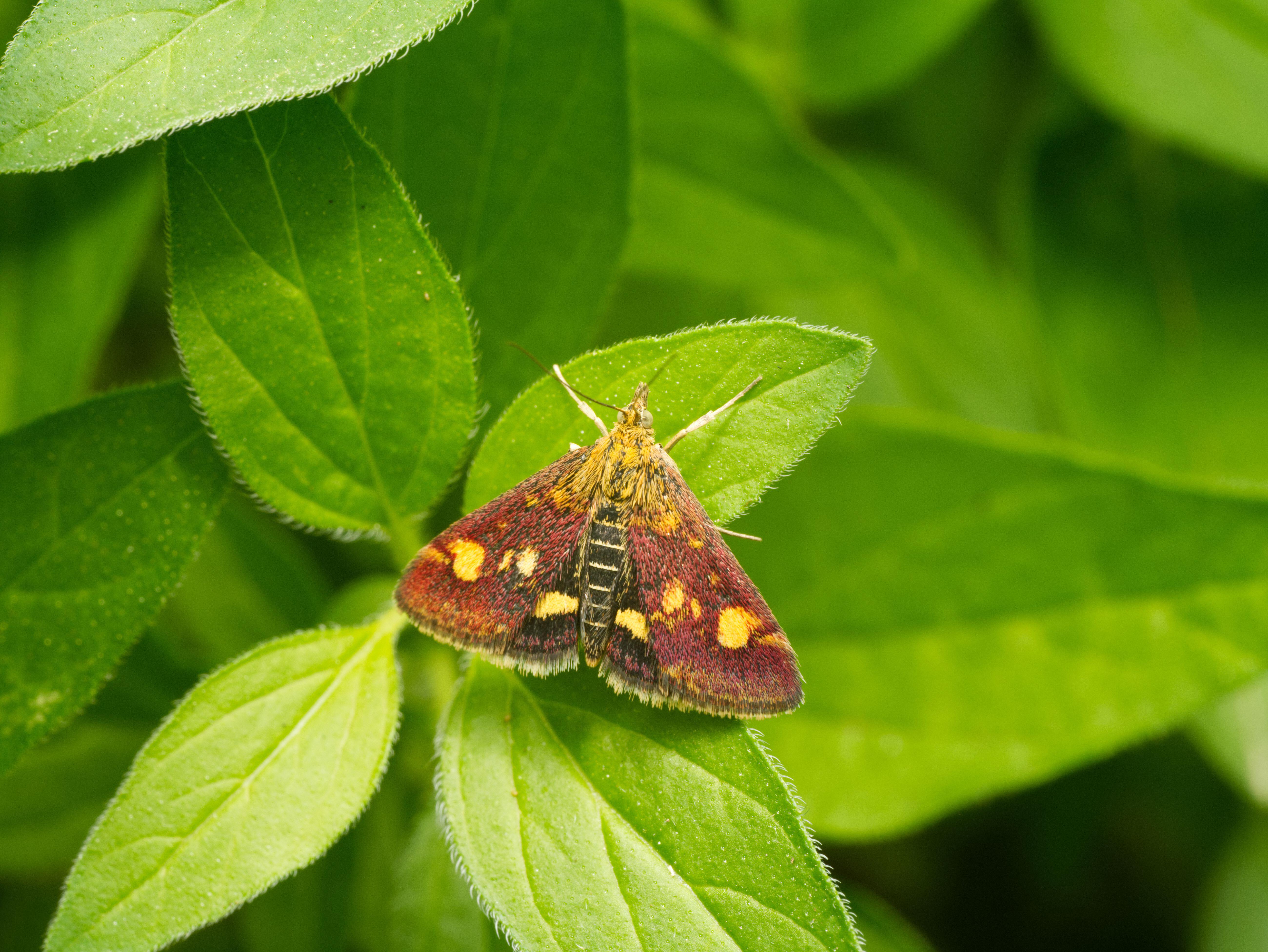
This smaller species loves mint and if you have catmint or other types of mint you may well see one in your garden, she says.
Are moths more timid than butterflies?
“It completely depends on the species,” say Levey. “The ones coming into gardens are probably some of the more confident ones that are looking for a really good nectar source, which they often find in gardens, especially in a year like this one, where a lot of their other habitats are looking quite dry.
“In a garden that’s receiving quite a bit more water, your plants are going to be providing more nectar potentially than some of the native plants in the surrounding areas.”
You’re more likely to see day-flying moths in the sunshine. It it’s cloudy or rainy, they may be hidden in a hedge or bush.
Where will you find moth caterpillars?
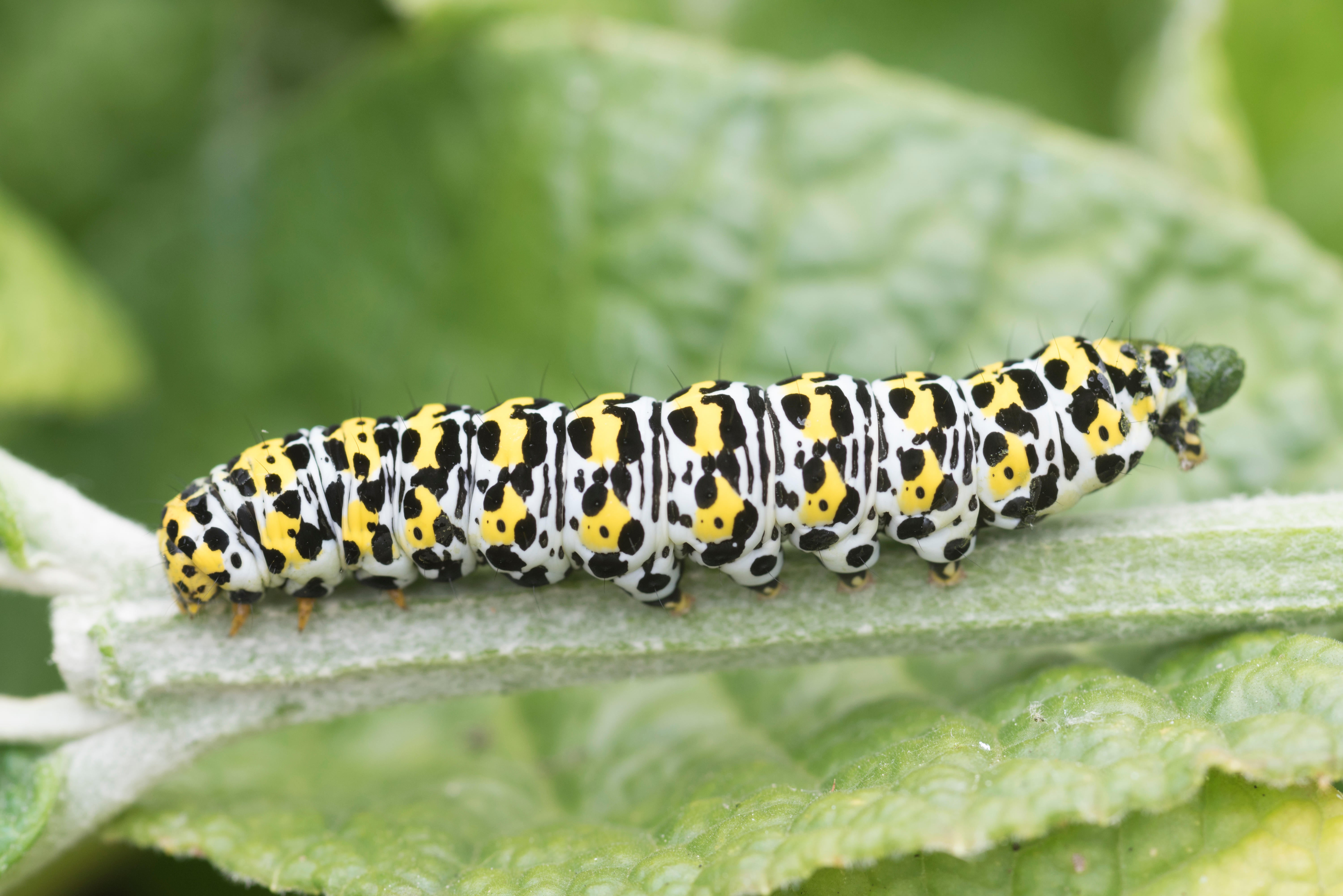
“Pretty much every native tree species in the UK will have moth caterpillars that will only feed on that specific native tree,” Levey explains. “The best thing someone can do, when they’re considering planting a small tree in their garden, is to make it a native tree, then you’ll be supporting native caterpillars of moths.”
If you have mullein in your garden, you’re more likely to see the bright yellow and black spotted mullein caterpillar on it than the mullein moth.
To encourage hummingbird hawk-moth caterpillars into your garden, consider planting something in the bedstraw family, such as lady’s bedstraw, a scrambling, carpeting perennial with small yellow flowers and a scent which smells of hay when dried. Its vigorous growth, though, can make it a bit of a garden thug if it isn’t kept in check.
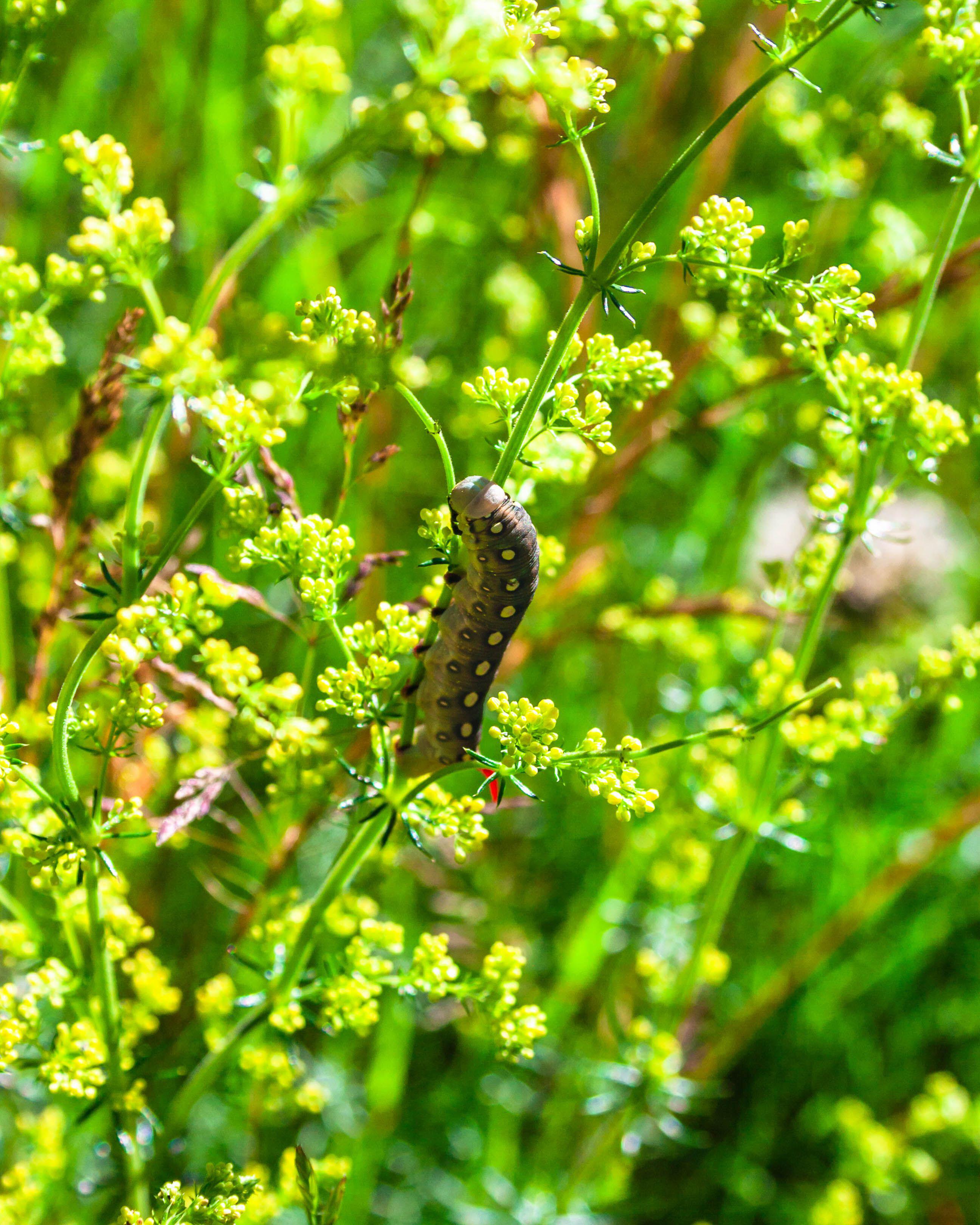
Red campion, which has pretty pink flowers suited to a more shady area, is also a magnet for moth caterpillars, which feed on its seeds.
Night-flying moths are likely to be attracted to plants which have a night scent and to plants which are a pale white or yellow, which are more noticeable at night, including flowering jasmine, night-scented stock and evening primrose.
Avoid sharp UV light
“Most moths will be attracted to lights that are slightly blue or purplish on the UV spectrum, which can be more distracting to them and put them off laying their eggs nearby. If the light is a warm orangey colour, that’s not as attractive to them,” she says.


