


Second hand Santa: How to pimp up your Vinted Christmas


Want to bookmark your favourite articles and stories to read or reference later? Start your Independent Membership today.
Already a member?
Log in
There was a time when getting something second-hand was embarrassing: Your sister’s coat, your cousin’s shoes, someone else’s PE kit were all sources of shame and humiliation. But as vintage has become chic, Vinted has turned into the UK’s third-largest fashion retailer, and the quality of clothes bought new on the high street has rapidly diminished; pre-loved is now premium – and the only option for many shoppers this Christmas.
Feeling shame over second-hand? Be done with it, says Rupert Wesson, a director at the 250-year-old etiquette guide Debrett’s. “It is ironic that to give an antique as a present could be seen as elegant, but a second-hand gift risks being seen as cheap!” he points out the decorum double standard. “There are plenty of good reasons for giving second-hand items as gifts. First among these is that it is no bad thing to take a stand against our seemingly out-of-control enthusiasm for cheap, disposable items.”
Quality over quantity has become an increasing concern for shoppers as budgets have diminished and fears over the climate crisis intensified. As such, new research from Good Housekeeping has found that more than three-quarters (77 per cent) of Christmas shoppers are cutting back on stocking fillers to focus on well-made presents. Plus, those on the receiving end agree with this ethos, with two in three people preferring a second-hand gift that suits them to something new that doesn’t.
But there is a right and a wrong way to do this. Used pyjamas, for example, ranked highly among the most disappointing presents (along with rotting fruit) that Brits received last year. On the flip side, Ruth Randall, who shares second-hand shopping tips online, has been praised online for her “What I thrifted and how I gifted it” series, in which she’s revamped everything from embroidered tote bags to Le Creuset pots.
Buy for the person – not the bargain
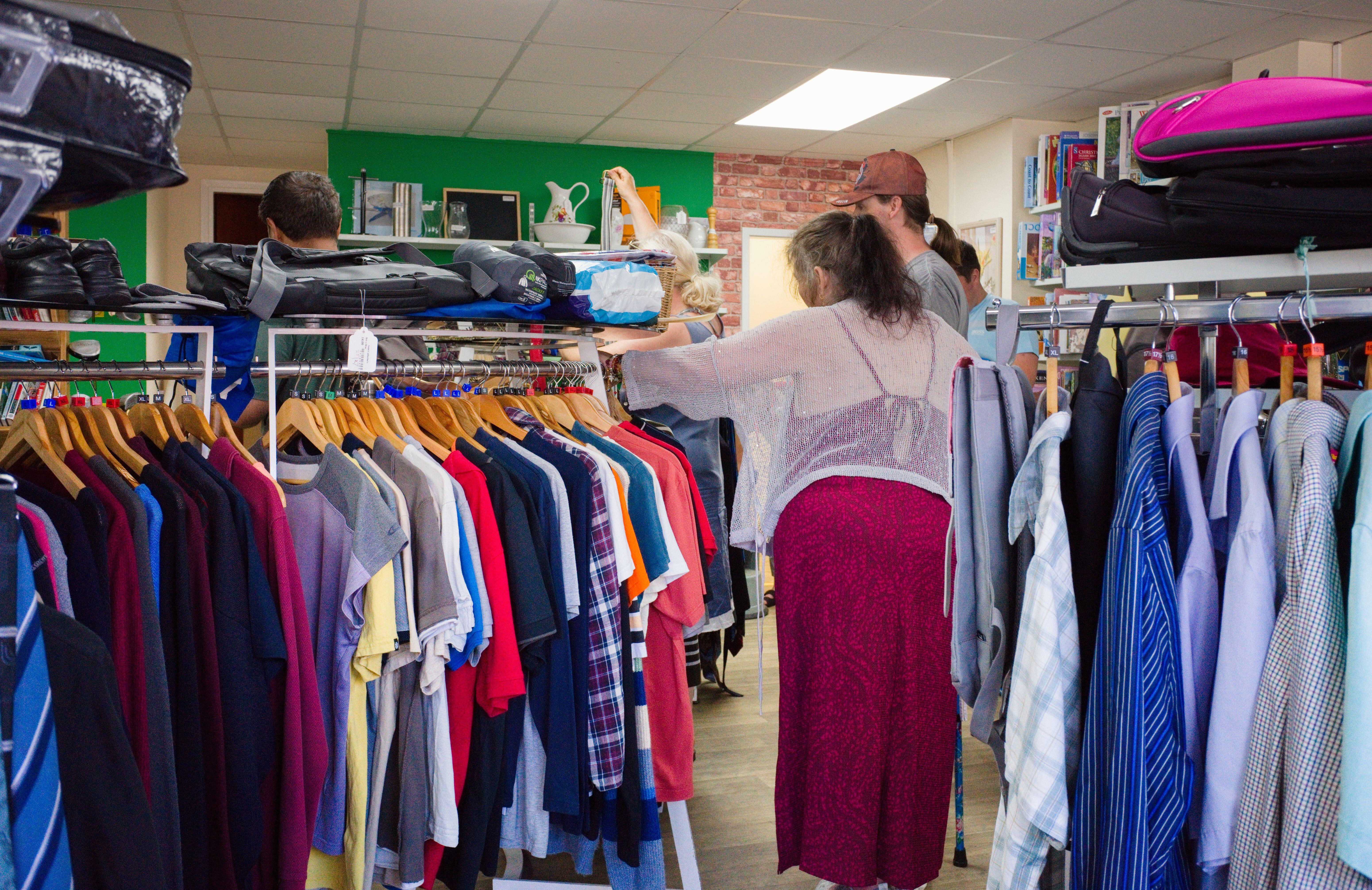
The most important rule with a thrifted Christmas, as with all gifting, is to pay attention to whether the presents are personal, and not to the price point. “You could spend £150 on a fairly generic present that somebody doesn’t particularly want, or you could find a beautiful £20 vintage silk scarf in exactly the colours they love, and the latter might feel infinitely more special,” says freelance brand strategist and former Selfridges luxury marketing lead, Hannah Alley. “Not because it was a bargain, but because it’s so clearly been chosen with that person in mind.”
“It’s very easy to get carried away on Vinted because something has a designer label or was originally five times the price,” she notes of the lure of labels. “But if it isn’t quite right for the person you’re buying for, it’s not suddenly a wonderful gift just because you’ve saved money.”
Add something to elevate
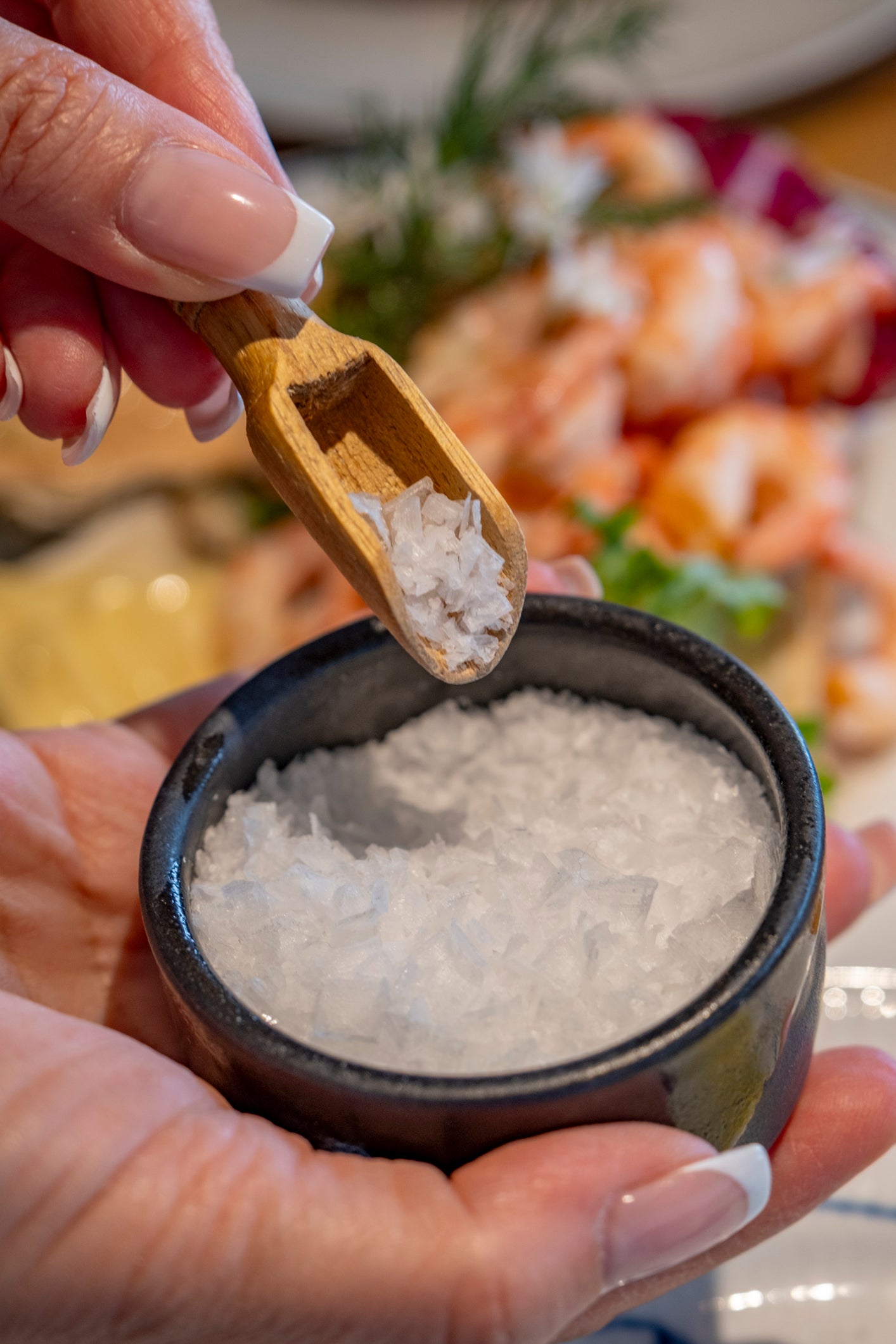
When Randall found a mini Le Creuset pot in her local charity shop, she filled it with Maldon salt and added a mini spoon to make the gift complete. After finding an antique ice cream scooper and Hydro Flask on another trip, she made her own ice cream and put both items into a basket lined with a gingham tea towel.
“You could find a beautiful pair of vintage brass candlesticks and give them with some lovely new taper candles. Or an old cookbook with a bottle of really good olive oil and a few ingredients. Or perhaps a gorgeous antique picture frame with a photograph that’s particularly meaningful to the person receiving it,” says Alley.
“Suddenly, you’re not just giving somebody something you found in a charity shop. You’ve created this lovely, considered little gift around them, and you really don’t need to spend very much to do that.”
Keep in mind the condition
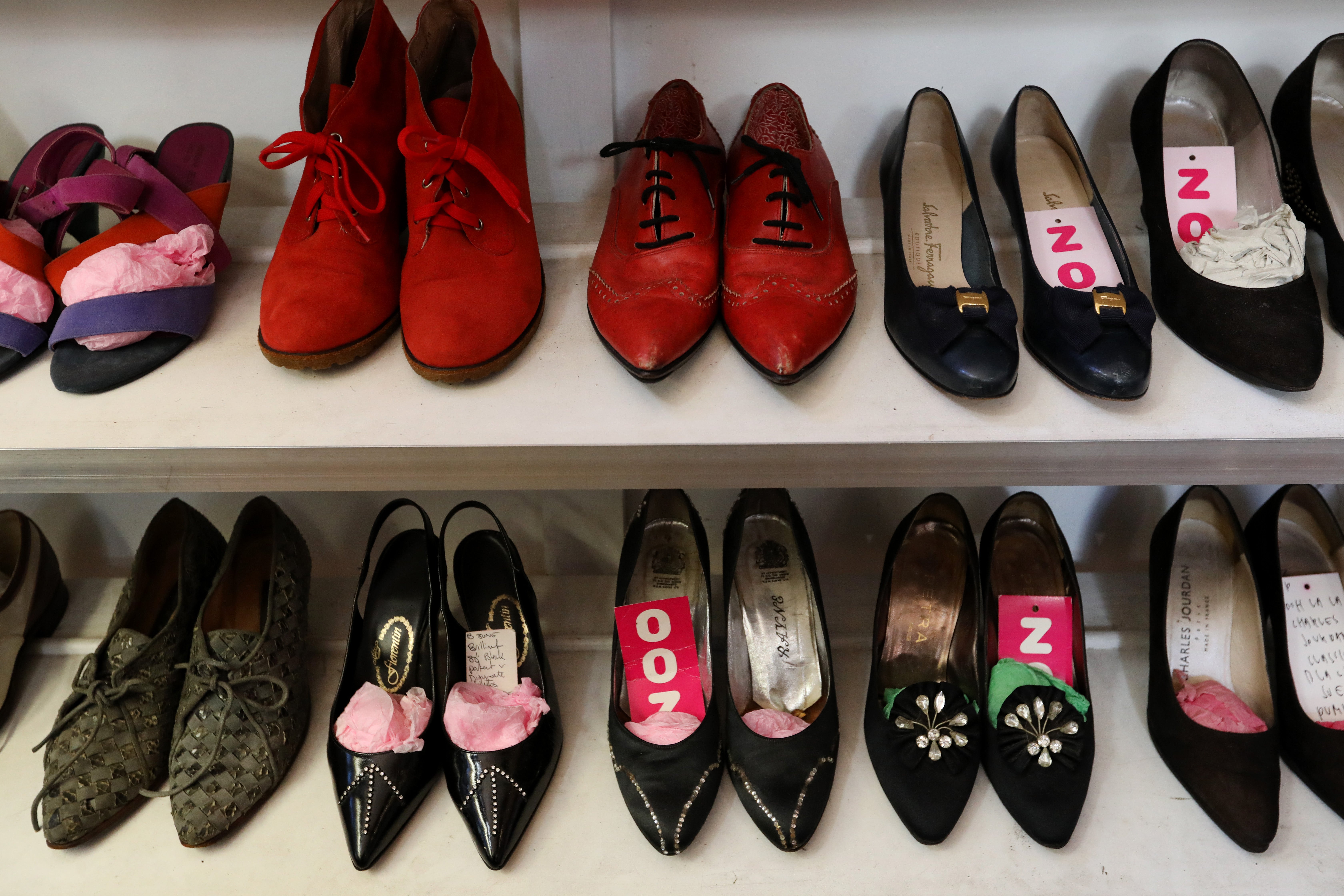
Nobody wants to receive something that’s falling apart or moth-eaten, so making sure the item you’re thinking of wrapping is still in its prime is one of the most important things to keep in mind. “There’s a difference between something having a beautiful history and something simply looking tired or uncared for,” says Alley.
“If you’re buying clothing or accessories, really look at the materials, seams, hardware and overall finish. A lovely silk scarf with a beautiful print can look incredibly elegant, but not if it’s covered in pulls or has an unpleasant smell. The same goes for cashmere, leather and jewellery,” she adds, noting there’s no reason to be afraid of asking for extra photographs of corners and fastenings where wear might be hidden on Vinted.
Take time on the presentation

Often, when buying products new, what shoppers are really paying for is the packaging. With charity shops or Vinted, unless the product is brand new, this is rarely the case. So, it’s down to you. “Spend a little time on the presentation, because that’s where you can make such a difference,” says Alley. “It’s not only the product itself. It’s the way it’s folded, the tissue paper, the ribbon, the anticipation of opening it. All those little things contribute to how special something feels, and there’s absolutely no reason you can’t recreate that sense of occasion at home.
“You don’t need to spend a fortune on packaging, either,” she asserts. “I’d much rather see a beautifully pressed vintage scarf folded into some clean tissue paper, placed in a simple box and finished with a lovely hand-wrapped velvet ribbon than something covered in lots of expensive embellishments. Even using an old silk scarf or beautiful piece of fabric as reusable wrapping can look incredibly elegant – and I’d always include a little handwritten note.”
Be proud of your find
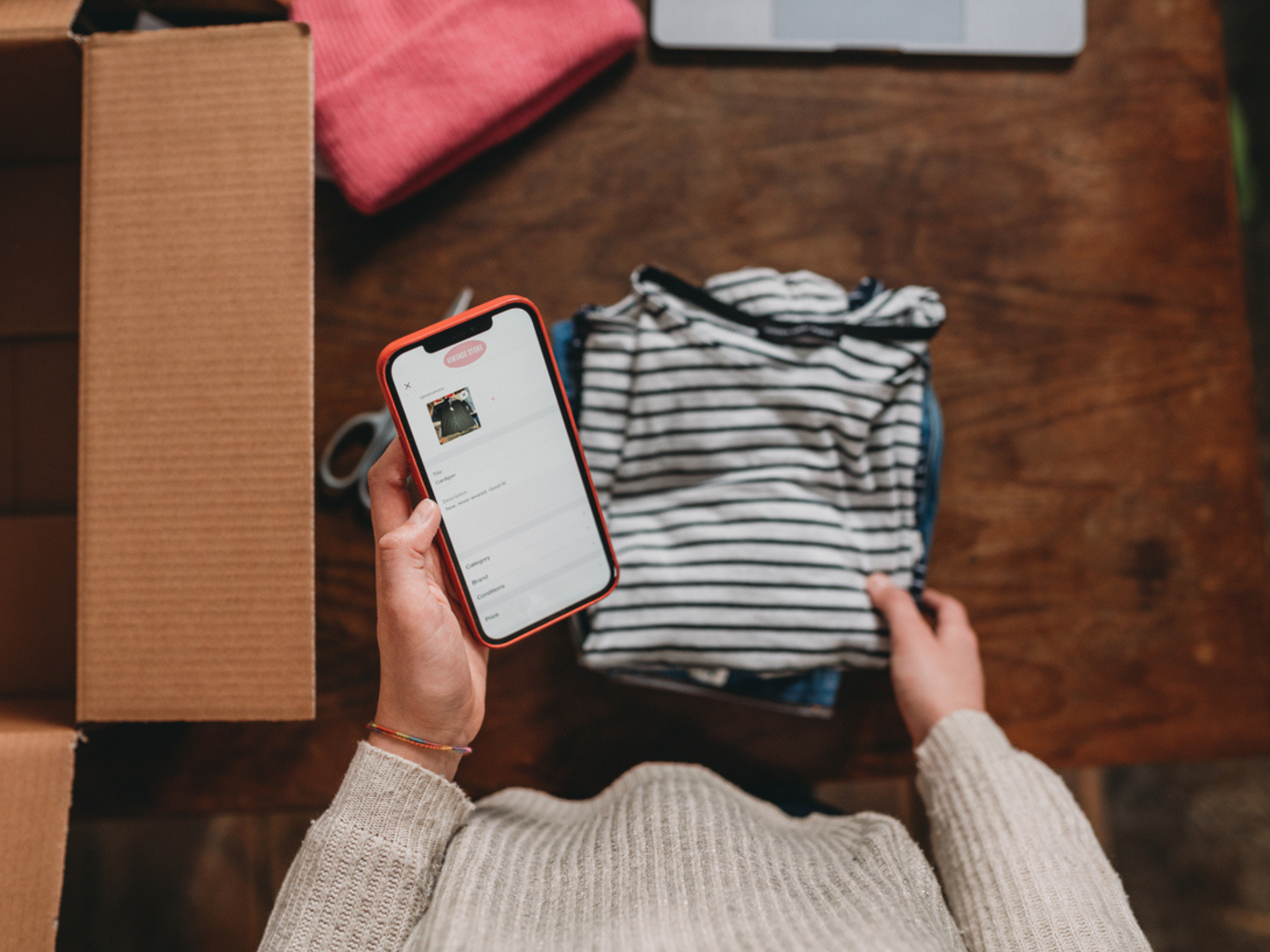
There’s no point trying to conceal that your gift is secondhand. “Personally, I think that’s missing the point a little,” says Alley. “There’s nothing embarrassing about saying you found somebody a beautiful vintage piece or discovered something in a charity shop that reminded you of them. In fact, I think that story can make it even more special.
“There’s no need to pretend something is brand-new or put it in misleading designer packaging,” she says of the charade some might adopt. “Let the object and the thought behind it speak for themselves… I think we all know that feeling of opening something and thinking, ‘Oh, they’ve really understood me.’ That’s what you’re trying to create here.”


