


The evolution of the anti-hero | The Express Tribune


PUBLISHED
May 31, 2026
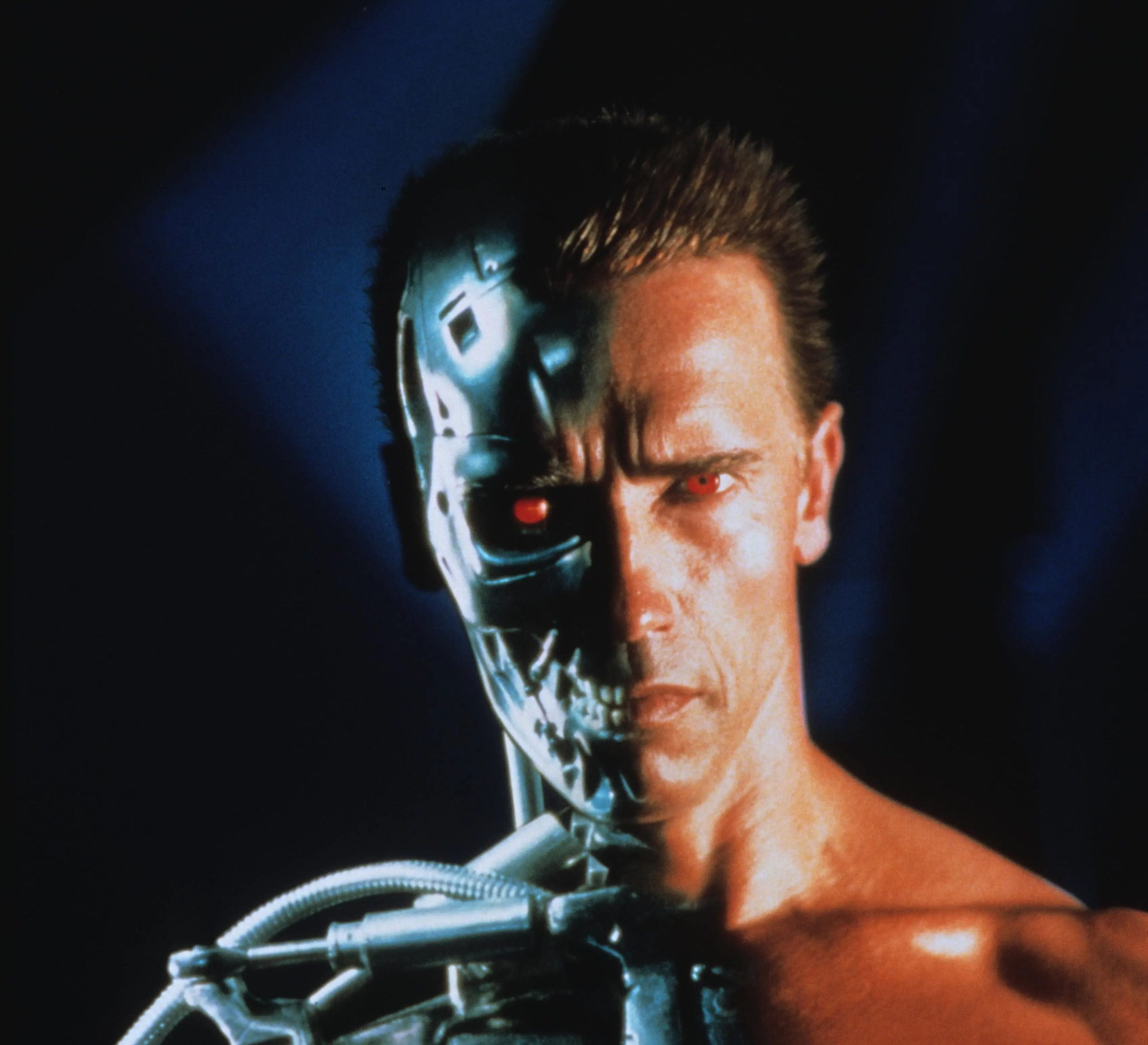
Back in the nineties, I watched the much-hyped Terminator 2 at Nishat Cinema. I’d gone with friends from college and I remember coming out baffled by everyone’s reactions. While I was high on the glory of Linda Hamilton’s upgrade from Terminator, they were fawning over the delightfully evil and vicious villain—the new and improved terminator that replaced Arnold Schwarzenegger as the antagonist. It wasn’t even as if the terminator in T2 was layered or complex—he was just evil, and that made him “interesting” to my friends.
The trend of valorising the villain remained constant for many years among a certain class—the elite classes that you’d expect to find at IVS. My own middle-class family and friends would have come out of T2 with the same reverence for the hero rather than the villain. I only realised many years later that this was a product of the dominance of Western popular culture over our own culture.
In the West, this trend was framed as a pivot to depth and realism in storytelling and it gave birth to the anti-hero. Hollywood’s heroes were no longer pure or rigidly moral. They bent the rules; not just red tape, but ethical and moral rules, and they were often fighting their own demons while saving the world. The hero’s journey remained intact, but the hero received a different kind of upgrade than Linda Hamilton—he wasn’t just bulking up and getting tough, he was flawed, human, layered.
Eventually, as art college moulded my mind, I grew to appreciate the pivot. I looked for stories with deep grey morality, shunning the black-and-white simplicity of fairy tales and romances. I admired the evolution of Burton’s Batman to Nolan’s Dark Knight—once an exaggerated cartoon, now grittily realistic and violent, with the urbane Bruce Wayne just one outcome away from the villains he fought. As a long-time fantasy/speculative fiction fan— initiated into it with Alice in Wonderland, and I read Lord of the Rings when I was 10—I happily watched shows like Game of Thrones, The Witcher, graduating to The Killing, Peaky Blinders, and Breaking Bad with the firm conviction that humans were multifaceted beings, capable of both good and evil.
Monster movies
The reference to T2 has probably clued you in already—I am the generation that grew up reading books and watching movies and shows like Cloverfield, Ridley Scott’s Alien, Joss Whedon’s Buffy the Vampire Slayer, Anne Rice’s Lestat, Bram Stoker’s Dracula, or Eric Kripke’s Supernatural.
As we entered the new millennium, I felt like the number of stories about monsters coming out of Hollywood was growing, not waning. In almost every generation, there has been a reimagining of Dracula and Godzilla, but there was also the TV show Penny Dreadful, which brought to life literary monsters that most of us grew up reading such as Frankenstein, Dracula, Dr Jekyll and Mr Hyde, or Dorian Gray. With every new movie or TV show, I found the villains or anti-heroes were more vicious, more violent, and more explicit in speech and actions.
These stories of monsters weren’t just fantasies. Silence of the Lambs kicked off an obsession with serial killers. As a flag bearer of the serial-killer genre, it’s also a prime example of the direction in which the level of depicted evil grew. The first movie in the series was disturbing enough, but the TV series Hannibal takes stories of unhinged minds to a terrifying psychological precipice and pushes them off the cliff. Hannibal is surreal and graphic in its depiction of the criminal mind and is a precursor to even more disturbing shows like True Detective (season 1). These detective shows are ostensibly about solving violent psychological crimes, but while their villains are unabashedly depraved, their pursuers are equally broken, battling demons that threaten to overwhelm, and ramping up the anti-hero trend from decades before.
This is all in service to Nietzsche’s famous quote, “stare into the abyss and the abyss stares back at you.” The protagonists of these shows are all touched with the same darkness that they struggle to bring down, because they are so close to it.
Of course, Hollywood is all about making money, so every new show, every new story, every movie that aims to decimate the competition must be more—more violent, more evil, more visual, more graphic. While the characters become more tortuous, the production of the show becomes more vivid and explicit.
Explicit nudity came slowly to the US (relative to Europe, which was far more permissive in portraying sex on TV and in movies) and is still primarily the purview of cable TV or streaming platforms, but when HBO launched Game of Thrones, they took sex and violence mainstream and no one objected. By this time, the anti-hero had been normalised, and acts of extreme sadism and depravity were reframed as ‘gritty realism’.
This is a standard progression for Western popular culture. In the same way, Hollywood normalised feminism, homosexuality, and now gender dysmorphia. By slowly increasing exposure to these roles—using powerful stories that build empathy for protagonists that are militantly feminist, gay, or ‘discovering their gender’—they’ve hammered home their ideologies to a global audience and made all of them everyday, mundane, normal.
The confluence of all these ‘isms’ and ideologies arrives in Killing Eve, now streaming on Netflix.
After the genocide in Gaza, I sought my doses of fantasy in the East—out of China and Korea—rather than the West. The lessons learned from Edward Said’s Orientalism, the naked brutality and criminality displayed by Western nations at the deaths of brown people, and the thoughtful, relentless deconstruction of colonialism by Palestine’s advocates have effectively poisoned the West’s cultural exports for me.
However, when Netflix recommended Killing Eve to me recently, I gave it a go. I could watch it without having to read subtitles and I missed the ‘realism’ of Hollywood’s storytelling. As someone fully immersed in stories of violence (I was, until recently, a Tarantino fan), I thought I would enjoy the show.
Things have changed irreparably, though. The Global North took its mask off and the Global South took off its blinders. I couldn’t watch the show without dissecting it from every angle.
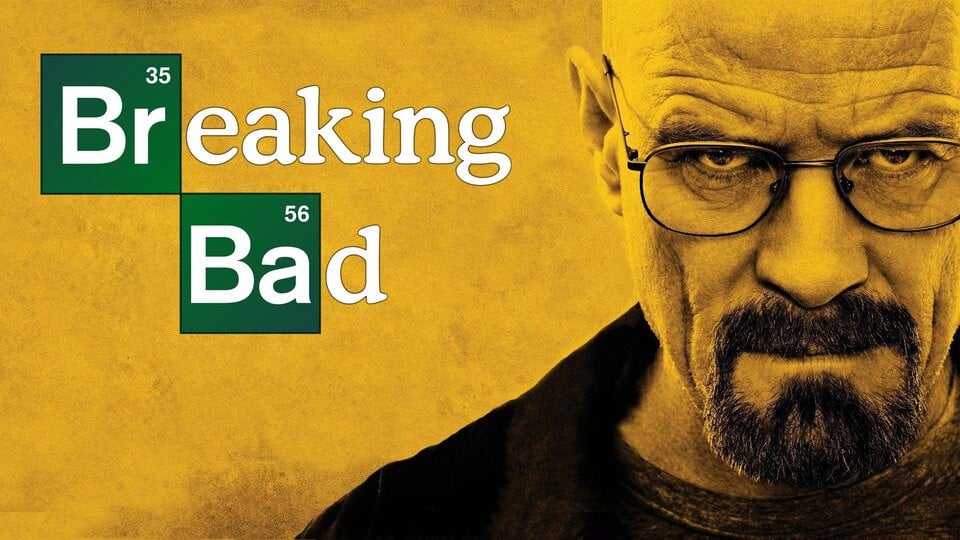
Killing Eve is the glorious culmination of having a cold-blooded killer as the main protagonist—a woman, so embodying the literal essence of militant feminism, who is also a lesbian. The titular character, Eve (not the killer), is someone who falls in love with the killer, Villanelle, and, like Walter White in Breaking Bad, will eventually become a killer herself.
Along the way, they encounter characters with ambiguous gender dispositions, liberally sprinkled into scenes of gratuitous sex between women.
It’s not that I’m an anti-feminist. But the Hollywood version of feminism does not represent equality. Instead, it’s a zero-sum inversion where female capability is demonstrated by supplanting or belittling traditional masculine roles. This a mandated political statement, not organic character development, just like the sad re-imagining of popular tales with women or people of colour (such as the new iteration of Thor). What this says to me is that neither women nor people of colour have their own stories, so they must displace existing characters from existing stories, because the writers and creators of popular shows lack imagination or lack any knowledge of women and people of colour.
Similarly, the push for explicit LGBTQ+ and intimate content is not liberation (nor liberalism), but a loss of restraint, subtlety, and the suggestive power of the unseen. The tools of narration have been replaced by the writer’s version of instant noodles. Both these issues are distractions from the real agenda, however.
In the past two decades, shows like Ozark, Fargo, The Sopranos, Breaking Bad, and Killing Eve have succeeded in taking the complex protagonist with personal demons and making him (or her) an out-and-out villain. These protagonists aren’t just morally grey, they are completely evil and they’re glorified for it. The shift has been subtle, but Hollywood, and by extension, the Global North, has successfully made us empathise with the monsters.
When protagonists are killers, corrupt cops, or drug lords, we are coerced into identifying with and rooting for moral monstrosity. In the stories mentioned above, often ‘good’ and ‘moral’ people are forced through circumstances to become crooks, criminals, murderers—their actions are justified and seen as necessary to their survival. We have been
desensitised to their brutality, conditioned to look for the reasons behind their actions rather than to condemn them.
This acceptance of moral monstrosity makes it easier, in our daily lives, to be unkind, selfish, distrustful, and even corrupt. It makes it easier to accept wrongdoing and to forgive the worst sins, because, after all, we’ve come to root for wrongdoers in fiction.
A story of monsters
Contrary to popular opinion, fiction is a far more persuasive tool than textbooks, teachers, or any form of non-fiction, however creative or well-designed. This is because we learn more than words and speech patterns from fiction. Fiction is insidious and deeply influential. If you relate to a protagonist, you internalise his or her values, her motivations, her reasons for her actions, however abhorrent they may be.
Now place this into the context of Orientalism. Said’s thesis postulates the existence of a well-documented narrative, however subtle, in which the white man is the civilised saviour and the people of colour are savages in need of saving. This is the narrative that says that when a white man is violent, he’s justified. When a brown person resists with violence, he is barbaric.
So, when Israeli Occupation Forces (IOF) post pictures of their unspeakable crimes on social media, they expect to be valorised for it—popular culture tells them this will be the reaction, and sadly, it often is. IOF soldiers are white Ashkenazi Russians, already seen, through years of well-planned hasbara, as the underdogs in West Asia, surrounded by barbaric brown Muslim savages. Why would they expect any other reaction?
Those of us who grew up reading and watching Western popular culture have been indoctrinated and conditioned to accept monsters as heroes. And by venerating the fictional
monster, we dull our capacity to judge the real one. This is why generations of Pakistanis still believe that the West is civilised and we are barbarians. Why generations of Pakistanis want to speak English and dress like their Western counterparts. Why generations of Pakistanis hope to live abroad someday, or failing that, to live like Westerners in Pakistan, from the clothes to the homes, to the lifestyles, the jobs, and music, the art, to the values. And why generations of Pakistanis find support for Palestine—even Kashmir—cumbersome and backward.
For the Global North, Hollywood is the West’s single most effective and potent form of cultural projection and normalisation. If all their fictional heroes are also monsters (but cool, complex, relatable ones), then the real-world monstrosities of empire, war, and exploitation can be reframed as complex, necessary, or understandable. Just as the protagonists in Ozark turn to a life of crime out of necessity, the West is reframing its crimes of colonisation, slavery, apartheid, siphoning of land, wealth, and natural resources, ethnic cleansing, and genocide as necessary to their own survival. Simultaneously, the Western empire, encompassing the US, Europe and the British empire, have managed to minimise the actual monstrosity of Western histories and their current actions in the world by making monstrosity ‘cool’.
But only, only, when the monsters are white.
All facts and information are the sole responsibility of the writer
The writer is an artist and a writer from IVSAA. She hosts a podcast on YouTube called Kawway. You can find her works on Instagram @sabahatquadri


