


Why we are all suddenly happy to pay £5 for a slice of pizza?


London has found another way to spend a fiver standing up.
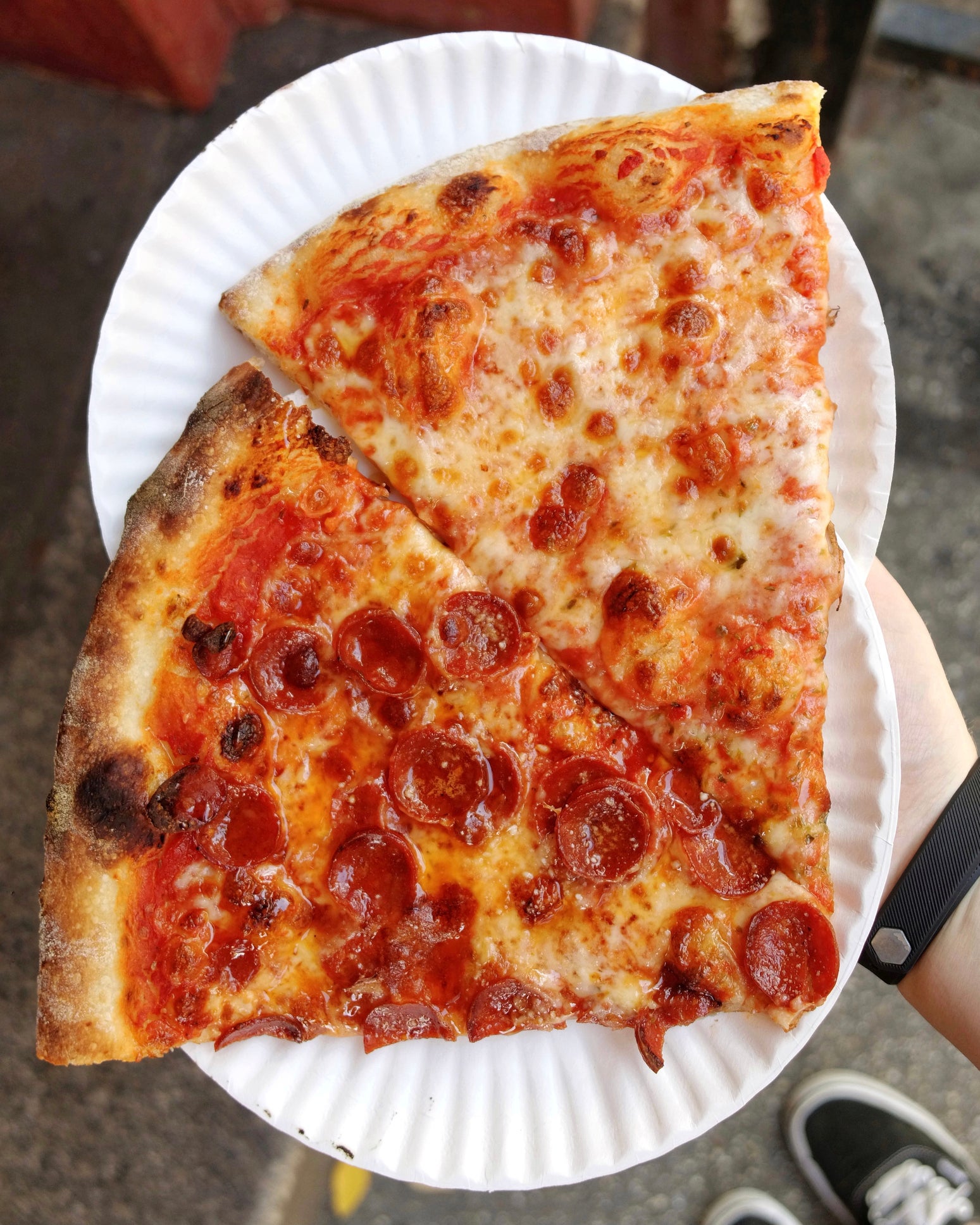
The pizza slice, once principally the food of New Yorkers, students and anyone making questionable decisions after midnight, is having a rather polished moment. Across the capital, enormous triangular wedges are appearing for £4, £5, sometimes £6 or more, topped with everything from pepperoni and hot honey to burrata and vodka sauce. You can fold them. You can walk with them. You can take nice photos of them.
At Carmy’s, a new New York-style slice shop that opened in Covent Garden this summer, a cheese slice is £4.25. At Voodoo Ray’s in Dalston, which has been doing this since 2012, a margherita is £4.90 and pepperoni £5.40. Paulie’s in Shoreditch starts at £5 for its classic NYC and runs to £6.50 for burrata or cacio e pepe. Homeslice, which opened in 2013, starts at £5.50.
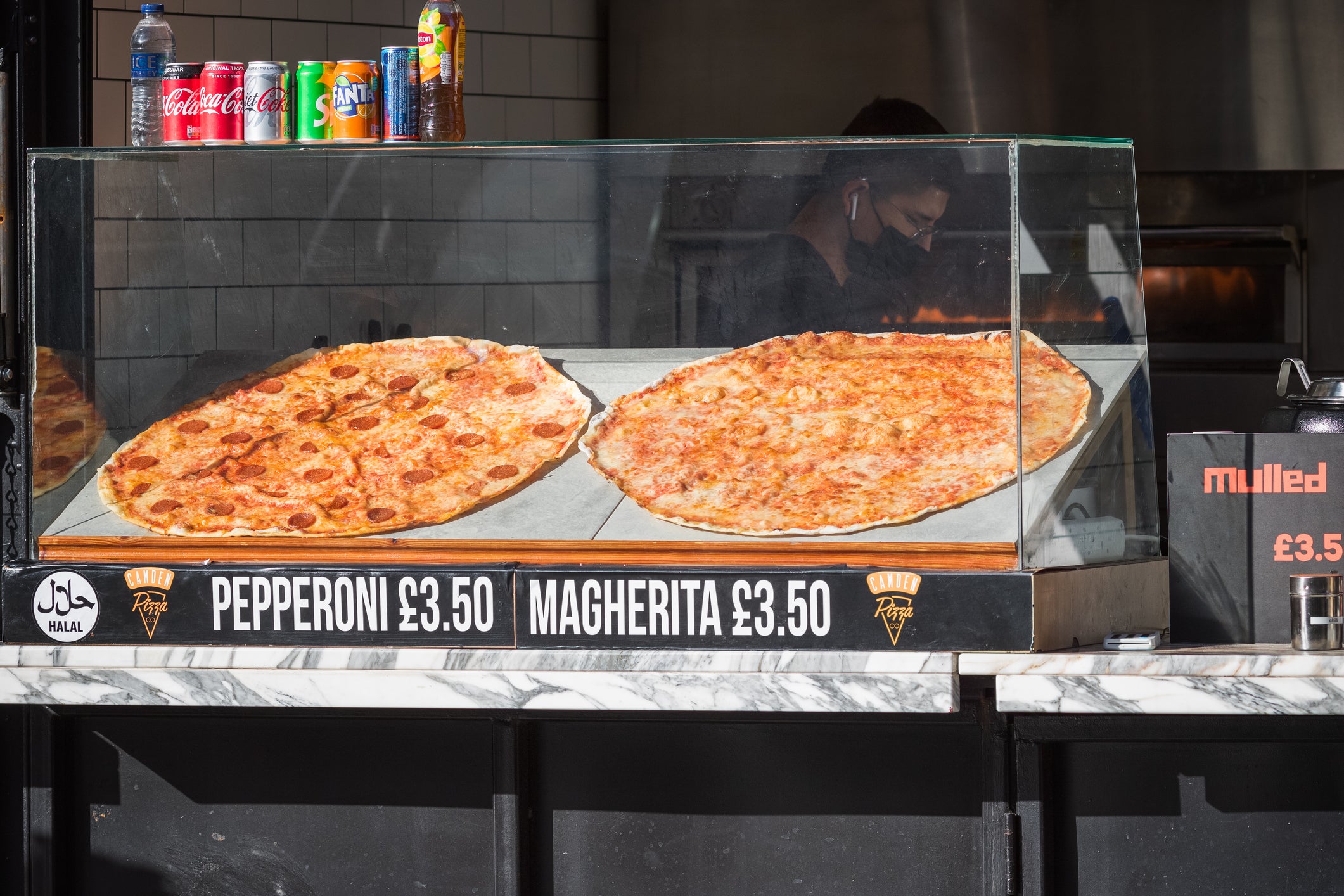
It is spreading. Dough Hands, already one of London’s more talked-about pizza operations, started selling individual slices from its 20-inch pies for the first time at All My Friends in Hackney Wick this year. Further north, Edinburgh’s Civerinos now has three dedicated slice bars, with prices for New York-style slices ranging from £4-6.
Five or six quid for one slice of pizza can, nonetheless, induce the sort of reaction normally reserved for captive audiences in airport Prets. Phil Chaykin, one of the five owners of Carmy’s, knows this because people told him. “When we first opened, there were quite a few comments online saying that £4+ for a slice of pizza was expensive,” he tells me. “I think part of that is simply because people aren’t yet used to judging pizza by the slice.”
There is a catch. The slice is admittedly enormous.
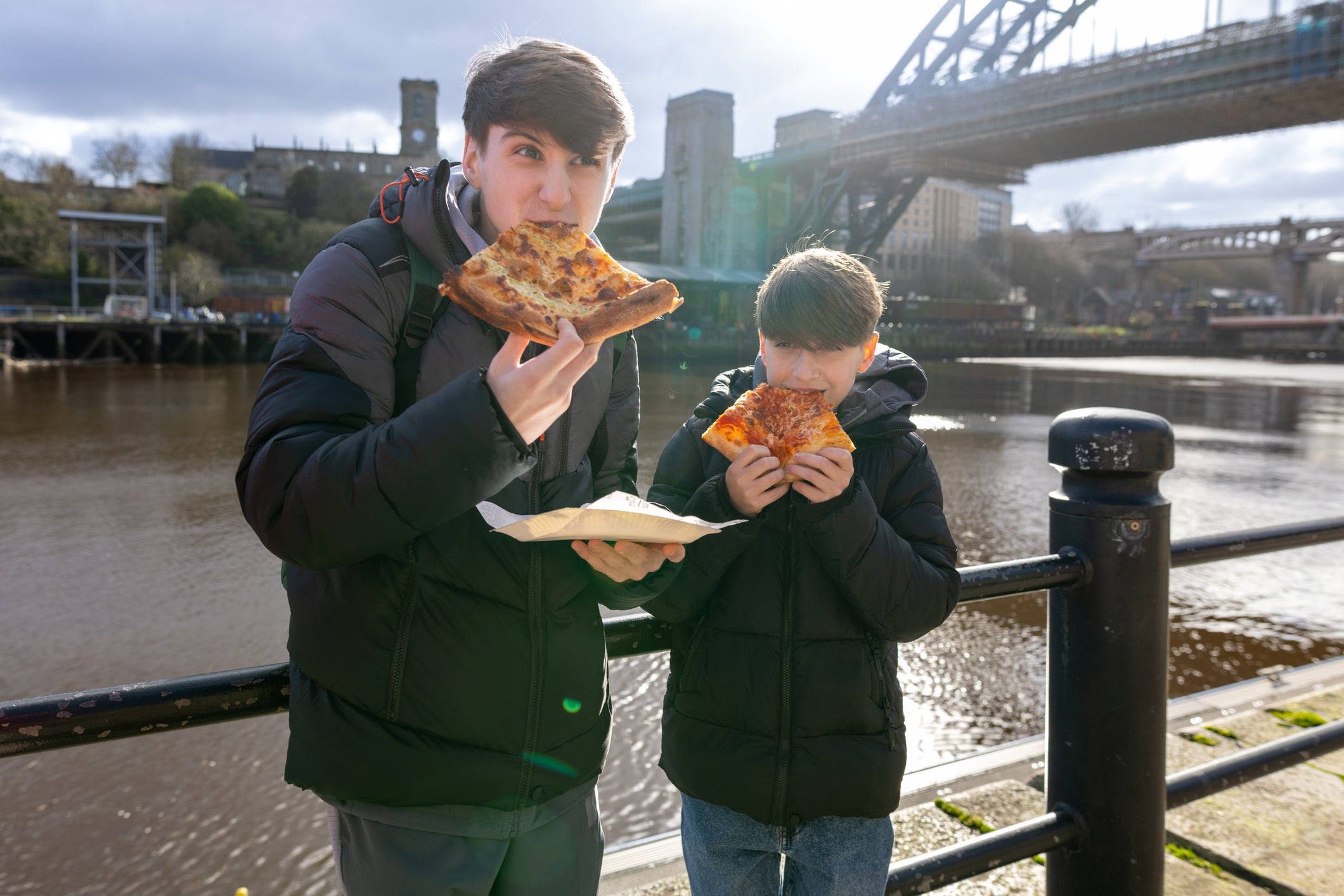
Carmy’s pizzas are 20 inches across and cut into eight. A 20-inch pizza has nearly three times the surface area of a 12-inch one, meaning its £4.25 cheese slice works out at roughly the same amount of pizza for your money as a £12 12-inch pizza.
“Our slices are substantial – two are enough for an average person to be full, and a whole 20-inch pizza is really something to share between three or four people,” Chaykin says. “You can get a lunch for less than £10 per person – is that really that expensive for central London?”
Pizza geometry is unlikely to be something any of us care to revisit after GCSE maths, but it is helpful here. We hear “one slice” and picture one eighth of a normal pizza. These things are closer to individual meals. Voodoo Ray’s goes bigger, at 22 inches. Each of those is cut into eight giant slices. Its £29.50 margherita would bring in £39.20 if all eight pieces were sold separately at £4.90. Its £35 pepperoni becomes £43.20 at £5.40 a slice.
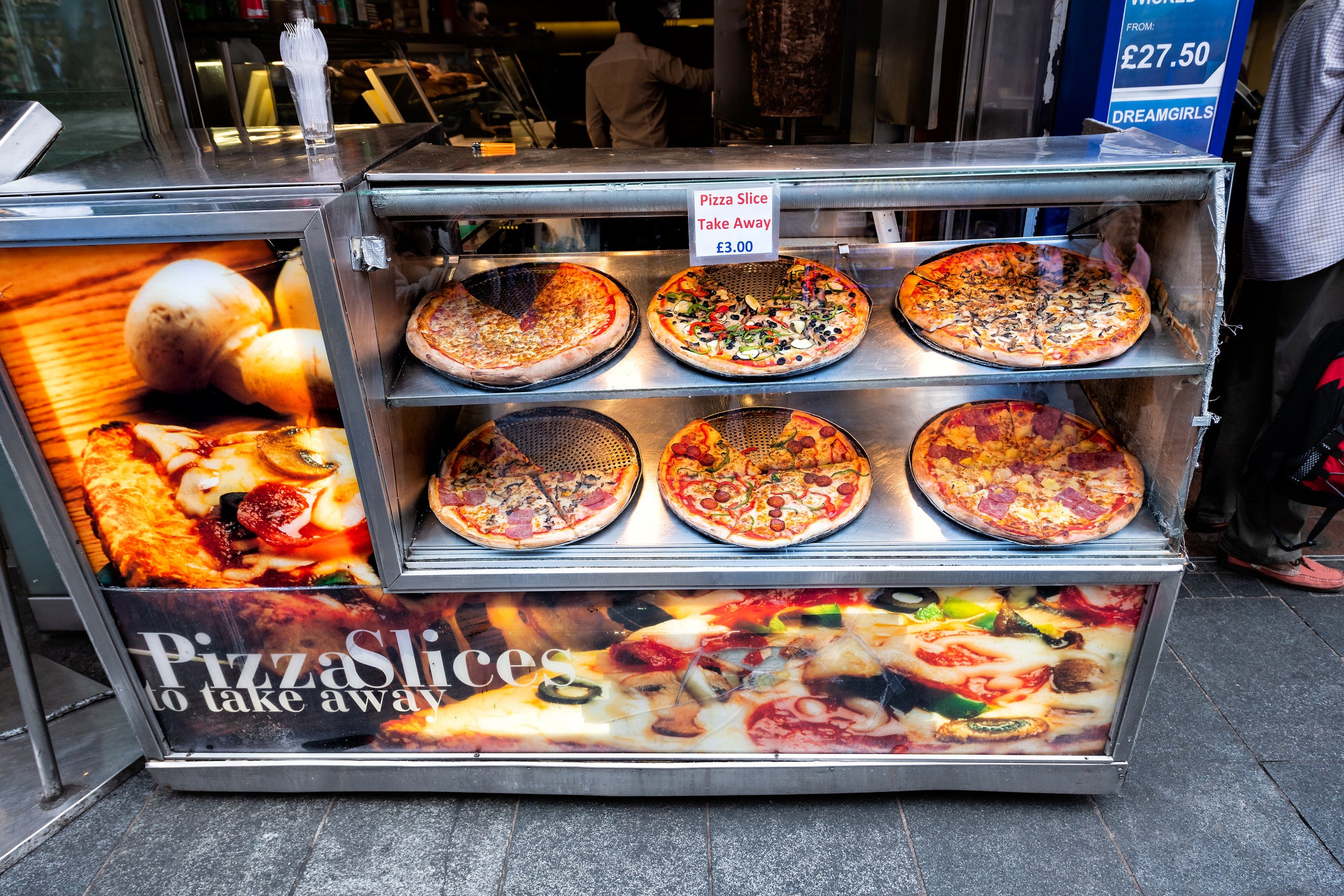
At which point one might reasonably conclude that pizza is an exceptionally good business to be in. Flour and water are cheap. Tomato is not caviar. Cut the thing up and somehow another tenner appears.
If only restaurants worked like that.
Carmy’s aims for an upper limit of roughly 25 per cent food cost across its menu, Chaykin says. Even using good flour, San Marzano tomatoes, quality cheese and carefully sourced produce, pizza’s raw ingredients remain relatively inexpensive.
Our dough takes a minimum of 72 hours from start to finish, and there are no shortcuts in that process
Phil Chaykin, co-owner of Carmy’s
The expensive part is persuading those ingredients to become pizza.
“Our dough takes a minimum of 72 hours from start to finish, and there are no shortcuts in that process,” he says. “Making the dough, balling it, managing fermentation, stretching, topping, baking and then reheating slices to order all require skilled labour.” In fact, he says selling whole pizzas is easier. Slices create more potential waste and require another step: a defining feature of the New York slice is its final blast in the oven, crisping the base immediately before it reaches your hand.
“So while a slice shop might look like a simpler or cheaper operation than a sit-down pizzeria, the economics aren’t dramatically different,” Chaykin says. “Ultimately, our pricing has to support a very labour-intensive product as well as the quality of ingredients we’re using.”
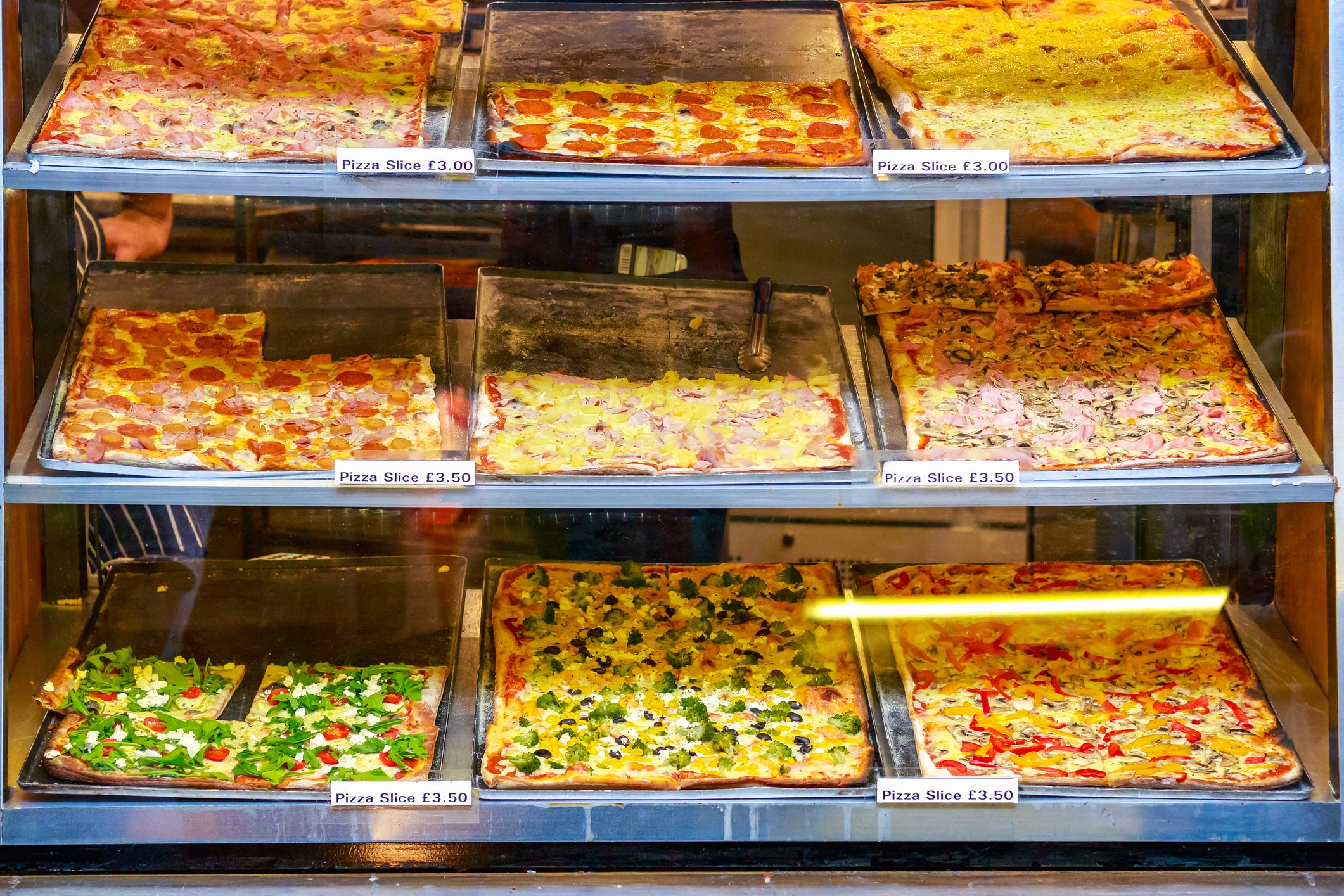
A £5 hot takeaway slice also contains about 83p in VAT before anybody has been paid or the lights switched on. Rent, rates, energy, equipment, insurance and card fees are all still waiting patiently for their portion.
There are easier moments to own a restaurant. The UK’s 100 largest restaurant groups saw combined profits fall 44 per cent in the most recent year, even as their revenues rose. It is quite possible, apparently, to sell more food and reap fewer rewards.
The real advantage of the slice reveals itself when you look around Carmy’s. There are no reservations, no table service and only limited seating. Most customers arrive, buy pizza and leave. “The physical model is definitely important,” Chaykin says. “We can serve a lot of people from a relatively small space, and because there are no reservations or traditional table service, customers can be in and out very quickly.
“At busy times we can serve a very large number of customers in a short period without needing a corresponding number of seats. That’s really what makes a small space work for us.”
The appeal on the other side of the counter is considerably less complicated. “The great thing about the format is that it serves quite different occasions,” Chaykin says. “Someone might come in on their own, grab one slice and eat it on the go. Someone else might have two slices and a drink, while a couple with two children might take a whole pie and share it.”
It also happens to fit rather neatly with the way London eats now. “Everyone is busy, people increasingly want something genuinely good without necessarily committing to a full restaurant meal, and a slice is probably the ultimate grab-and-go food.”
Waste, which ought to be the model’s obvious weakness, has so far proved less troublesome than expected at Carmy’s. Production is adjusted throughout the day to avoid leaving slices sitting around and staff take home much of what remains at closing time.
“In practice, the bigger commercial risk for us has been the opposite: not having enough pizza ready when demand suddenly picks up,” Chaykin says. “We’re much more likely to lose revenue because customers are waiting for the next pizza to come out of the oven than because we’ve made too much.”
None of this was invented in Covent Garden. Pizza spent its early life in Naples as inexpensive food that could be eaten in the street; Italian migrants carried it across the Atlantic and New York turned giant, foldable slices into a civic institution. “In New York, slice culture is an iconic part of daily life,” Chaykin says. “It’s affordable, grab-and-go, the menus are usually simple, and the shops themselves can be very basic. New York is also one of America’s great walking cities, so the slice naturally became part of its street-food culture.”
The capital, he argues, ought to have been fertile ground all along. “London is arguably even more suited to that way of eating. We walk everywhere, we use public transport, we eat on the move – so I’ve always found it slightly surprising that we never developed the same kind of slice culture here.”
London has sold pizza by the slice for years, but Chaykin thinks something about it has changed: “the pizza itself.”
“New York has seen a new generation of pizza makers applying almost a high-end bakery mentality to the slice shop – much more attention to flour, fermentation and dough-making, combined with a chef-led approach to ingredients and toppings,” he says
The modern slice has managed to become fast food with a 72-hour dough, cheap lunch with expensive cheese, a bit of New York theatre and something you can eat alone over a bin without feeling you have made a poor life choice. London has practically run with the idea.
For the people selling it, cheap flour helps. More important is being able to serve a lot of people with not very much room. For everyone else, the calculation is simpler. You have a fiver. There is a very large piece of pizza in front of you. Good luck walking past.


