


World’s Rarest Tigers In One Frame: Melanistic Tigress And Her Three Cubs Spotted In Odisha’s Similipal Reserve


Last Updated:
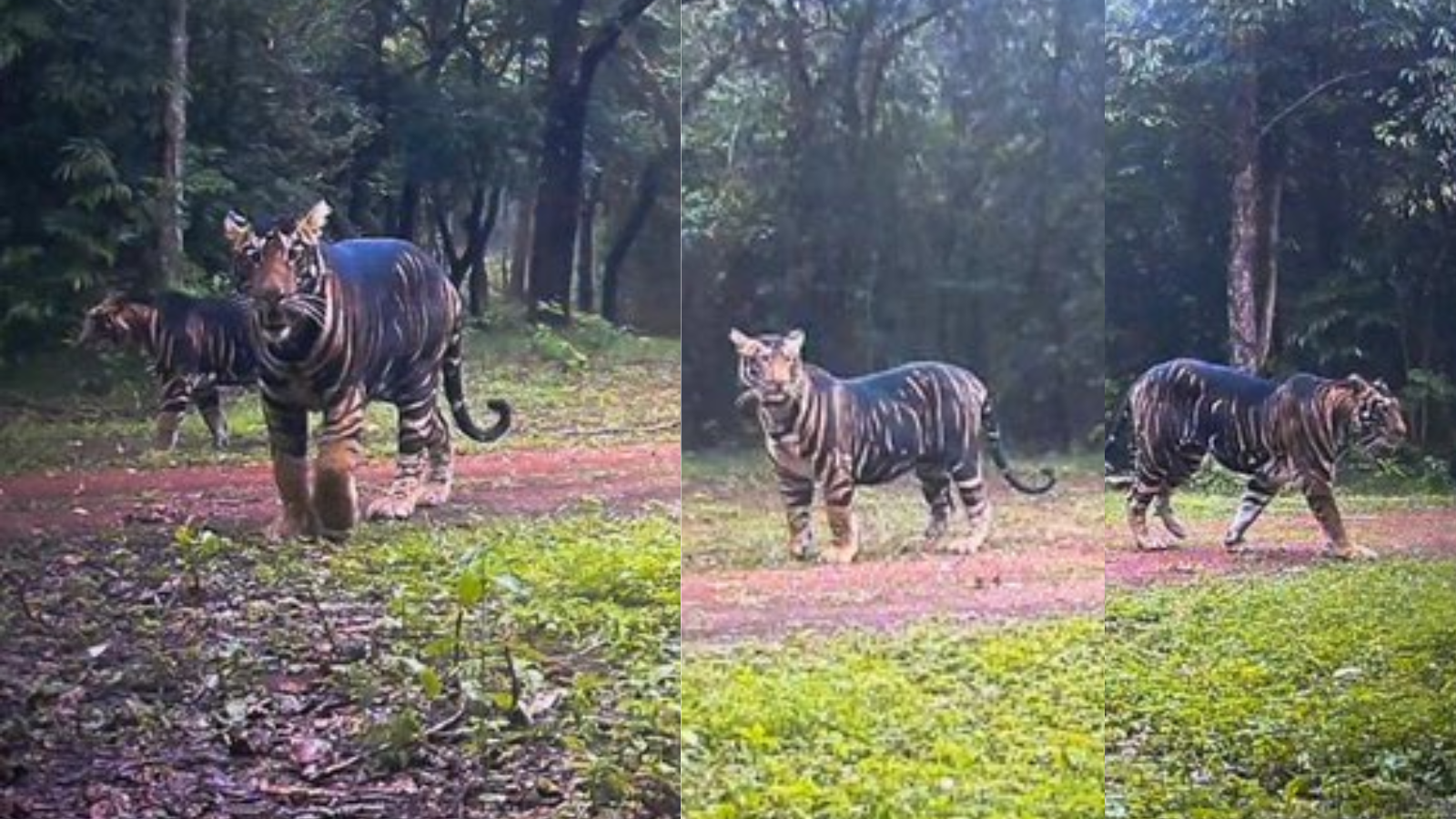
A melanistic tigress and her three black cubs were spotted in a single frame at Similipal National Park in Odisha, home to all of India’s black tigers.




Known technically as “pseudo-melanistic,” these creatures carry a rare, recessive genetic glitch, specifically a mutation in the Taqpep gene which causes their characteristic tawny-orange coat to be overwhelmed by heavily broadened, overlapping black stripes. (Image courtesy: X/@ParveenKaswan)
Deep inside the forests of Odisha, a rare family portrait has emerged from the wild. A melanistic tigress walking alongside her three melanistic cubs was recently captured in a single frame and shared by renowned IFS officer Parveen Kaswan. The picture has drawn attention not only for its rarity but also for where it was taken: Similipal Tiger Reserve, one of the few places on Earth known for its population of elusive black tigers.
The picture is significant not only because black tigers are rarely seen in the wild, but also because capturing a mother and three cubs together is an extraordinary event.
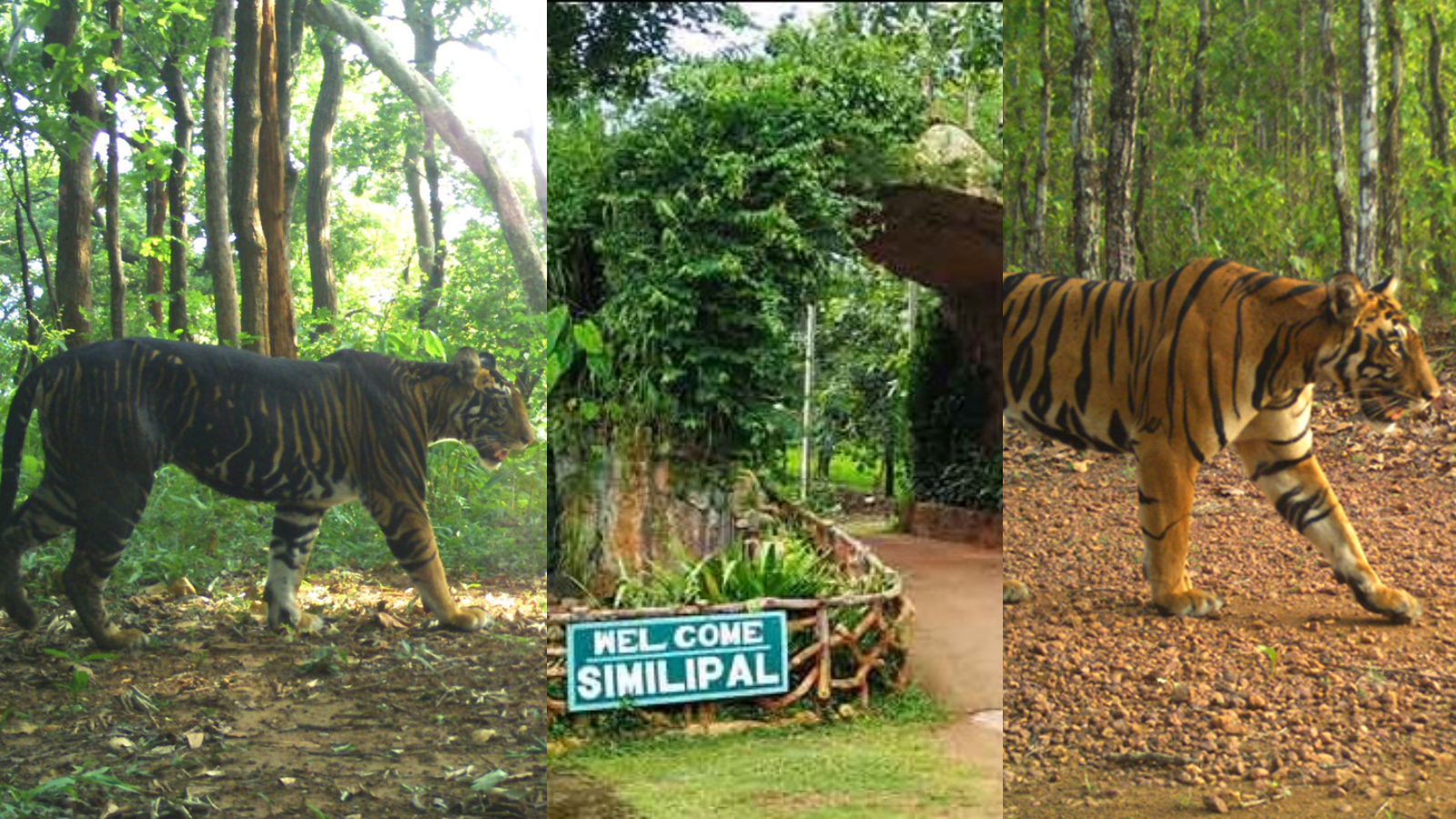
While the Royal Bengal tiger remains India’s most iconic big cat, Similipal’s pseudo-melanistic tigers have quietly transformed this forest into a wildlife wonder, with an estimated 37 per cent of its tiger population displaying this rare genetic trait.
Why are Melanistic Tigers Rare?
The big cats captured in this viral image are not a distinct species, but an exceptionally rare color variant of the Royal Bengal Tiger. Known technically as “pseudo-melanistic,” these creatures carry a rare, recessive genetic glitch specifically a mutation in the Taqpep gene which causes their characteristic tawny-orange coat to be overwhelmed by heavily broadened, overlapping black stripes. This creates the striking illusion of a solid black predator slithering through the shadows.
This rare genetic trait has made Similipal one of the few places in the world where visitors and researchers have a chance, however slim, of spotting these elusive big cats in their natural habitat.
All About The Similipal Tiger Reserve in Odisha
Tucked away in the northern reaches of Odisha, the Similipal Tiger Reserve is one of India’s most biodiverse wildernesses. Spread across the Mayurbhanj district, the reserve is famed not only for its elusive melanistic or black tigers but also for its vast forests, dramatic waterfalls and rich wildlife. For travellers seeking an offbeat safari experience away from the crowds of central India’s more famous parks, Similipal offers a wilderness that feels raw, untamed and deeply rewarding.
Spread over an astonishing 2,750 square kilometres, Similipal is a massive biosphere reserve that was brought under the historic ‘Project Tiger’ banner in 1973 and recognized by UNESCO in 2009. The landscape is dominated by towering Sal forests, sprawling meadows, and dramatic, cascading waterfalls like Barehipani and Joranda, which plunge over jagged cliffs to feed the roaring Khairi and Deo rivers.
One of the first things visitors notice about Similipal is its remarkable diversity of terrain. Dense sal forests stretch across rolling hills and valleys, interrupted by rivers, streams, grasslands and waterfalls. The reserve forms part of the larger Similipal Biosphere Reserve and sits within a landscape shaped by varying elevations and climatic conditions, creating habitats that support an extraordinary range of flora and fauna.
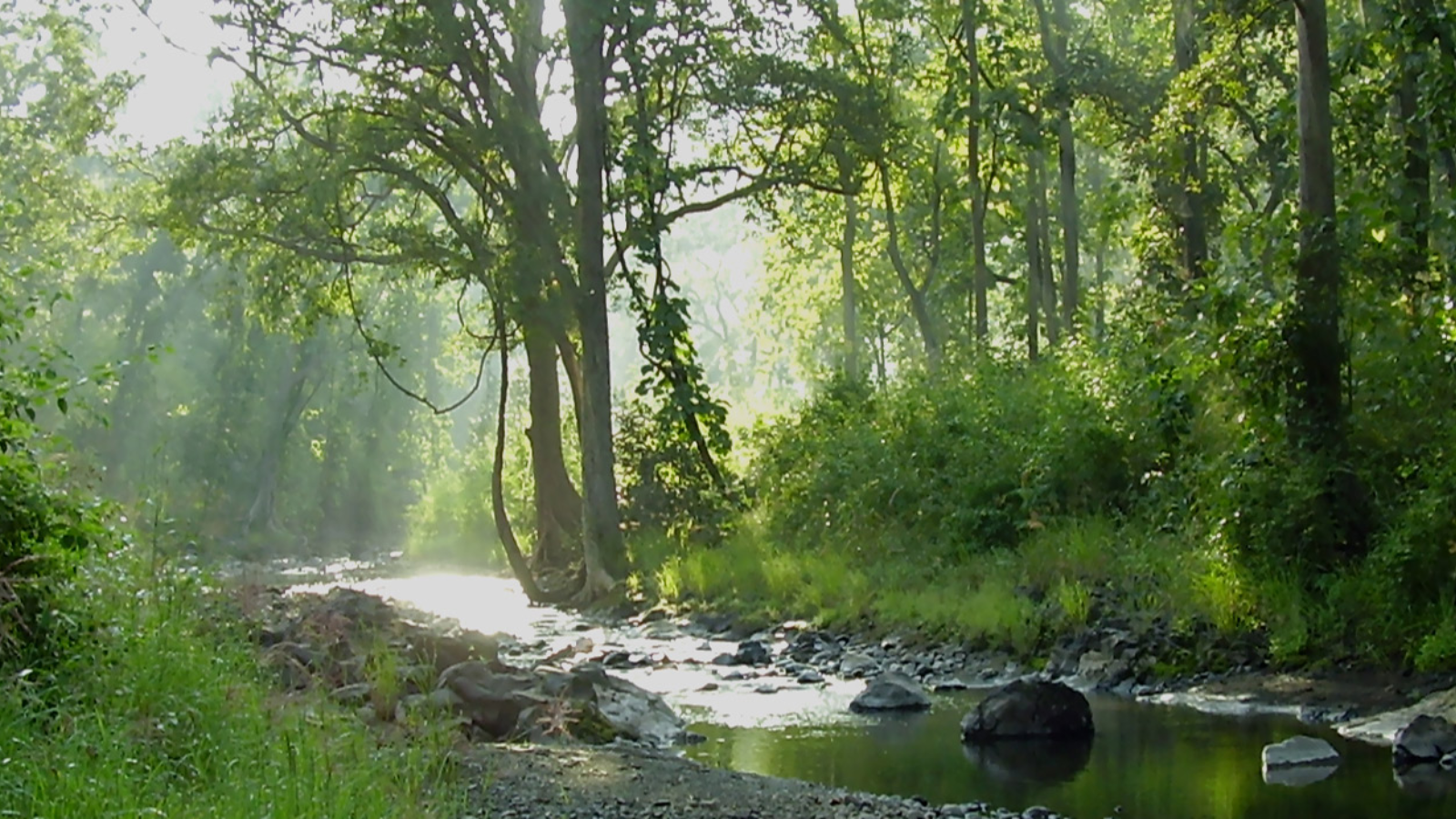
The reserve is also home to some of Odisha’s most spectacular natural attractions. Barehipani Falls, one of India’s tallest waterfalls, plunges dramatically through the forest, while Joranda Falls offers another breathtaking spectacle amid the wilderness.
Animals
While the reserve has gained global attention for its rare melanistic tigers, the wildlife experience extends far beyond these elusive cats. Similipal supports populations of Bengal tigers, Asian elephants, leopards, gaurs, sambar deer, barking deer and numerous smaller mammals. The forests are also a haven for birdwatchers, with hundreds of bird species recorded across the reserve.
Safari Experience
Visitors can enter the reserve through two primary gates: Pithabata near Baripada and Kaliani near Jashipur. Safari permits can be booked online or obtained at the entry gates, subject to availability. The reserve also offers safari vehicles for visitors who prefer guided exploration of the forest.
Similipal’s safari routes pass through dense forests, river crossings and remote stretches of wilderness, creating a more immersive experience. The reserve generally remains open from November to mid-June and closes during the monsoon season.
Stay
One of Similipal’s unique attractions is the opportunity to stay within the reserve itself. Eco-tourism nature camps at Gurguria, Kumari, Barehipani, Jamuani and Ramatirtha allow travellers to spend a night surrounded by forest landscapes. These stays are managed through eco-tourism initiatives and typically include accommodation and meals.
Outside the reserve, visitors can also find hotels, lodges and nature camps around Baripada and Jashipur, which serve as convenient bases for exploring the region.
How Do You Reach Similipal Tiger Reserve?
The reserve is accessible by both road and rail. Baripada and Jashipur serve as the main gateways to Similipal. By road, the reserve is connected to major cities including Bhubaneswar, Kolkata, Ranchi and Jamshedpur.
For rail travellers, the nearest stations include Baripada, Bangiriposi and Badampahar, while major railheads such as Balasore and Tatanagar provide broader connectivity to cities across India.


