


Would you spend £500 to make friends? Welcome to Britain’s loneliness economy


Want to bookmark your favourite articles and stories to read or reference later? Start your Independent Membership today.
Already a member?
Log in
Feeling lonely? Would it help to know that you’re not alone?
The number of young people with no close friends has risen fivefold since 2014, and 40 per cent of Britons aged 16 to 29 report feeling lonely “often, always or some of the time”.
Britain is in the grip of a loneliness epidemic, which paints a bleak picture of the country’s social landscape, but perhaps a rather sunnier one for late-stage capitalism.
Companies have realised a simple truth: the desire for connection is valuable. And as young people’s isolation and disconnection grow, so too does the profit potential of their loneliness.
Over the past few years, there has been a surge in the number of paid social clubs and companionship apps catering to people trying to “find their friends”.
Timeleft, Agora, 222Place, the Remotely Social Club, GroupVibe and PLY (People Like You) are just a few of the new platforms that market themselves as the answer for those searching for connection.
Each platform curates groups and events where strangers are matched through an algorithm for the chance to meet and make “lasting friendships”.
The appeal is obvious, as is the commercial opportunity. In an increasingly disconnected world, they are selling more than a service. They are selling an emotional return on financial investment.
But do they work?
I’ve been fortunate for most of my life to have had a close-knit group of friends. But now we are in our late twenties; we are each navigating our own paths, whether settling into relationships, moving away from the city or focusing on our careers. And I have found myself (like so many others my age) wanting to meet new people.
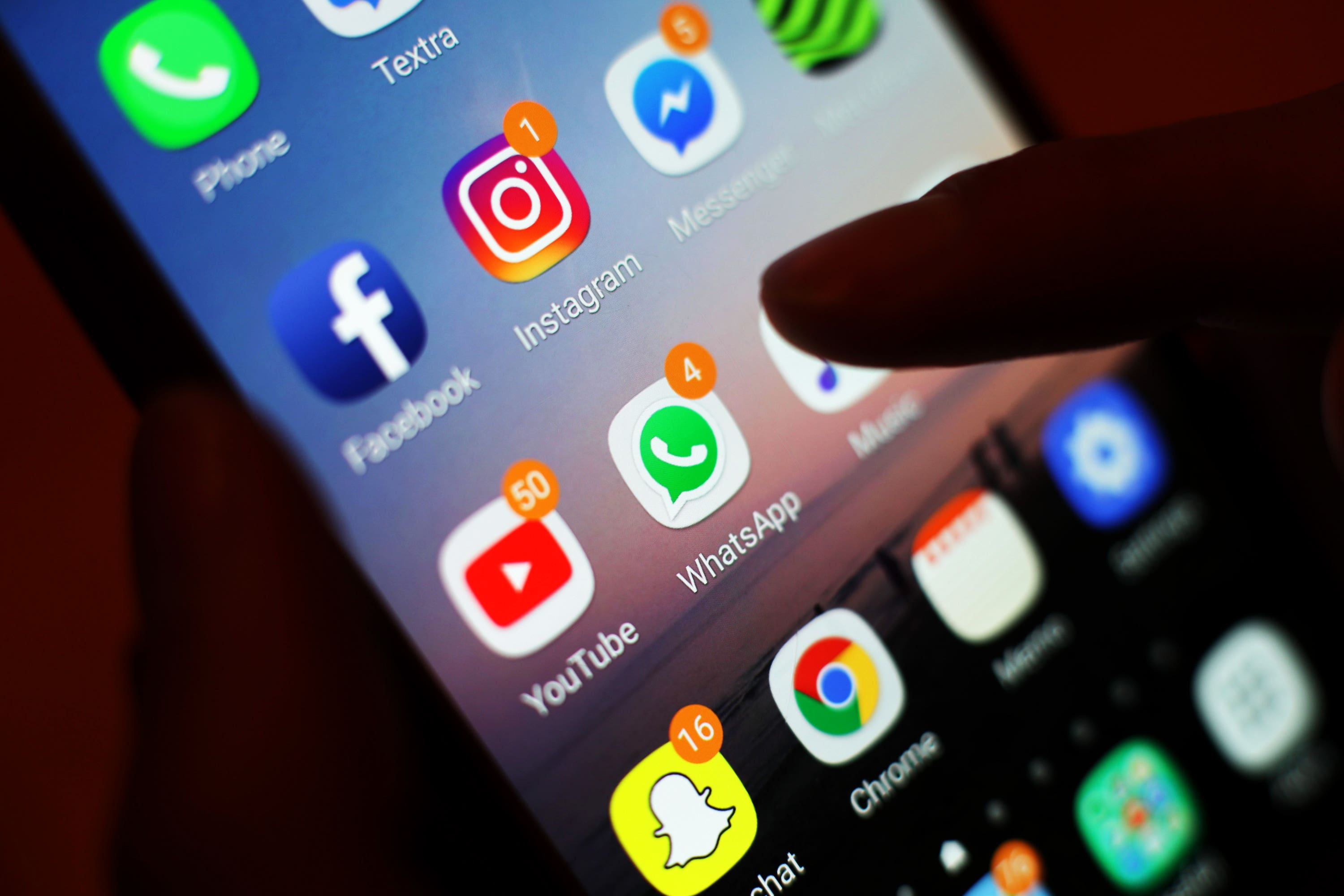
It’s hard to escape the wave of Instagram adverts promoting social meet-up apps; glossily edited videos featuring influencers and the now-familiar buzzwords of modern marketing: connection, community, belonging.
So, I finally decided to try one out. Timeleft is one of the biggest and fastest-growing platforms today; it brands itself as “The Friendship App”.
After taking a quick quiz about my age, lifestyle, work and even what “genre of film” my life would be, their algorithm had everything it needed; and after a subscription fee of £13.99, I was set for dinner with six other strangers.

I was glad when they did. I had arrived early, so my experience began with a stark moment of panic, sitting alone at a large table, wondering if the other restaurant patrons would think better of me if I persisted in ordering a dinner for one, or accepted defeat and left.
The more I researched, the more I discovered that a lot of these apps have an issue with people dropping out of events on the day or simply not bothering to turn up at all.
Of course, regardless of cancellation, they are still paying their subscription fee, but for someone suffering from social anxiety, attending an event might feel less like a relaxed introduction and more like exposure therapy.
My potential new friends were a colourful mix, all new to the city and nearly all new to Timeleft. Despite my initial trepidation, I was pleasantly surprised by dinner – our little group balanced out well and lively conversations drove back any awkward reservations I had.
Only one person, Mridual, 28, had ever used the Timeleft app before.
“I think it’s great if you want to meet other interesting people you wouldn’t generally encounter in your daily routine,” he told me, “or if you enjoy slightly offbeat interactions and aren’t socially awkward with someone who might be completely outside your comfort zone.”
His experience has, on the whole, been positive. When I asked whether he thought apps were the best way for young people to make new friends, he was less convinced, pointing out that building long-term connections is naturally harder based on a single interaction.
His comment highlighted something I had already begun to notice about the evening. In the restaurant, we had lots of laughter and great conversations – but it ended there. We left the restaurant and went our separate ways, with no guarantee we would ever see one another again.
Unless, of course, we kept using the app and kept paying. The opportunity to make new friends over dinner cost me Timeleft’s monthly fee, as well as the cost of my dinner and drinks.
Timeleft sits towards the lower end of the social subscription spectrum. Groupvibe charges £19.50 a month, 222Place £22.22, the Remotely Social Club costs £35 a month, while Agora can charge up to £40 for each curated event.
Subscription fees and access, in terms of payment, can essentially be like a bouncer at the door telling you that you’re not allowed in
Professor Fay Bound-Alberti, leading loneliness researcher
That is all just for access. Over the course of a year, that could mean spending anywhere from £234 to £480, all for the possibility of meeting your shiny new friends.
But where are young people meant to find the money to cover these fees?
In London, where many of these apps and platforms are concentrated, around 20 per cent of young people spend over half their income on rent. And in the middle of a cost-of-living crisis, it is likely that much of the remaining half is already being stretched as far as it can go.
Of course, paid social clubs are nothing new. However, in the past, member-owned clubs often operated on either a philanthropic or a community-minded basis. Money spent was money that would, in some form, eventually come back to benefit those participating.
But the new generation of social clubs taking over today sells social interaction specifically for profit.
It’s something that Professor Fay Bound-Alberti, a leading researcher and consultant on loneliness and mental health, thinks we should be cautious of. “Subscription fees and access, in terms of payment, can essentially be like a bouncer at the door telling you that you’re not allowed in.”
It is her belief that “the digitisation of friendship or something rooted in the digital world could never truly be a replacement for third spaces – I think much like the Covid lockdown we could lose those skills that we learn when socialising organically.”
Layla, a 29-year-old from London, who previously used social apps, told me that her experience was often “hit and miss”. “I attended a dinner with Timeleft and didn’t really make friends with the people I met there,” she says, adding that “some people I’ve met through other platforms genuinely want to make new connections, but it’s up to us to maintain it in the long run”.
For Layla, maintaining friendships beyond the initial meeting often meant taking those relationships off the app where they began. She would continue talking to new friends and arrange to meet them independently, on her own terms.
It is this step that reveals a paradox at the heart of the social-club economy.
If we limit meaningful social connection to only those who can afford it, are we really addressing the problem?
Timeleft, 222Place, Groupvibe and countless other platforms rely on people continuing to use their services to make a profit. It raises an uncomfortable question: is there an inherent tension between a business built around repeated social transactions and the goal of helping people form relationships that eventually no longer need a platform?
Last year, a study found that frequent social contact does not necessarily protect against loneliness. Research published in the International Journal of Environmental Research and Public Health states that instead people must “prioritise the cultivation of emotionally meaningful relationships rather than simply increasing social contact”.

Filling your calendar with dinner parties and mixers at the coffee shop might help keep you sociable, but it doesn’t mean that you will get what you paid for.
And if young people are increasingly relying on private businesses to provide infrastructure for their social lives, what happens when maintaining that infrastructure is no longer profitable? Locals.org offers a cautionary example. The social networking app dominated the market for years, organising, running, and monetising social events. Then, like a digital earthquake, it was announced the app was closing at the start of this year.
Its founders offered no clarity about the reasons for the shutdown, but by May the app disappeared from users’ phones, taking with it the digital infrastructure that had helped organise their social lives.
The story is not entirely bleak. Both Layla and Mridual told me that, despite the ups and downs, they have managed to form and maintain friendships through the various social apps they have joined. Their experiences may be representative of many users, or they may be exceptions.
Either way, the rapid growth of these paid social apps deserves a degree of scrutiny. If we limit meaningful social connection to only those who can afford it, are we really addressing the problem?
And perhaps, in the midst of a loneliness crisis, young people deserve better than a system that turns something as fundamental as friendship into a recurring transaction.


