


NASA’s Artemis II astronauts capture historic first glimpse of the Moon, scientists can’t wait for what’s next


On April 1, 2026, a quartet of daring astronauts lifted off from Earth in a little white capsule strapped to an enormously powerful rocket. This moment left the whole world in awe and anticipation, leaving behind a sendoff of roaring post-launch rumbles rivaled only by tears and cheers of joy. The sunrise-orange vessel pierced through a clear blue sky, beginning humanity’s long-awaited trip back to the moon.
Five days later, the adventurers, Christina Koch, Reid Wiseman, Victor Glover and Jeremy Hansen, woke up to a message from Apollo astronaut Jim Lovell. In the recording, Jim Lovell said, “Welcome to my old neighborhood.” He’d recorded it before he died in August of last year.
Then, they saw this outside:
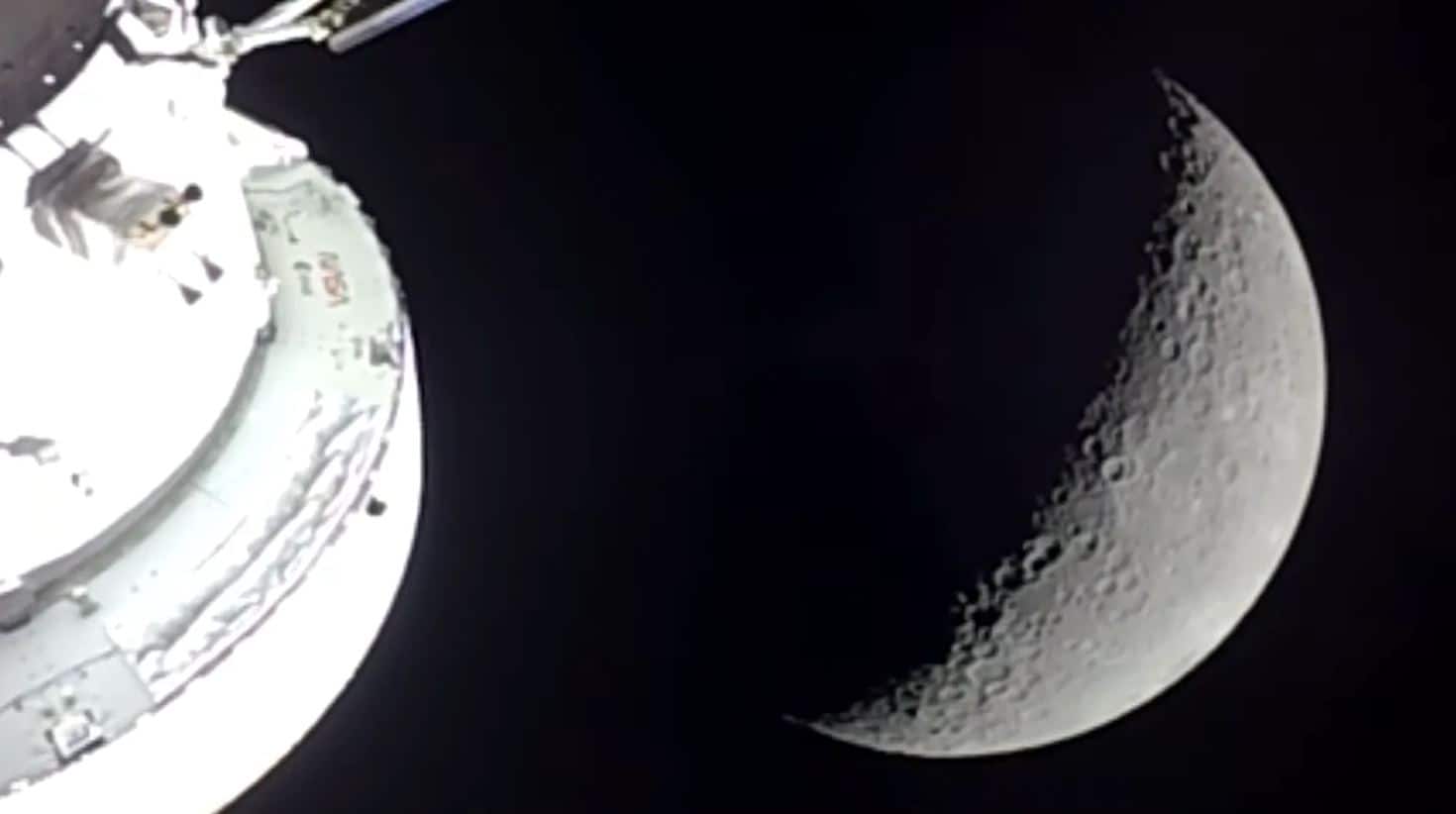
This picture is screenshot from the livestream of NASA’s Artemis 2 moon mission. This is from a feed of a camera on the outside of Orion. The spacecraft can be seen a bit on the left.
That moment marked the first time in over 50 years that humans have visited our planet’s very best friend. It was the first time in history, when a woman, a non-American and a Black person were part of the endeavor. The last people to reach the moon were Apollo 17’s Gene Cernan, Harrison Schmitt and Ronald Evans in 1972. They got there in a time before TikTok, virtual reality, iPhones, Wi-Fi or even DVD players existed. Cernan and Schmitt walked on the lunar surface, while Evans circled above them in the mission’s command module.
Naturally, this long lapse of lunar presence, despite our species’ continuous technological innovations, can feel a little ironic, but there are legitimate reasons why it took us so long to go back. Ironically, the gap itself seems to have made revisiting our treasured gray rock so much more of a big deal. We’re finally back at the moon, and our generation can sort of relive the thrill that penetrated the 1960s and 1970s because it feels new, or, at least new enough. Just imagine, if Apollo could accomplish what it did with only the tech available in its time, what can Artemis do now?
This exciting thought is especially potent for scientists who have dedicated their lives to studying the moon without ever knowing for sure they’d see us back there.
Earthset.
The Artemis II crew captured this view of an Earthset on April 6, 2026, as they flew around the Moon. The image is reminiscent of the iconic Earthrise image taken by astronaut Bill Anders 58 years earlier as the Apollo 8 crew flew around the Moon. pic.twitter.com/ag72r97wzb
— NASA Artemis (@NASAArtemis) April 7, 2026
“I am part of a generation of lunar scientists, perhaps the majority of lunar scientists today, who were born after the Apollo missions had ended,” Jeffrey Andrews-Hanna, a lunar and planetary scientist at the University of Arizona, told Space.com. “For me, human exploration of the moon has always been an inspiring piece of history. Now, to see it unfolding before my eyes is incredibly exciting.”
It’s an awe that echoes the way academics felt about Apollo back in the day. Alan Binder, for instance, a scientist from the University of Arizona’s Lunar and Planetary Laboratory, who was around to experience the Apollo years, said a professor at the time told his students they’d be doing their PhD thesis about the moon.
“That’s what we believed. It was what we all wanted, some of us wanted to go to the moon, but we all wanted to study the moon and the planets. The whole world was listening,” he once said, according to a page on the University of Arizona’s website. “I have all these fantastic memories of Apollo and the men on the moon, and I envied them so much because I wanted to go. And I still want to go.”
Who are the four astronauts on Artemis II?
Reid Wiseman, the mission commander, is a former US Navy pilot and test pilot. He became a Nasa astronaut in 2009 and spent 165 days on the International Space Station (ISS) in 2014.
The ship’s pilot is Victor Glover, who lived on the ISS from November 2020 to May 2021 and was also the pilot of SpaceX Crew-1. He will be the first Black astronaut to fly on a Moon mission and holds three master’s degrees.
Mission specialist Christina Koch holds the record for the longest single spaceflight by a woman (328 days) after becoming an astronaut in 2013. She will also be the first woman to travel around the Moon.
The other mission specialist on the team is Jeremy Hansen, who will become the first Canadian to go to the Moon. He previously lived underwater for seven days as part of his aquanaut work with Nasa.
Studies on the astronauts’ health will also help Nasa to better understand how deep space travel influences the human mind and body, protecting astronauts on future lunar missions as well as travel to Mars.


