


‘The walking tree’: How this Amazon tree fooled the world into believing it moves | – The Times of India


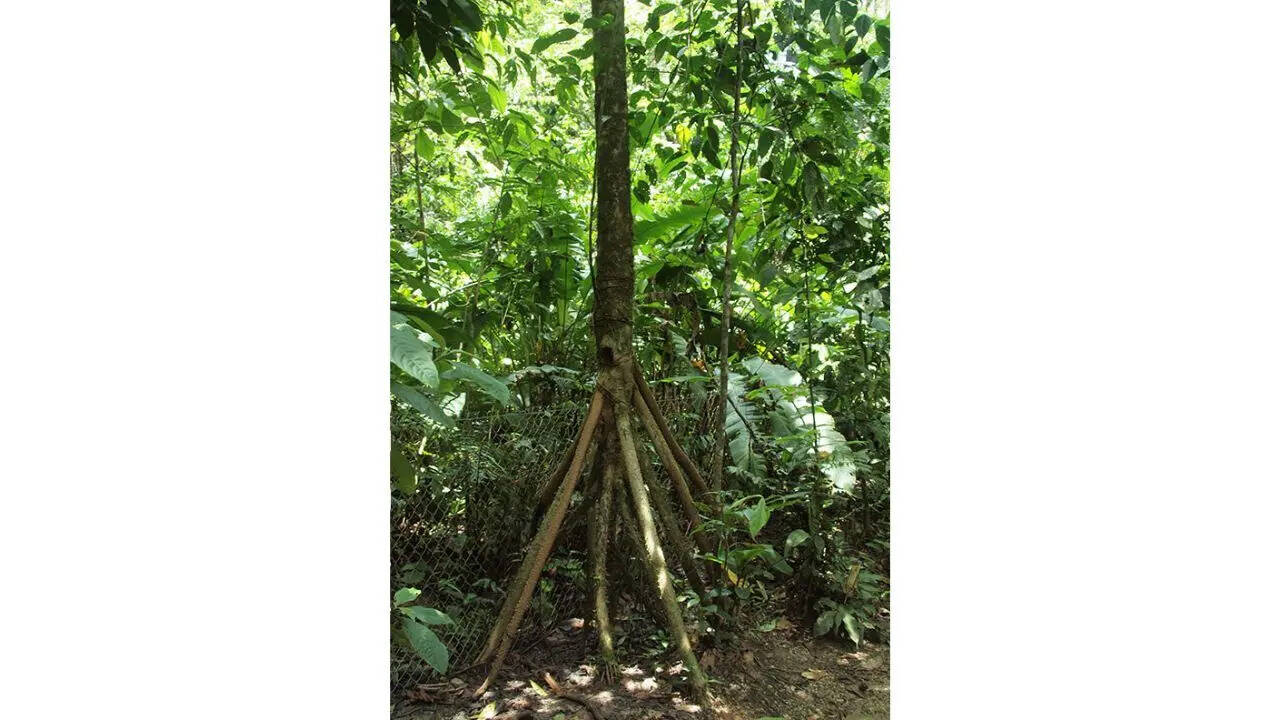
Deep in the Amazon rainforest, a tall, slender palm known as Socratea exorrhiza has sparked one of nature’s most intriguing myths. Often described as a “walking tree”, it is said to slowly shift its position over time, moving a few centimetres each year in search of sunlight. The claim has been widely repeated in travel stories and documentaries, turning the tree into a symbol of a living, moving forest. But while the idea is captivating, scientists say the truth is far less dramatic. The tree does not actually walk. What people are seeing is a subtle illusion created by how its roots grow and adapt in the dense and constantly changing environment of the Amazon.
What makes the tree look like it is moving
The unusual appearance of Socratea exorrhiza comes from its distinctive stilt roots, which raise the trunk above the forest floor and spread outward like legs. Unlike typical trees that anchor themselves with underground roots, this palm relies on a cone-like network of above-ground supports.This structure is highly responsive to its surroundings. In the Amazon, light conditions shift, soil becomes unstable due to rainfall and decay, and falling debris can alter the terrain. In response, the palm grows new roots toward more favourable conditions while older ones on less supportive sides gradually weaken and die.As this process continues, the tree’s centre of support subtly changes. The trunk may tilt slightly or appear to reposition itself, especially when observed over long periods. Without fixed reference points, these gradual changes can create the impression that the tree has moved, even though it remains rooted in the same place.
What science says about the “walking” claim
Despite how convincing the illusion can be, scientific research does not support the idea that these trees physically move across the forest floor. Studies on Socratea exorrhiza have consistently found no measurable horizontal displacement of the trunk over time.Tropical ecologist Gerardo Avalos, who has studied these palms extensively in Central and South America, has stated that there is no reliable evidence showing that the tree relocates itself. While the roots are dynamic and respond to environmental changes, the trunk remains anchored in the same position.Claims that the tree can move several centimetres per year are widely repeated but not supported by controlled measurements or long-term data. Researchers associated with institutions such as the Smithsonian Tropical Research Institute describe the stilt roots as an adaptive feature for stability and flexibility, not movement.From a biological perspective, true movement would require the tree to uproot and re-anchor itself, something no known tree species can do. Instead, this palm demonstrates a slower process of structural adjustment, which, combined with human perception, has led to the enduring myth.
Why the tree evolved this unusual root system
The Amazon rainforest presents a challenging environment for plant life, with loose soil, heavy rainfall, and constant decomposition. In such conditions, the stilt roots of Socratea exorrhiza provide stability by distributing weight across multiple points.They also allow the tree to adapt to uneven terrain, such as fallen logs or shifting ground. Some researchers suggest this structure may help younger trees survive in shaded conditions by enabling flexible growth as they compete for light.
Local stories and the persistence of the myth
Despite scientific explanations, the idea of a walking tree remains popular across parts of Ecuador and Peru. Local guides often describe the tree as capable of slowly migrating, particularly after environmental changes like storms or shifts in the forest canopy.These stories endure because the changes in the tree’s root system are real but occur gradually. Without precise observation over time, it is easy to interpret these subtle shifts as movement. The tree’s leg-like structure only reinforces this perception.
A mystery rooted in perception
In reality, the “walking tree” is not moving but adapting. Its changing root system reflects a response to environmental pressures rather than any form of locomotion. Yet the illusion is powerful enough to blur the line between observation and imagination.In the end, Socratea exorrhiza highlights how easily natural processes can be misinterpreted. What appears to be movement is simply life adjusting to survive, slowly and quietly, in one of the most dynamic ecosystems on Earth.


