


The rise in Britain’s youth unemployment rate to a 10-year high is posing tough questions for the country’s centre-left government about its policy of phasing out a lower minimum wage for younger workers.
Official figures this week showed Britain’s jobless rate for people aged 16-24 rose to 16.1% in the final quarter of last year, up from 13.8% in the middle of 2025 and a record low of under 9.2% during the Covid-19 pandemic. Youth unemployment in Britain now exceeds that in the euro zone.
Many business groups and economists blame a sharp increase in the minimum wage alongside last April’s increase in employer social security charges and broader economic headwinds, while the impact from greater use of artificial intelligence remains harder to prove.
UK low-paid vacancies fell faster than in Germany, France
Jack Kennedy, senior economist at job site Indeed, said vacancies for jobs paying close to the minimum wage in Britain had fallen more sharply than those for higher-paid roles over the past three years – the opposite trend to Germany or France.
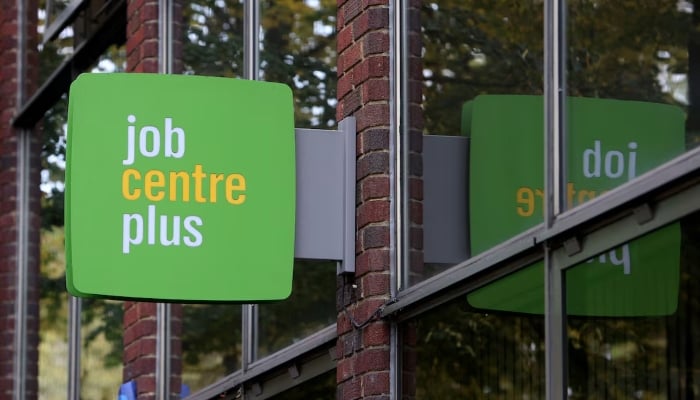
“The UK really stands out in terms of the weakening that we’ve seen in lower-paid job postings,” Kennedy said. “That does definitely illustrate the extent to which low-wage postings in the UK have been hit by policy changes: the National Insurance increase, the minimum wage increases, and so forth.”
Ben Caswell, senior economist at the National Institute of Economic and Social Research, said official data showed some of the sharpest rises in unemployment in the private sector between April and October 2025 had come in hospitality and retail.
“It’s definitely impacting younger workers more,” he said.
The IT sector had also seen above-average job losses, possibly due to AI, but overall there was little evidence of firms investing more in labour-saving technology in response to higher labour costs, Caswell said.
UK minimum was has risen sharply
For most of the time since Britain introduced a minimum wage in 1999, there was little sign that it hurt jobs. The headline unemployment rate hit its lowest since the 1970s at 3.6% in 2022.
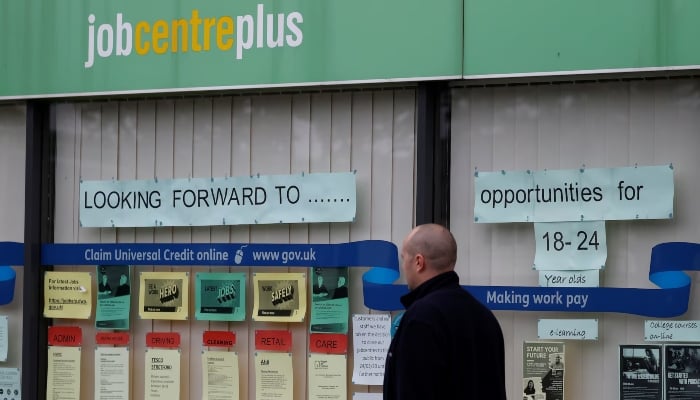
The previous Conservative government set a goal of raising the main minimum wage to two thirds of median earnings, making it one of the highest relative to earnings in Europe. It abolished lower minimum wage rates for workers aged 23-24 in 2021 and for 21 to 22-year-olds in 2024.
The current Labour government has pledged to end lower minimum pay rates for 18 to 20-year-old workers.
The main minimum wage rate now stands at £12.21 ($16.40) an hour – up 29% over the past three years – while the rate for 18 to 20-year-old workers has risen 46% to £10 an hour over the same period and is due to increase to £10.85 in April.
Approaches to youth minimum wage rates vary widely across Europe. France, which has a high minimum wage similar to Britain’s, does not lower it for younger workers except in certain training roles, while the Netherlands pays 18-year-olds half the hourly rate of those three years older.
Gareth Jones, managing director of In-Comm Training Services, said manufacturing and engineering firms, especially smaller ones, were becoming more reluctant to hire apprentices.
“There’s a lot of narrative around employers saying: ‘Why would we pay someone that’s completely unskilled that wage when we can get semi-skilled for the same or not too much more?’,” Jones said.
Tough market for job-hunters
For young people, finding work is often tough.

Alex Kelly, a 19-year-old film student, works at the bar of a working men’s club in southeast London near his family home, where he started washing glasses at the age of 16.
But the job does not offer reliable hours and he has not been able to find other work that fits around his studies.
“The applying process is really awful. If you do it online, then most of the time you’re not even getting a response,” Kelly said. “A lot of people I know have just stopped applying for jobs.”
Elsa Torres, 20, in her final year of a business studies degree in Liverpool, has been unable to find a part-time job, despite 70 applications, after the gastropub where she was a waitress closed down.
The Times reported on Wednesday that the government was considering abandoning its long-term plan to end the lower rate of pay for 18 to 20-year-olds.
In response, a government spokesperson said the minimum wage was going up “so that low-paid workers are properly rewarded”.
Minimum wage rates for 2027 will be set in October or November based on advice from a public body representing businesses, academics and trade unions.
Nye Cominetti, an economist at the Resolution Foundation, a think tank focused on issues affecting lower earners, said evidence that a higher minimum wage was to blame for youth unemployment was not cast-iron but was strong enough for the government to be more cautious about future rises.
“In a world where the youth labour market looks rocky … big increases in the youth minimum wage rate are probably the wrong way to go,” he said.


