


How to pick the perfect tree for your home this Christmas


Want to bookmark your favourite articles and stories to read or reference later? Start your Independent Membership today.
Already a member?
Log in
Finding the ideal Christmas tree can prove challenging for many, with options often appearing excessively wide, sparse, dense, or spindly.
However, specialists emphasise that a suitable option exists for every living space. Buyers simply need to take careful measurements before making a decision.
“In recent years, especially with a lot of new-build homes, the trends show that a big chunky tree isn’t for everyone,” says Nigel Lawton, plant buyer at Dobbies Garden Centres. “In terms of sale trends, we are selling more slim trees.”
Potted options can now be purchased widely, whereas real cut varieties are expected in stores around mid-November.
Measure up
“We always encourage people to measure both the height of the room and the floor space available before they come out to purchase their tree,” says Eve Kerrigan, content creator at British Garden Centres.
Ditch the netting
You’re not going to be able to judge a tree’s density or shape if it is already netted when you buy it. Choose retailers that display all their trees in bays out of netting, only netting them once the tree has been chosen.
“Get them out, turn them around, make sure they are full all the way around,” Lawton advises.
For narrower spaces
Some garden centres offer slim Nordmanns, shaped through specialised pruning over years to maintain a tight, columnar footprint ideal for apartments and tight corners.

“Our Nordmann slim and Fraser fir, which is a naturally slim tree, are really popular,” says Lawton. “We just do one size which is graded at 6-7ft, but because they are naturally slim, height is generally not an issue as most will fit into a standard home.”
For huge spaces which need filling
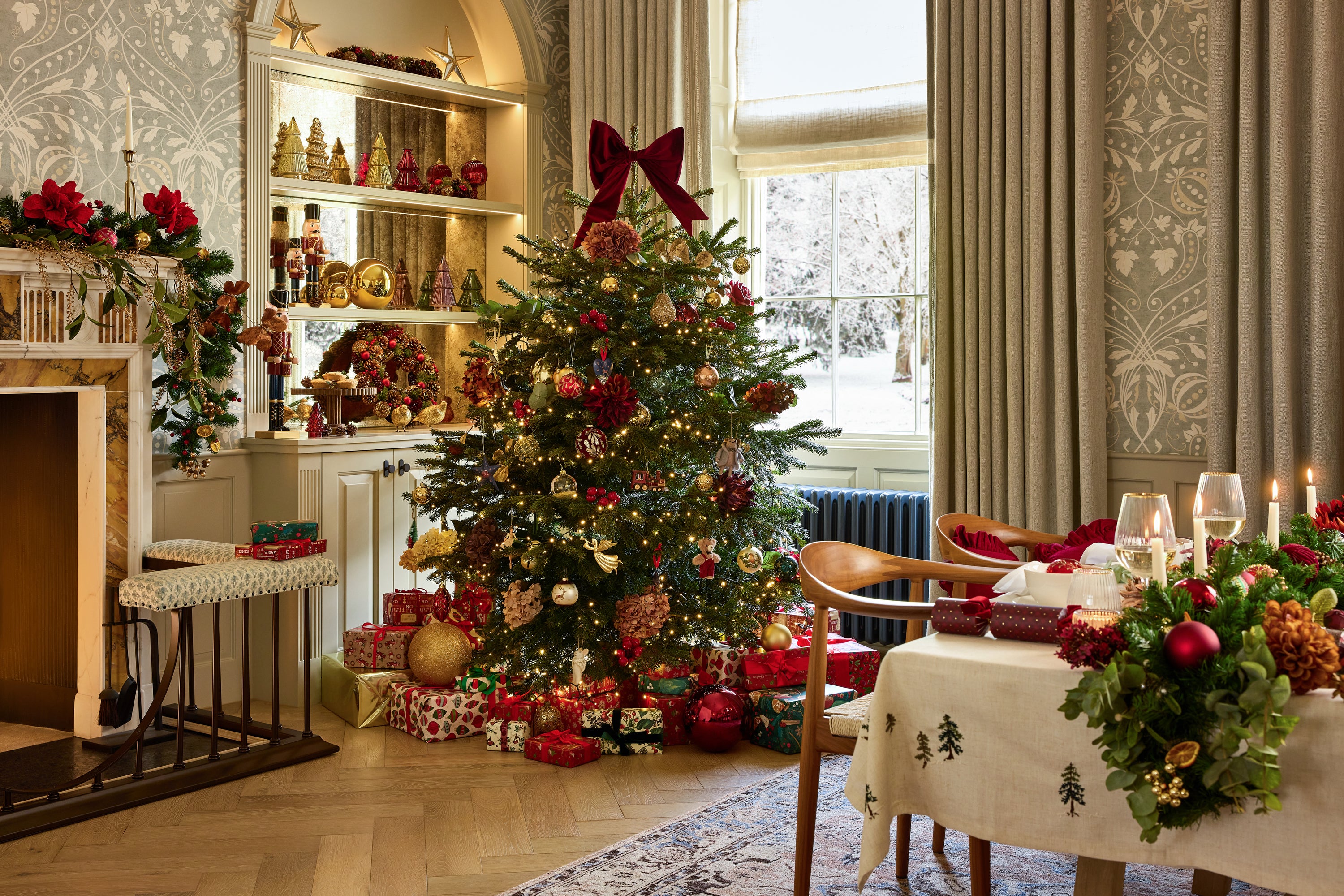
If you have a large space in your hall or another room which lends itself to an eye-popping showstopper, some garden centres and Christmas tree nurseries sell 8-9ft tall specimens and bigger.
They are great for hallways where the tree is in full view as you open the front door, without anyone brushing the branches to get past, but are also great for bay windows, if you have the width, says Lawton. Go for the non-drop Nordmanns if you can.
For smaller areas
If you haven’t room for a tall tree and want something to sit above ground level, say on a side table or the hearth of a non-working fireplace, a pot-grown tree may be the answer, says Lawton.
“They typically start from a tree that is maybe only 1-2ft tall. Afterwards you can either plant them in the garden or move them into a bigger pot and keep them again for next year.”
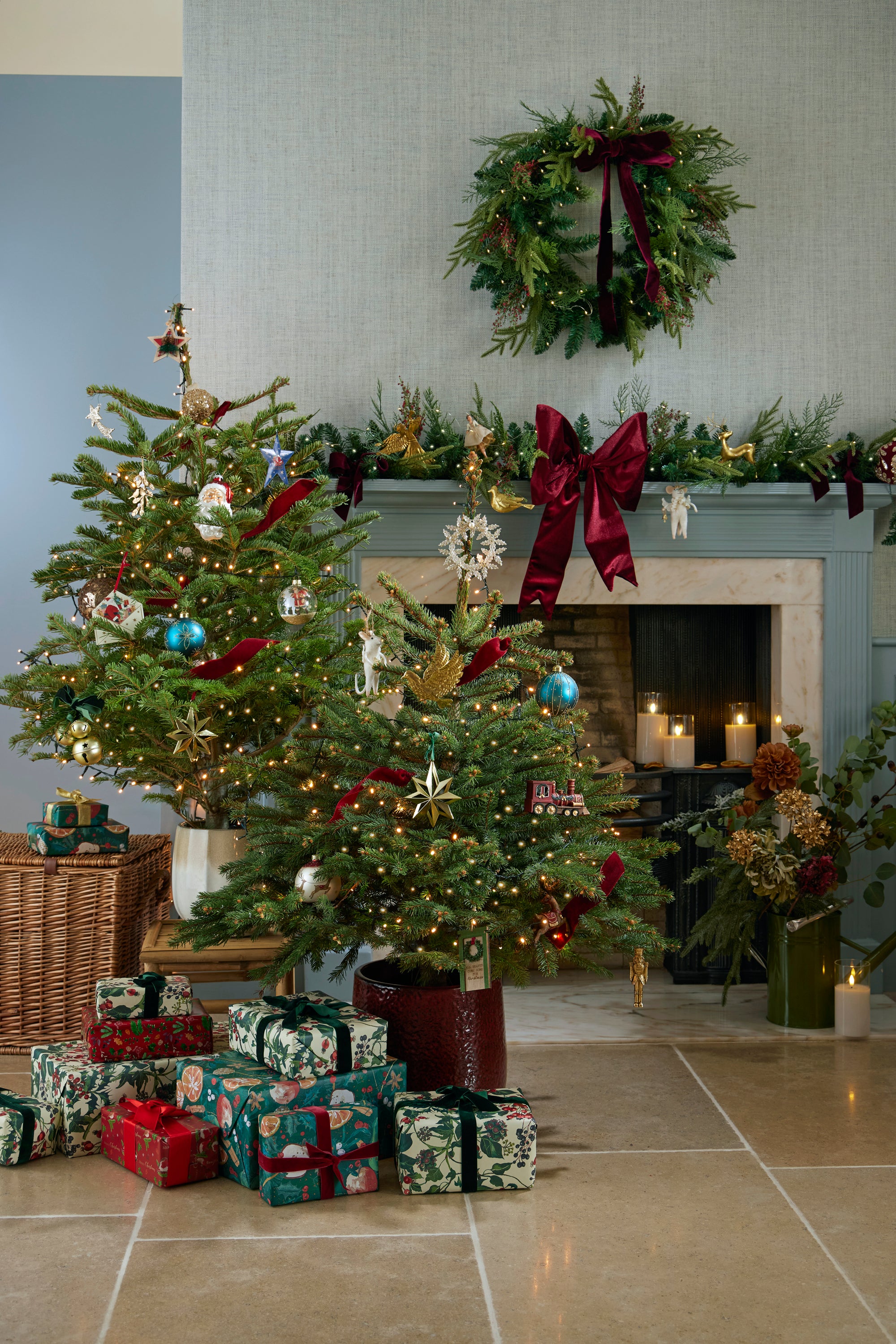
Make sure that if you buy a pot-grown tree it is supplied with a pot cover or tray so that it doesn’t leak, and you need to water it frequently.
“The only thing is that because a pot-grown tree is an outdoor product, I would try to bring it in as late as possible and put it out as quickly as possible after Christmas.”
For even smaller spaces
Pot-grown dwarf ornamental conifers like Picea glauca (white spruce) or dwarf blue spruce can fit into many rooms, but if you only have room for a tiny token tree on a mantelpiece or coffee table, you could even go for a miniature potted rooted Norway spruce complete with outdoor lights and baubles which can come ready packed to fit through your letterbox.
Trees to plant out afterwards
“There’s a big difference between pot-grown and potted trees,” says Lawton. “There are a lot of trees out there which are containerised, so they’ve been grown in the field and as we approach Christmas they are dug up and stuck in a pot.
“The problem with that is the success rate after Christmas is small. It might survive. It’s probably got a 50:50 chance, whereas ours are truly pot-grown, with a really good chance of surviving, given the right conditions.”
A pot-grown tree, which has been raised in a pot all its life, won’t suffer the stress of a potted tree, which has been dug up and dropped into a pot of compost shortly before the festive season, a process which severs a large portion of the roots and can cause the tree to go into root shock.
It’s not easy to see if a tree is potted or pot-grown, but you could tip it gently to see if it holds its rootball together when you lift it. If so, it’s likely to be pot-grown. If the tree slides about in loose compost it is more likely to be potted but ask at your garden centre to be sure.
Twiggy alternatives
If you don’t want the hassle of fitting a real tree into a limited space, you could go for a vase with an array of long twigs from the garden – or a garden centre – and adorn them with decorations, for a more open feel.
Good candidates include dogwood, willow and corkscrew hazel, on which you can hang baubles, dried fruits and string lights.


