


The heatwave hangover: What the high temperatures are really doing to your body


If I had to sum up the prevailing mood in the UK right now, I’d resort to one word: frazzled. The late June heatwave seems to have left everyone feeling depleted – tired, irritable and utterly over it.
The mental strain of trying to cool down a British home designed to insulate us from harsh winters, rather than protect us from record-breaking high temperatures, has taken its toll. It feels like no one’s had a decent night’s sleep since Andy Burnham won his by-election (pure coincidence). And even when the heat (temporarily) dropped off this week, it has been hard to bounce back. The after-effects are persistent, like a heatwave hangover that won’t lift.
This general sense of malaise has meant that news of another bout of warm weather, due to kick off soon, has been greeted with much eye rolling (and panic about whether those big standing fans are back in stock online). We’ve barely shaken off the impacts of June’s heat, after all. Is it just in our heads, or is this the oscillation between a classic drizzly British summertime and a hot hellscape wearing us all out?
Our bodies endeavour to maintain a core temperature of around 37C to function properly. But during hot weather, they have to work much harder than usual to keep this steady. “Prolonged heat puts the body under genuine physiological stress,” explains Dr Chun Tang, GP at Pall Mall Medical. “Even after temperatures drop, many people are left dehydrated, depleted of key electrolytes, and running on disrupted sleep. The body has been working overtime to cool itself, and that has a cost.”
It’s also worth bearing in mind that, when studying the impact of high temperatures, it’s not just about where the mercury hits. Instead, scientists consult the “wet bulb” temperature to assess how well the human body can cool itself. This factors in air temperature and humidity and is measured by wrapping a thermometer’s bulb in a damp cloth.
Much-cited research dating back to 2010 estimates the maximum “wet bulb” temperature for human survival is 35C, equivalent to an air temperature of 40C with relative humidity at 75 per cent. But a more recent study suggests the actual threshold could be several degrees lower: scientists at Penn State University put the upper limit at 31C. During our recent scorcher, the “wet bulb” temperature in the UK hovered around 25C.
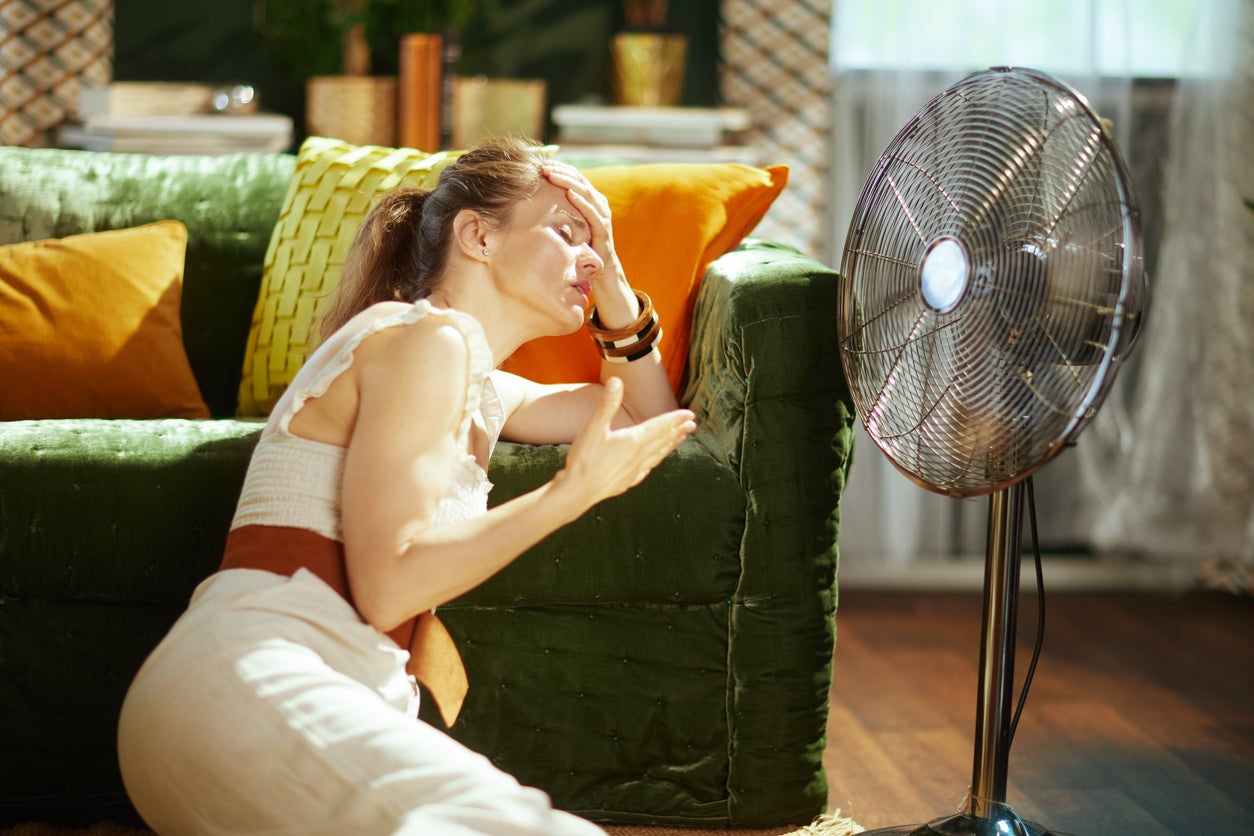
When a heatwave hits, your body’s priority is to cool itself down. “The heart and blood vessels adapt in several ways,” says Dr Gajen Sunthar Kanaganayagam, cardiologist at HCA Healthcare’s The Harley Street Clinic. Blood vessels widen, part of a process called vasodilation, “bringing more blood flow to the skin’s surface so heat can escape”.
But while this is useful for cooling, he explains, “it also causes your blood pressure to fall, which can make you feel lightheaded or faint”. And in response to this, “the heart rate increases and your heart has to beat faster to maintain sufficient circulation. Even healthy people can experience a noticeable rise in resting heart rate”.
It’s thought that the heart circulates two to four times as much blood per minute on a hot day as it would on a cool day. This all puts more strain on the cardiovascular system, and those with underlying heart conditions are more likely to be impacted. Research in the American Heart Association’s journal, Circulation, has estimated that heat-related cardiovascular deaths might increase by more than double over the next few decades.
Sweating is another way the body cools down, but when humidity is high, it’s harder for sweat to evaporate, and “sodium and potassium losses through sweat can also disrupt the electrical signals that keep your heart rhythm steady”, Sunthar Kanaganayagam adds.
There are other effects too. If you’ve noticed yourself feeling less sharp – or more likely to snap over the slightest inconvenience, that might be because dehydration and overheating “can all affect concentration, attention, reaction times and short-term memory”, says Dr Clair Grainger from Superdrug Online Doctor. “Many people describe feeling “foggy” or less able to “think clearly during periods of extreme heat”.
If the body hasn’t fully recovered before the next heat event hits, the risks compound
Dr Chun Tang
And as part of vasodilation, our veins widen, and “even people with healthy veins may notice their legs feeling heavier or more swollen”, explains Dr Dominic PJ Howard, consultant vascular surgeon at UK Vein Clinic. “Once the veins have been dilated for several days, they don’t immediately tighten back to their usual diameter”, so the blood “continues to pool in the lower legs even when the temperatures have cooled”. Any fluid that might have leaked into surrounding tissues can take time to clear, he adds. “The lymphatic system works more slowly than the circulatory system, so swelling can linger for days, sometimes weeks after the heat has passed.”
And there’s the crux – once the weather returns to normal, our bodies don’t just snap back to normal immediately, as they are “still recovering from several days of sustained extra workload”, as Sunthar Kanaganayagam puts it. “Several processes lag behind,” he adds. “Even mild dehydration thickens the blood slightly, making circulation less efficient. This can leave you feeling fatigued, foggy or light-headed for days.” And persistently lower blood pressure after long periods of vasodilation might leave you feeling dizzy, especially in the mornings.
Swings between hot and cold are “genuinely taxing”, says Dr Tang. “Repeated cycling” between the blood vessels dilating in the heat and constricting in the cold contributes to extra strain on the heart. “It also makes it harder for the immune system to regulate itself, which is one reason people often pick up colds or feel run down after a heatwave breaks.”
The cumulative effect of heatwave after heatwave is something that’s under appreciated, says Dr Tang. “Each successive heatwave leaves less recovery time, particularly for vulnerable groups” – think older people, children and those with underlying health conditions. “If the body hasn’t fully recovered before the next heat event hits, the risks compound. We are seeing this become a more pressing concern as extreme heat becomes more frequent.”
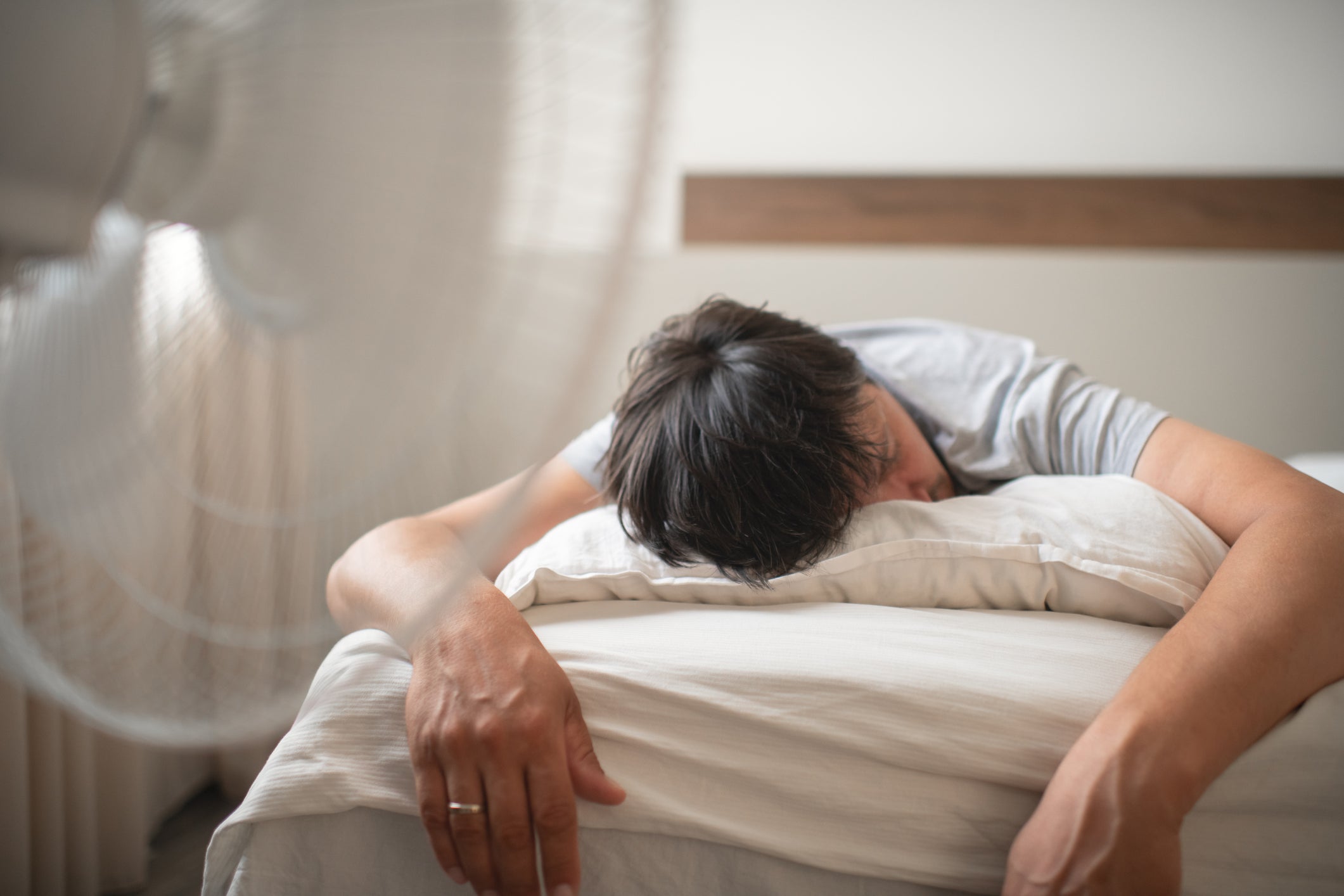
Poor sleep during a scorching spell can also have lingering consequences. Sleep is closely linked to our body temperature, explains Maryanne Taylor, founder and sleep consultant at The Sleep Works. In the evening, she says, “our core body temperature naturally starts to drop, which helps support the release of melatonin, the hormone involved in falling and staying asleep at night”. But during hot weather, when we struggle to keep our bedrooms cool overnight, it’s trickier for the body to cool down sufficiently.
Many of us will end up waking up more often than usual, adds Nicole Ratcliffe, founder of The Workplace Sleep Coach. And we might spend longer in the lighter stages of sleep, rather than the deeper, more restorative stages. We’re then more likely to wake feeling unrefreshed, because sleep is not just about time, but the actual quality of shut-eye.
One or two disrupted nights are unlikely to have too much of an impact, Ratcliffe says, but any longer than that and we might end up “carrying a temporary sleep debt”.
Bouncing back from this is not as simple as snatching the odd extra hour at the weekend. “Sleep isn’t something we can simply ‘make up’ in one long lie-in,” she says. “Recovery tends to happen over several nights of consistently good quality sleep, as the body gradually restores the deep and REM sleep that may have been disrupted.”
Menopausal and perimenopausal women might struggle the most, Taylor notes. “Heat can make night sweats and hot flushes worse, leading to more frequent waking and lighter sleep”. Older people, those with long-term health conditions and pregnant women are also especially vulnerable, she adds. So are those who work outdoors or with irregular shift patterns, “because their routines, recovery time or sleep environments are harder to control” (having to try and get some sleep at the very hottest point of the day before you head out on a night shift? Heatwave hell).
Just as we begin to settle back into sleeping in cooler conditions, another spell of hot weather can disrupt that process again
Nicole Ratcliffe, The Workplace Sleep Coach
More hot weather is just around the corner, with temperatures set to reach 30 degrees in some parts of the UK. “Just as we begin to settle back into sleeping in cooler conditions, another spell of hot weather can disrupt that process again,” Ratcliffe points out. Our circadian rhythm, the body’s natural 24 hour clock, is “primarily regulated by light”, she adds, but temperature is also “an important cue for healthy sleep”, and a period of change “can make it harder to establish a consistent sleep pattern”.
And if you had a bad time trying to drift off during the last hot spell, this can prompt worries about how it will affect you this time around. The result? A vicious cycle, “where anxiety about sleeping actually makes it harder to fall asleep”.
The mental load of keeping kids and older relatives cool, or planning a commute that won’t leave you in a melted puddle before 8am can raise cortisol levels too. “Cortisol is one of the hormones that helps keep us alert, so elevated levels in the evening can make it harder to switch off and fall asleep,” Ratcliffe says.
This sense of anticipation “triggers a low level stress response that is physically draining in its own right”, Tang agrees – “heat anxiety”, he reckons, “is a real and growing phenomenon”.
So what can we do to try and mitigate the lingering impact? “The best approach is to prevent heat-related illness before it develops,” says Grainger. “Stay well hydrated by drinking water regularly throughout the day, even if you don’t feel thirsty, and limit alcohol as it can contribute to dehydration”. She also recommends closing blinds during the hottest part of the day, and opening windows when the temperature drops later on.
And while it’s sensible to avoid vigorous exercise during the warmest parts of the day, she adds, it’s better to adapt your routine rather than stop moving altogether, as this might contribute to “lower energy levels, poorer sleep and a drop in mood, all of which can contribute to feeling sluggish”.
Walking in the early morning or evening, going for a swim or gentle indoor exercise in a cool environment “can help you stay active without putting yourself at risk of heat-related illness”, Grainger says. And if fatigue persists for more than a couple of weeks, despite returning to your usual routine, she adds, “it’s worth considering whether an underlying health issue, rather than the heat itself, could be responsible”.


