


Do You Know What The Numbers 916, 750, 585 On Your Gold Jewellery Actually Mean?


If you’ve ever looked closely at a gold ring, chain, or bangle, you may have noticed tiny numbers like 916, 750, or 585 engraved on it. Most people assume these are just serial numbers, but they actually reveal one of the most important details about your jewellery: how pure the gold is. Understanding these markings can help you know exactly what you are buying and whether you are getting value for your money. Here’s what those numbers really mean.

916 Means 22-Karat Gold
The number 916 is the most common stamp found on gold jewellery in India. It means the piece contains 91.6 percent pure gold, which is equivalent to 22 karats. The remaining 8.4 percent consists of other metals like silver, copper, or zinc that make the jewellery stronger. This is the standard purity used for most traditional Indian jewellery.

750 Means 18-Karat Gold
A 750 stamp means the jewellery contains 75 percent pure gold, or 18 karats. This type of gold is widely used in diamond and gemstone jewellery because it is harder and more durable than 22-karat gold.

585 Means 14-Karat Gold
If your jewellery is marked 585, it contains 58.5 percent pure gold, which equals 14 karats. This is commonly used for lightweight and contemporary jewellery.

999 Means 24-Karat Gold
The number 999 indicates 99.9 percent pure gold, or 24 karats. This is the purest form of gold, but it is too soft for most jewellery designs. It is more commonly sold as coins and bars.
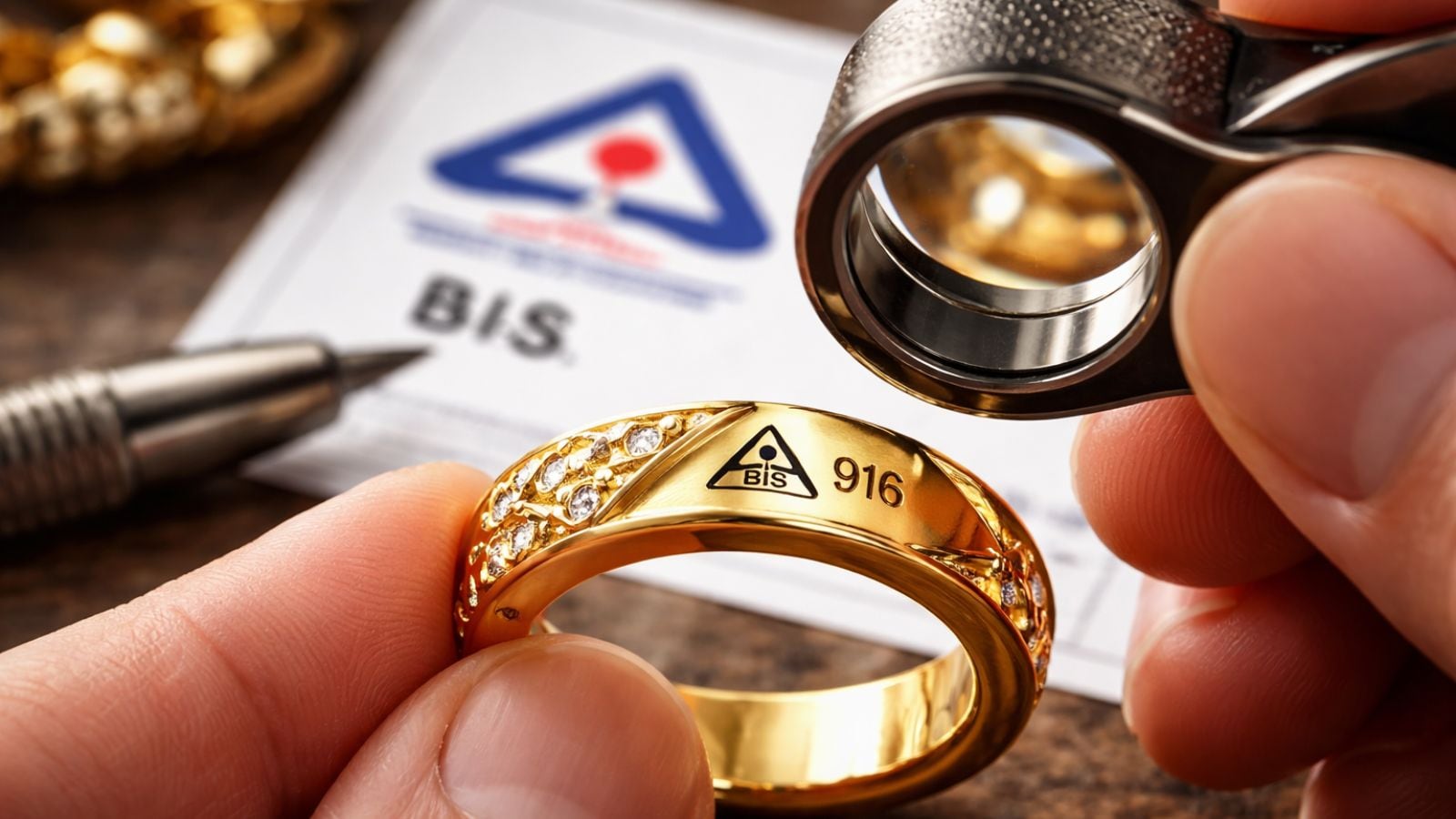
In India, gold jewellery is certified under the hallmarking system regulated by the Bureau of Indian Standards (BIS). A BIS hallmark indicates that the purity has been independently tested and verified.
Modern hallmarked jewellery usually carries the BIS logo, the purity mark (such as 916 or 750), and a six-digit Hallmark Unique Identification (HUID) code. The HUID helps buyers trace and verify their jewellery. The higher the purity, the higher the gold value. However, the stamp only tells you the gold purity; your final bill also includes making charges, wastage, and taxes.


